REVIEW · KRAKOW
Pierogi Cooking Class: Mastering the Art of Polish Dumplings
Book on Viator →Operated by Delicious Poland · Bookable on Viator
Pierogi have a soft spot in my heart because they’re both comfort food and a real skill. This Krakow class takes you through making dumplings from scratch, then eating what you made with a local drink.
What I like most is the hands-on pacing (no rushing) and the focus on getting your dough and fillings right. The second standout is the quality of instruction, with local teachers known for being patient and clear, whether you’re new to cooking or not.
The main thing to consider is that pierogi classes are most fun when the group stays on plan. If extra people show up beyond what’s prepared, you may end up sharing stations or cooking a little less per person.
Key moments to look for
- Dough from scratch with step-by-step guidance
- Two fillings: savory pierogi ruskie and fruit-filled sweet dumplings
- Boiling and shaping taught so you get better results at home
- A local meal with a choice of beer or wine
- Small-group feel, with personal help from instructors like Olga, Magda, Maria, and Ania
In This Review
- Krakow Pierogi Class Right Near the City Center
- Starting With Dough: Make the Wrapper From Scratch
- Filling Two Worlds: Pierogi Ruskie and Sweet Fruit Dumplings
- Shaping and Boiling: The Technique That Makes or Breaks Pierogi
- Eating Your Results With Beer or Wine
- Instructors Who Teach Like It’s a Family Task
- Small-Group Pacing in a 2-Hour Cooking Window
- Price and Value: What $82.72 Gets You
- How to Prep So You Enjoy Every Minute
- Should You Book This Pierogi Class?
- FAQ
- Where is the meeting point for the pierogi cooking class?
- What pierogi types will you make during the class?
- Does the class include alcohol?
- How long is the class, and is it in English?
- Can you accommodate dietary requirements?
- What’s the cancellation window for a full refund?
Krakow Pierogi Class Right Near the City Center
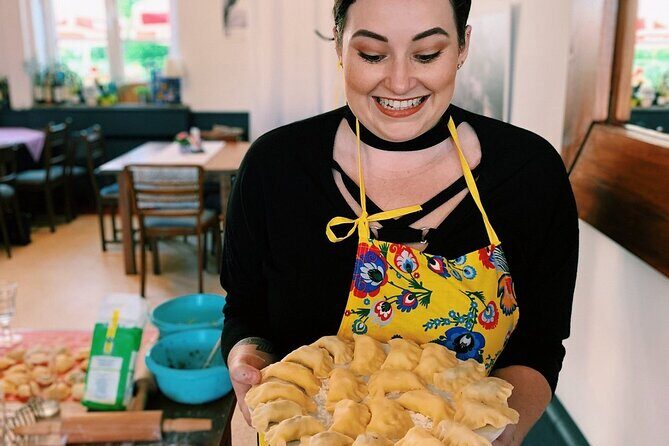
This is a classic Polish food experience that doesn’t pretend pierogi are complicated. You meet up at WavelovePodchorążych 3, 30-084 Kraków, Poland, then head to a nearby restaurant for the whole session. The vibe is informal but smart casual works best, and it’s set up so you’re not stuck watching from the sidelines.
Price is $82.72 per person for about 2 hours, and the class time is built for doing real work: dough, filling, shaping, boiling, and then eating. If you like learning with your hands, this kind of activity is a great use of a night in Krakow. Also, it’s offered in English, and you’ll get a mobile ticket, so you can show up without hunting for paper confirmations.
One practical note: the experience is limited to a maximum of 50 travelers, and the small-group setup is meant to keep instruction focused. You still want to make sure your timing and group size are solid, because cooking relies on having the right stations and ingredients ready.
Starting With Dough: Make the Wrapper From Scratch
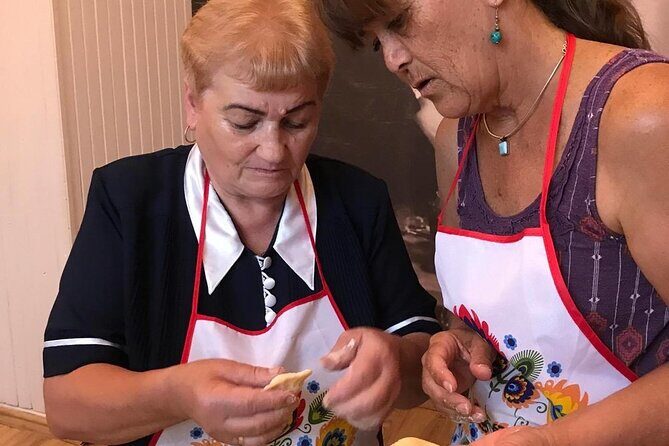
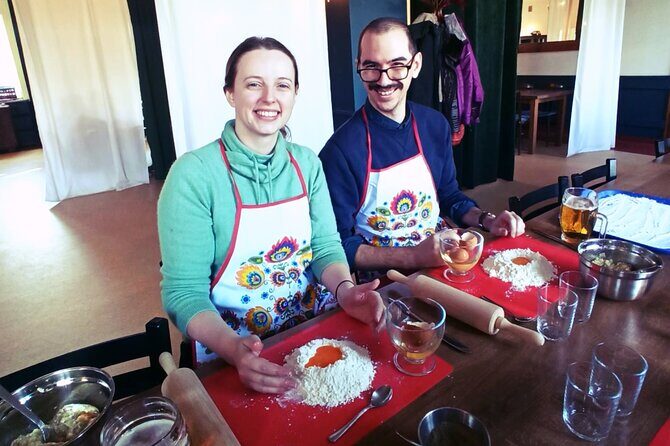
The class starts with the dough. Not store-bought. You’ll work with a dough made entirely from scratch, which is the part that many people think they’ll mess up. The good news is that the instruction is designed for beginners.
When you make your own pierogi dough, you learn something most souvenirs can’t teach: how dough should feel and behave. You’re not just copying a recipe. You’re building understanding—how to handle it, how it comes together, and how to work it into workable portions. That matters later when you try again at home and your dough is too sticky (or too stiff) and you need to fix it fast.
In the class atmosphere, instructors are described as friendly, patient, and willing to guide you step-by-step. Names that come up often include Olga (also spelled Ola), Magda, Maria, and Ania. That matters because pierogi dough can be technical, and a calm teacher can turn it from stressful into doable.
You can also read our reviews of more cooking classes in Krakow

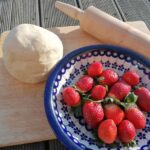
Filling Two Worlds: Pierogi Ruskie and Sweet Fruit Dumplings
You get two fillings, savory and sweet. That’s one of the smartest ways to learn pierogi, because you practice the same core technique with totally different flavors. And it keeps the meal from feeling repetitive.
For savory dumplings, you’ll make pierogi ruskie, a main type found in Poland. The filling uses boiled potatoes mixed with twaróg, a creamy and tangy white cheese. This combination is the classic comfort-food anchor: soft potatoes plus that clean dairy tang that keeps the filling from tasting flat.
For the sweet batch, you’ll make fruit-filled pierogi using fresh fruit that’s currently available. The point isn’t to chase a specific seasonal variety; it’s to learn how fruit filling behaves and how to balance it so it still works in a dumpling. Sweet pierogi are a normal part of Polish eating habits, especially in summer and autumn.
If you’re thinking about what to order for dinner after the class: you’ll already have it covered. You’ll eat the dumplings you make, and the class also includes a local drink.
Shaping and Boiling: The Technique That Makes or Breaks Pierogi
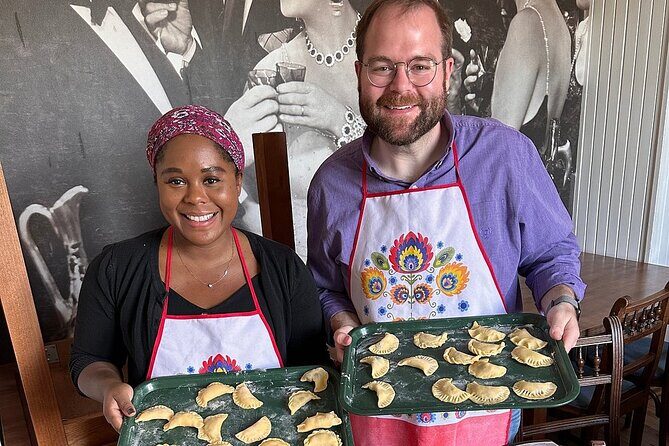
After dough and filling, the core work becomes shaping and then boiling. This is where a lot of home attempts go wrong, usually because the dumplings aren’t sealed well or the cooking time gets off. The class focuses on getting you from filled dumplings to a finished result without guesswork.
You’ll learn a workflow that makes sense for a busy kitchen: portioning the dough, handling filling, sealing, and then boiling until tender. One bonus from the instruction style is that you’re often encouraged to play with shapes—so you end up with food that feels homemade, not just assembled.
Also, boiling teaches you another key skill: timing and texture. If you’ve ever eaten pierogi that are either too tough or breaking apart, you already know how sensitive the wrapper can be. In this class format, you get guided practice so you can avoid those common problems when you recreate the dish later.
A final practical detail: the hot water and dough prep are part of the process, and that affects how groups are organized. The class tends to be set up for participants to work in pairs at stations, which keeps ingredients and workflow manageable. If your group composition is unusual, ask early so the station plan can match what you need.
Eating Your Results With Beer or Wine
Once your pierogi are done, you sit down and eat them. That’s not an afterthought. It’s the point where the class becomes a meal and you can taste-test what you learned.
The included drink choice is a large beer or a glass of wine alongside your dumplings. That’s a nice value add because the class isn’t only about technique—you also get a proper Polish-food payoff with a local-style beverage to match.
You’ll eat both savory and sweet dumplings. In other words, you’re not just getting one flavor theme. You get a full pierogi spread that helps you remember the differences: the savory comfort of potatoes and twaróg versus the fruit sweetness and softer, dessert-style vibe.
If you’re the kind of person who learns best when you can taste immediately after doing the steps, this is a strong format. You’re not waiting until the end of a long lecture. You’re cooking, then eating.
Instructors Who Teach Like It’s a Family Task
What really drives the quality here is the instructor approach. Multiple named teachers—Olga, Magda, Maria, and Ania—show up in feedback as patient, personable, and funny in a good way. That’s more than personality. It affects your learning speed.
In a pierogi class, you need clarity. Dough is hands-on. Filling can be messy. Sealing takes coordination. The instructors are consistently described as walking people through each step and making the process feel manageable rather than overwhelming. Even if you’re a kitchen novice, the tone is meant to keep you moving and not freezing at the table.
Many participants also mention that the session doesn’t feel rushed. That pacing matters because pierogi-making is not a “watch and hope” activity. You need time to form dumplings correctly, and you need time to ask questions while the dough is still workable.
One small caution: some people were told they would receive recipes afterward, and at least one person said they didn’t get the email. If having written instructions is important to you, ask the instructor on the day of class whether a recipe copy will be sent and how.




Small-Group Pacing in a 2-Hour Cooking Window
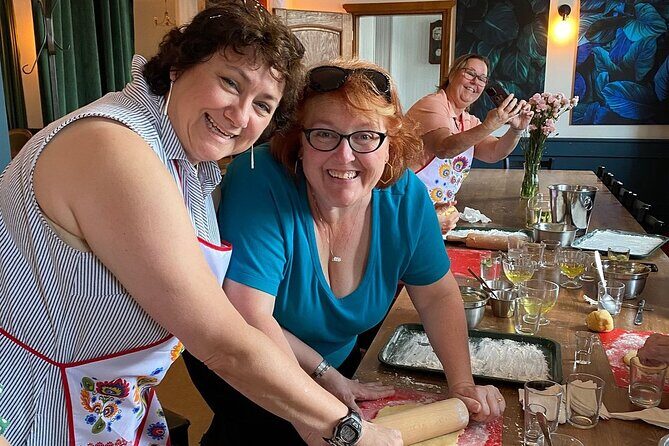
Two hours sounds short until you consider what’s included. In this class, you’re doing dough, two fillings, shaping, boiling, and then eating. That’s why the group size and station flow matter. The experience is set up for personal service, not a chaotic free-for-all.
The class is capped at a maximum of 50 travelers, but what you really care about is how many active cooks are working together at the same time. The usual setup is designed around pairs at stations, which helps keep ingredients organized and ensures someone can help when you’re unsure about dough feel or sealing technique.
If you’re coming with kids or you’re traveling as a larger party, it’s smart to plan. One lesson from the way the class is described: if you don’t match the standard station setup (for example, needing individual workstations for everyone), the workflow might be less smooth than you’d expect. Communicate your group details early, so the instructors can adapt without scrambling.
The best-case scenario is that you leave feeling capable—like pierogi at home are not a mystery dish.
Price and Value: What $82.72 Gets You
At $82.72 per person, this isn’t a budget snack tour. But it does include a lot that most food experiences don’t bundle.
You’re getting:
- Instruction and hands-on guidance for making pierogi from scratch
- Materials and equipment needed to complete the class
- Food tasting from what you make
- A local guide
- Alcoholic beverages (a large beer or glass of wine)
If you compare it to paying separately for ingredients plus a guide plus a tasting meal, it starts to make sense. You’re not only buying the food. You’re buying a structured learning session where someone corrects your technique in real time—especially on dough and sealing.
Also, you’re getting two flavors and two types of dumplings in one sitting. That’s a bigger payoff than classes that focus on only one filling. For a first-time pierogi baker, that combination helps you build confidence faster.
Timing note: the booking pattern shows people reserve this about 43 days in advance on average. That’s a hint that spots can go quickly, especially for English-language sessions.
How to Prep So You Enjoy Every Minute
Because this is a 2-hour hands-on class, your main goal is to arrive ready to work. Here are the practical moves that help:
- Wear smart casual clothing that can handle a little kitchen mess.
- Plan to arrive a few minutes early at WavelovePodchorążych 3 so you’re not stressed when the dough work starts.
- Bring dietary notes when booking. The experience asks you to advise any dietary requirements in advance.
- If you care about written instructions, confirm during the class how recipes are shared.
One more small tip: if you’re traveling with a group, keep your headcount aligned with what you booked. When the setup matches the plan, the pace stays calm. When it doesn’t, the kitchen can get tight, and you might not get the same amount of help.
Done right, this is the kind of evening you can remember because you learned something useful. Plus, you get a full meal out of it.
Should You Book This Pierogi Class?
If you want a hands-on Krakow experience that teaches a real Polish skill, I think you should book it. The best reasons to go are the focus on dough from scratch, the chance to make both savory and sweet pierogi, and the steady reputation for patient instruction from teachers like Olga, Magda, Maria, and Ania. You’ll also eat what you make with a local drink, so it’s not just a lesson—it’s dinner.
But don’t ignore the two main risk points. First, cooking is schedule-sensitive. If your itinerary is extremely tight, don’t assume you’ll have a long recovery window if anything changes. Second, if your group size or needs don’t match the typical station setup, message ahead so the instructors can plan accordingly.
If your schedule is workable and you’re open to getting a little hands-on, this class is a strong way to take Polish dumplings home in both skill and taste.
FAQ
Where is the meeting point for the pierogi cooking class?
You start at WavelovePodchorążych 3, 30-084 Kraków, Poland. The activity ends back at the meeting point after the class and meal.
What pierogi types will you make during the class?
You’ll make pierogi from start to finish, including a dough made from scratch. The savory option is pierogi ruskie (boiled potatoes mixed with twaróg). You’ll also make a sweet version with fresh fruit that’s available at the time.
Does the class include alcohol?
Yes. Your homemade pierogi are served with a choice of a large beer or a glass of wine, which is included in the experience.
How long is the class, and is it in English?
The class runs for about 2 hours. It’s offered in English, and the experience has a maximum group size of 50 travelers.
Can you accommodate dietary requirements?
You can advise specific dietary requirements at the time of booking. That’s recommended so the team can plan for your needs.
What’s the cancellation window for a full refund?
For a full refund, you must cancel at least 24 hours in advance of the experience start time. If you cancel less than 24 hours before, the amount you paid is not refunded.