REVIEW · KRAKOW
Auschwitz & Birkenau Guided Tour with Hotel Pickup from Krakow
Book on Viator →Operated by Hello Cracow · Bookable on Viator
Few places hit like this day.
This Auschwitz & Birkenau tour from Krakow is built for real-world ease: hotel or address pickup, a planned transfer to Oswiecim, and a guided visit designed to keep you moving without the chaos. I love that you get headsets so the guide stays clear, even in crowded spaces and tricky weather. One thing to consider: the day can run late or shift, because Auschwitz schedules entry slots and the route depends on traffic.
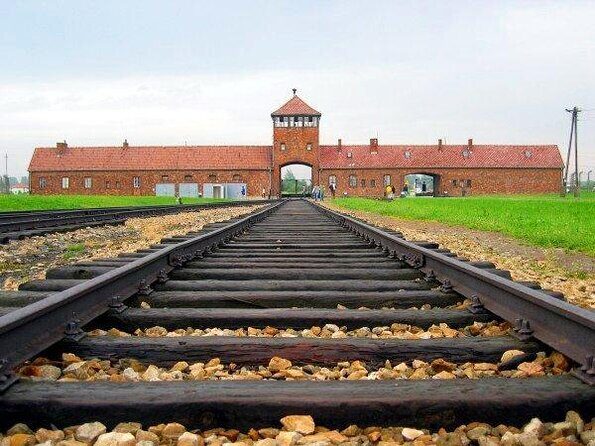
The core experience is both direct and structured. You’ll go into Auschwitz I first, starting through the gate at the concentration camp that began as a detention site after Germany annexed Poland in 1939. Then you’ll continue to Birkenau (Auschwitz II), the larger camp built to serve the Nazis’ plan to make Europe Judenrein, with the guide’s story carried by a licensed, museum-approved presentation. One drawback to plan around: it’s often cold and a lot of the route is outdoors, so you’ll feel every minute unless you dress like you mean it.
In This Review
- Key things to know before you go
- The real value: hotel pickup plus a calm plan for a heavy day
- What I like most
- A consideration to keep in mind
- The drive from Krakow to Oswiecim: why the timing feels right
- Auschwitz I: entering through the gate, with headsets and a museum-licensed guide
- Why this structure is valuable
- A small practical note
- The short break and transfer to Birkenau: plan for snack time
- Birkenau (Auschwitz II): the larger camp, the story of selection, and why 90,000 matters
- The ending note: liberation and closure
- Group size, headsets, and the guide handoff: what you’re really paying for
- Practical tips that make the day easier (and kinder to yourself)
- Should you book this Auschwitz & Birkenau tour from Krakow?
- FAQ
- Do I need my passport or ID for this tour?
- When will the pickup time be confirmed?
- Is food included?
- Is there an outdoor portion, and should I dress for weather?
- Can I take photos?
- How does pickup work if my hotel is in a restricted traffic zone?
Key things to know before you go
- Hotel pickup in Krakow, with a practical plan if your hotel is in a traffic-restricted zone
- Headsets for clear listening during the guided museum sections
- Small groups (up to 30) to keep the visit manageable and respectful
- Auschwitz I then Birkenau with a short break between the two areas
- Passport/ID name matching is mandatory for entry security checks
The real value: hotel pickup plus a calm plan for a heavy day
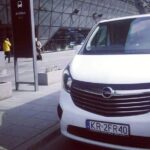
Auschwitz and Birkenau are emotionally intense. The last thing you need is to spend half your energy figuring out transport, ticket chaos, and meeting points while your nerves are already on edge. This tour handles the “how do I get there and stay organized” part with round-trip transfer from Krakow in an air-conditioned van or mini-bus.
Pickup is arranged from a nearby accessible point when your Krakow hotel sits in a restricted traffic area. The exact time is typically confirmed the day before, in the afternoon at the latest, and you’ll get updates so you’re not left guessing. That matters, because the tour depends on museum entry timing and the road back.
Also, the group size cap matters. You’re not dropped into a giant crowd and told to follow the strongest people. The museum’s own rules keep the visit comfortable (up to 30 people), and that makes a difference when you’re trying to listen and absorb what you’re seeing.
You can also read our reviews of more guided tours in Krakow
What I like most
- Pickup takes the stress off you. You show up, you go, you come back.
- You hear the guide clearly thanks to headsets, so you don’t miss context when the day gets busy.
A consideration to keep in mind
- Departure times can change. Auschwitz Museum controls schedules, and traffic happens. The operator notes your booked time is tentative.
The drive from Krakow to Oswiecim: why the timing feels right
Oswiecim is about an hour and 15 minutes each way (65 km). That travel time helps set expectations: you’re not just “going for an afternoon.” You’re committing to a full day that includes entry security, guided walking, and a transfer between two sites.
This tour runs in all weather. Up to about 70% of the visit takes place outdoors, which is exactly why packing for cold—or at least dressing for it—matters. People often remember the emotional content, but the comfort part still affects how well you can listen.
If you go in winter, you’ll likely understand why a simple tip like wrapping up warm shows up in reviews. Even with good logistics, cold air and wind at Birkenau can slow you down mentally. Dress in layers, bring water on warmer days, and plan for the fact that sitting in a van won’t replace being outdoors for long stretches.
Auschwitz I: entering through the gate, with headsets and a museum-licensed guide
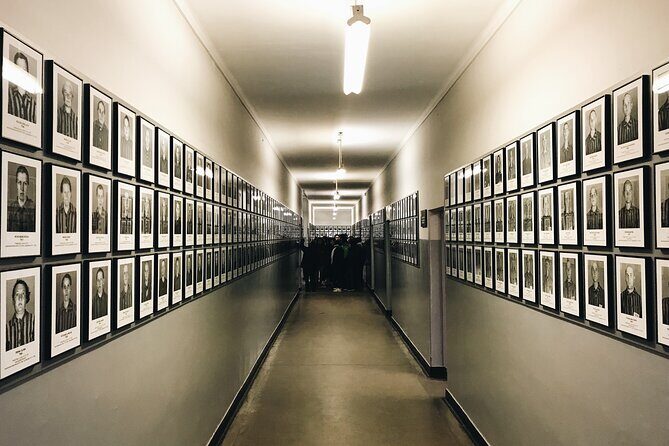
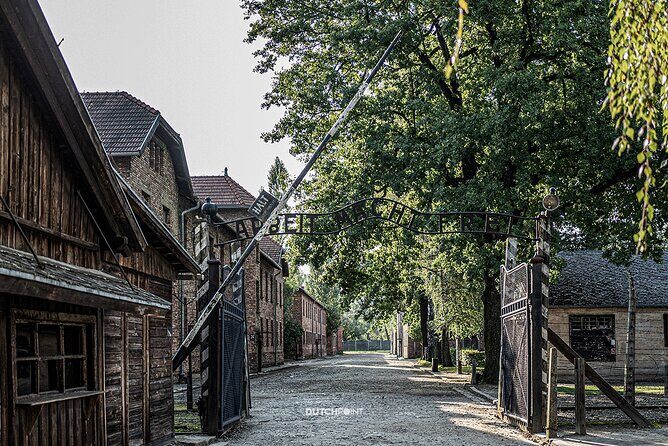
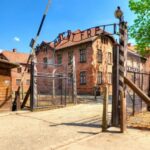
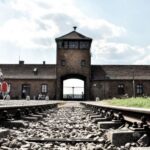
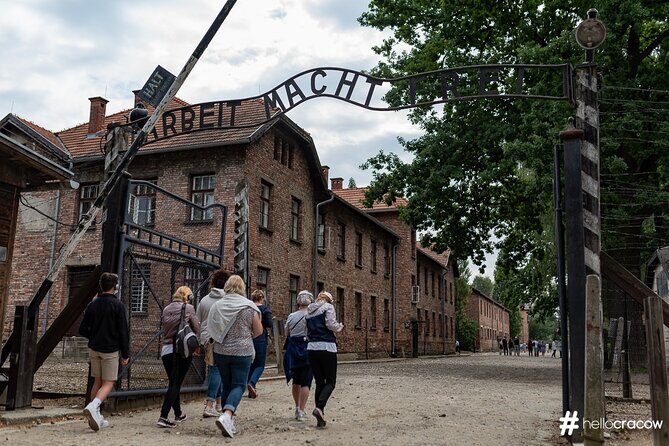
The tour begins at Auschwitz with you walking through the main gate area. Auschwitz I originally functioned as a concentration camp concept and then a detention center after Germany annexed Poland in 1939. The sign “Arbeit Macht Frei” appears at the entry point, and the guide uses that moment to set the history in motion.
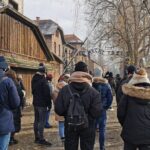
You’ll spend about 2 hours in Auschwitz I. This is also the part where the tour’s listening setup really pays off. Headsets help you hear the guide clearly, which is important because the camp layout can get crowded and because some people step into the same space to read plaques or signage.
What you’ll see is heavy and specific: original wooden buildings, fortified walls, barbed wire, and the locations connected to gas chambers and crematoria. You’re not just touring rooms—you’re walking through a system designed for terror and mass murder.
Why this structure is valuable
Auschwitz I gives the framework. It’s where you learn how the camp system worked and how it expanded. The guide’s job is to connect details to the bigger story, without turning the site into a checklist.
A small practical note
There are limits on how much time you’ll have to read every information panel on your own. The tour pace is designed around the official guidance and timing. If you want extra time for reading, you might feel that urge here, but the tradeoff is a smoother flow through both sites.
The short break and transfer to Birkenau: plan for snack time
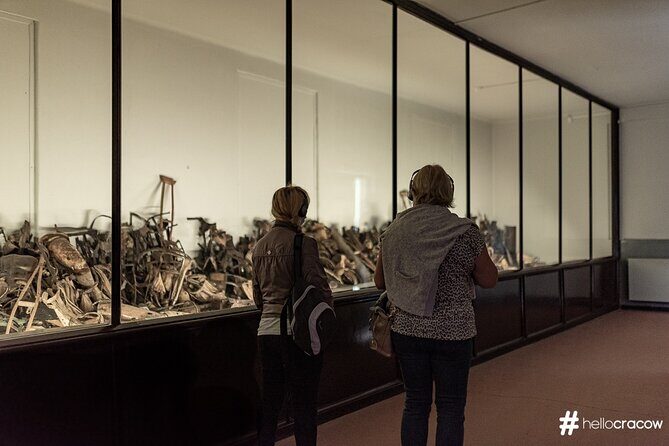
After Auschwitz I, you get a short break—up to about 15 minutes—before heading to Birkenau. The transfer between the two areas is only a few minutes, but the rhythm still matters: you’ll want your brain switched from one set of images to the next.
There’s also an on-site reality check: no full meal time is built into the day, and there aren’t food facilities in a way that supports a real lunch plan between visits. Bring a snack. If you skip that, you’ll spend mental energy on hunger instead of learning.
If you prefer a bit more control, some people choose to order lunch options from the operator ahead of time. The key point is simple: you’ll want something small and portable.
Birkenau (Auschwitz II): the larger camp, the story of selection, and why 90,000 matters
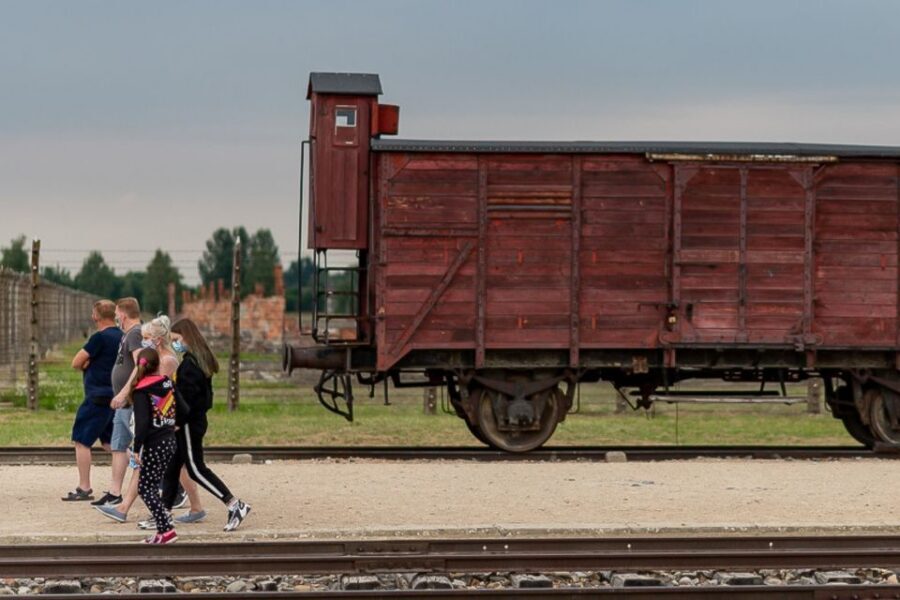
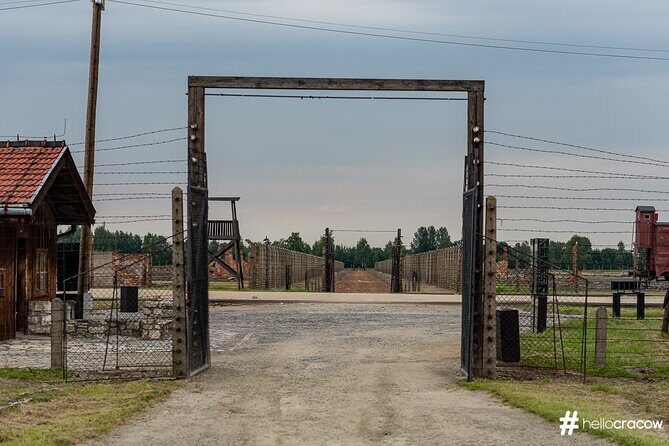
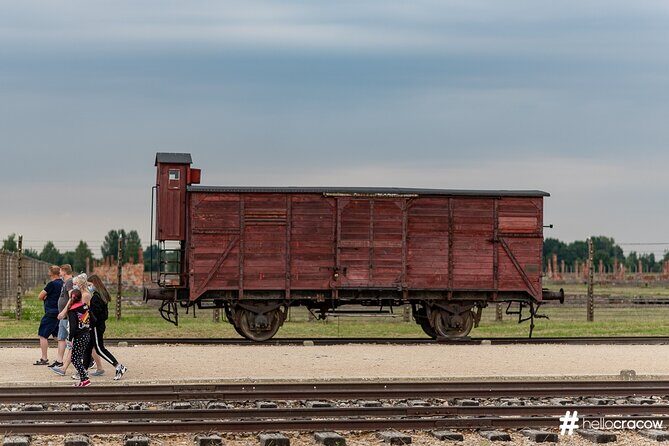
Birkenau is where the scale becomes harder to grasp. Auschwitz II was built starting in 1941 on the order of Heinrich Himmler, and it was designed for the Nazis’ plan to make Europe “Judenrein.” The tour frames Birkenau around capacity and intent, including the fact that the camp could hold around 90,000 prisoners.
You’ll have about 1 hour 30 minutes here as part of the guided presentation. The route includes lecture-style explanation in Brzezinka (Birkenau) and the guide’s account of terrible living conditions, cruel selections, and pseudo-scientific medical experiments associated with prominent Nazi doctors, including Josef Mengele.
The emotional weight here can feel different than Auschwitz I, partly because Birkenau’s openness and outdoor exposure make it more “visible” at a distance. The guide’s role is crucial: it helps you anchor what you’re seeing to what it meant.
The ending note: liberation and closure
The tour concludes after the Birkenau portion with the story of liberation—specifically the opening of Auschwitz by the 60th Army of the First Ukrainian Front on January 27, 1945. It’s a final historical point that leaves you with the stark message that this genocide must never happen again.
Group size, headsets, and the guide handoff: what you’re really paying for
At $35.07 per person for roughly a 7-hour day, the price isn’t just a ticket. It’s logistics and stress management plus official museum entry planning. You’re paying for:
- round-trip transport from Krakow in an air-conditioned vehicle
- museum admissions for Auschwitz I and Auschwitz II
- headsets so the guide is heard
- a licensed, English-speaking guide associated with the Auschwitz-Birkenau Museum
You also get support if something goes sideways. The operator includes professional assistance in case of issues. That’s not a small thing on a day with airport-style security checks and tight museum entry windows.
In reviews and common on-the-ground experiences, certain guide-and-driver names show up often—Sebastian, Christoph, Michal, Patryk, Damien, Wojciech, and Victor. Even when the exact person varies by date, the format stays consistent: driver gets you there and back smoothly; the museum-licensed guide leads the camp sections.
Practical tips that make the day easier (and kinder to yourself)
Auschwitz isn’t a “power through it” experience. It’s more like an endurance day where the goal is to stay present. Here are the practical pieces that help:
- Bring a snack. You won’t have time for a full meal between Auschwitz I and Birkenau, and you shouldn’t plan on food facilities to save you.
- Use real outerwear. With up to 70% outdoors, you’ll regret light clothing in cold months.
- Expect security screening. There’s an airport-style check before entering the Auschwitz-Birkenau Museum.
- Dress smart casual. The tour expects respectful attire; avoid anything that feels careless or too casual.
- Know the photo rules. Photography is allowed except in marked areas. Flash is not permitted inside buildings.
And one more thing: if your mind is sensitive to intense material, go slowly. Don’t force it. The tour structure gives you the guidance; it doesn’t require you to absorb everything in one go.
Should you book this Auschwitz & Birkenau tour from Krakow?
Yes, if you want a solid, organized way to visit both camps without wasting your day on transport and meeting-point stress. This is a strong pick for first-time visitors who value hotel pickup, headsets, and a small-group format (up to 30) that keeps the experience readable and respectful.
I’d think twice if you’re trying to cram this in around a fixed schedule, because departure times can shift with museum entry slots and traffic. Also, if cold weather or long outdoor stretches are a deal-breaker for you, plan for serious layers.
Overall, this tour feels built for the way real days work: you get official guidance, manageable group size, and logistics handled—so you can focus on what you came to witness and understand.
FAQ
Do I need my passport or ID for this tour?
Yes. Full names must match your passport or ID exactly, and each participant needs a passport or ID for entry. Without matching ID, you may not be allowed in.
When will the pickup time be confirmed?
Pickup hours are tentative at booking. The exact pickup time is confirmed the day before the tour, in the afternoon at the latest.
Is food included?
No. There’s no time for a full meal between Auschwitz I and Auschwitz II, so you should bring a snack.
Is there an outdoor portion, and should I dress for weather?
Yes. Up to about 70% of the visit takes place outdoors, and the tour runs in all weather, so dress appropriately and bring warm layers if it’s cold.
Can I take photos?
Photography is allowed except in marked areas. Flash is not permitted inside buildings.
How does pickup work if my hotel is in a restricted traffic zone?
Some Krakow hotels are in traffic-restricted zones. Pickup is arranged from the nearest accessible point, and you’ll be informed in advance.