Silesia has layers, and this tour shows them fast. Katowice’s old streets sit right on the line between cultures, so you’ll get a clear picture of how the region shifted over time—especially in the way your guide connects buildings, religion, and politics. I really liked the way this walk balances big landmarks with street-level details, and I also appreciated the personal storytelling style from my guide, Malwina. One thing to plan for: you’ll be on your feet for about 6.5 km, so comfortable shoes matter.
The best part is how the route keeps changing tone. You start in the mood of the Market Square and the city’s theater-and-shopfront energy, then you slow down for churches, an academy, parliament, and memorials that explain Silesia’s identity in plain terms. The tour ends back where you began, so you don’t have to fight with transit at the finish.
In This Review
- Key highlights
- Silesia’s borderland story: why Katowice feels different
- Paying $81.62: what you actually get (and what makes it fair)
- The walking pace: 6.5 km, moderate fitness, and good footwear
- Starting at Silesian Theatre: Market Square as your anchor point
- Kosciol Mariacki (Immaculate Conception Church): art inside, meaning in both
- Academy of Music + Silesian Parliament + a local theater stop
- Cathedral of Christ the King: the outside-inside contrast that explains Silesia
- Stawowa route: tenements, an old high school, and the 1939 scouts memory
- Silesian Insurgents’ Monument + Spodek: from uprisings to the city symbol
- Who should book this Katowice Old Town walking tour
- Should you book this walking tour?
- FAQ
- How long is the Katowice Old Town Walking Tour?
- How far do you walk during the tour?
- Is the tour offered in English?
- Is this tour private?
- Are any admissions included?
- Where is the meeting point?
- What’s the weather policy?
- Can you cancel and get a full refund?
Key highlights
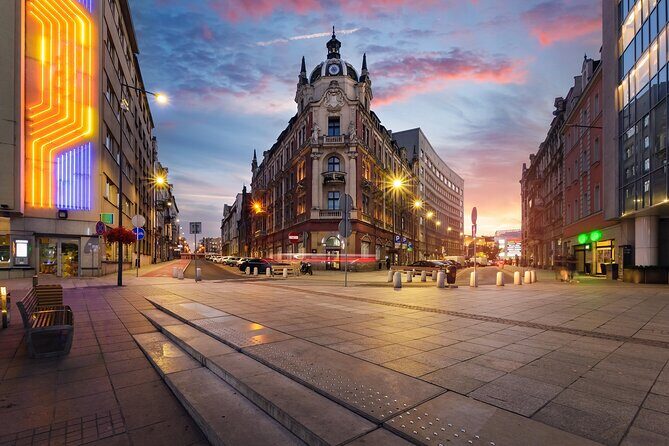
- Market Square orientation in Katowice’s oldest core with a mix of theater, historic building fabric, and modern street life
- Kosciol Mariacki (Immaculate Conception Church) where outside drama meets inside art by top Polish artists
- A route that mixes culture and power: Academy of Music, Silesian Parliament, and a local theater stop
- The Cathedral of Christ the King’s inside-outside contrast reflecting Silesia’s blended roots
- Stawowa area stops: 19th-century tenements, an old high school, and a Nazi-era scouts memorial
- Spodek and the Silesian Insurgents’ Monument for the city’s symbol and its memory of uprisings
Silesia’s borderland story: why Katowice feels different
Katowice’s old town doesn’t work like a one-note “look at the pretty square” kind of place. This region has been shaped by shifting control and shifting faiths, and that shows up in the city’s buildings and the way people talk about them. In plain language, you’ll hear how Silesia kept changing hands between Slavs and Germans—plus what that meant for everyday life, not just rulers.
I love that the tour uses architecture as a translator. Instead of facts that stay trapped in your head, you see how different eras left their fingerprints: a church that looks one way from outside and reads differently inside, civic buildings tied to regional autonomy, and memorials that tie personal identity to big historical moments. If you like travel where you leave with a mental map of how a place became itself, this walk delivers.
And because it’s a guided walk, the story stays cohesive. You’re not wandering and guessing which building matters. You’re walking through a sequence designed to help you understand Katowice as a Silesian city, not just a stop.
You can also read our reviews of more walking tours in Krakow
Paying $81.62: what you actually get (and what makes it fair)
The price is $81.62 per person for about 3 hours. For a walking tour, that’s not “cheap,” but it’s not random either. You’re buying two things: a private group experience and a guide who stitches the details together into a story you can use.
Here’s the value logic I’d follow:
- Many listed stops include admission tickets free, so you’re not paying extra at multiple points.
- It’s offered in English, which can matter a lot when you’re trying to understand political and religious symbolism quickly.
- You get private tour/activity, meaning only your group participates. That usually helps with pace and questions, especially if you care about what you’re seeing.
- You also get a mobile ticket, which tends to reduce friction on the day.
One practical note: you’ll still want to budget a little for your own snacks or drinks if you want to stop for refreshments along the way. The route passes areas known for eating and drinking, but that part isn’t included.
The walking pace: 6.5 km, moderate fitness, and good footwear
This is a 6.5 km walk over about 3 hours. That’s a solid “active afternoon,” not a stroll. The good news is it’s structured with short stops, so you’re not stuck in one long stretch without breaks.
Plan for moderate physical fitness. If you’re used to city walking, you’ll likely be fine. If you’re more limited, you may want to consider a different format—but there’s no option listed for reduced-distance on this specific tour, so your best move is to come prepared and take shoes that handle uneven sidewalks.
Also, weather matters here. The experience requires good weather, so check forecasts and be ready for a date change if the tour can’t run due to poor conditions.
Starting at Silesian Theatre: Market Square as your anchor point
You start at Silesian Theatre, Rynek 10, 40-003 Katowice—right in the Market Square zone. This is a smart starting position because it gives you orientation immediately. From this core, the rest of the walk makes sense: civic buildings, churches, and memorial spaces all radiate from this old-town center.
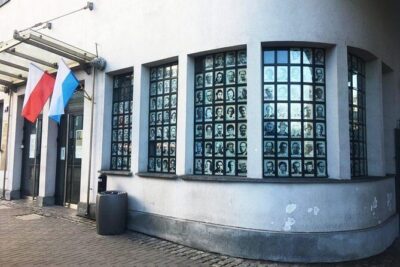
At the first stop, you’ll take in the Silesian Theater and learn how older structures shape the feel of the square. You’ll also pass by Skarbek and Zenit, described as a “shopping dream place” from communistic Poland. Even if you’re not into architecture nerding, those names and that era help you understand how the city looked when it was being planned with different social priorities.
There’s also a mood shift you should notice. The stop describes the area as a place for “party” energy—eating and drinking spots and the kind of street life that feels local rather than staged. If you want to get a feel for Katowice quickly, this is where you do it.
Kosciol Mariacki (Immaculate Conception Church): art inside, meaning in both
Next up is Immaculate Conception Catholic Church (Kosciol Mariacki). From outside, the architecture is described as breath-taking—enough to stop you in your tracks. But the real pay-off comes when you consider what the guide frames for you: the church is also where you see artworks of top Polish artists inside.
This is one of those stops where listening matters. Religious art can feel overwhelming if you don’t know what you’re looking at. The guide’s job is to point you toward the details that carry meaning, so you don’t just admire the building—you understand why it’s important in Silesian Catholic life.
Time here is short (about 10 minutes), so go in with a quick mindset: don’t try to see everything. Instead, follow the guide’s focus points, and you’ll leave with a sharper sense of what the church communicates.

Academy of Music + Silesian Parliament + a local theater stop
The tour then moves into a “culture and politics” stretch that helps you understand how Silesia organizes its public life.
First, you’ll visit the Academy of Music in Katowice, described as the most prestigious music academy in Poland. Even if you don’t attend concerts, stopping here gives you a sense of what the city values. Music is not just entertainment; it’s a way a community trains talent and keeps traditions alive.
Then you reach Silesian Parliament, the former seat of parliament of the Autonomous Silesia Region. This is the political backbone of the region’s identity, and it’s valuable because it puts the autonomy story in physical context. You’re not reading about self-rule; you’re standing where civic authority used to operate.
Right after, you’ll also pass a local’s favourite theater with an informal vibe. The name isn’t given in the provided details, but the intent is clear: this stop adds a human-scale layer. It tells you Katowice doesn’t treat culture as something distant. It’s part of daily life.
If you’re into cities where arts and governance overlap, you’ll like how the tour keeps switching gears without losing continuity.
Cathedral of Christ the King: the outside-inside contrast that explains Silesia
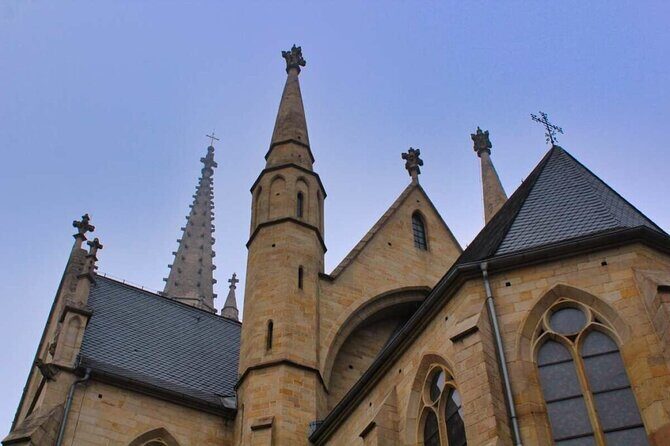
The Cathedral of Christ the King is described as Catholic-like from the outside, but Protestant-like inside. That single sentence is the kind of clue that makes a borderland city click in your brain.
This stop matters because it’s not just a visual contrast. It represents the mixed origins of the Silesia region and its spirituality. So instead of treating religion as separate “teams,” the guide frames it as overlapping roots—something you can read in the building’s shape, structure, and feel.
You get about 10 minutes here. That’s enough time to grasp the key visual message, but you’ll want to stay mentally flexible. If you walk in expecting a single-style church experience, you might need a moment to adjust to what the space is communicating.
It’s a good stop for anyone who likes understanding a place through contrasts, not through one big story.
Stawowa route: tenements, an old high school, and the 1939 scouts memory
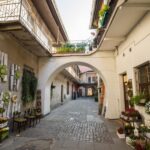
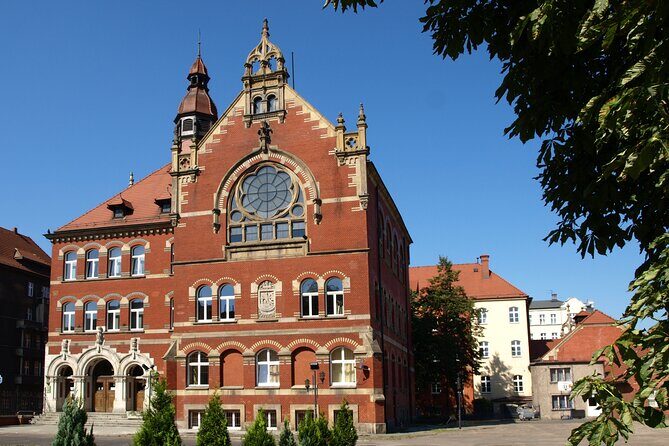
One of the longest sections is the walk toward Stawowa, with a purposeful route through Miarka Square, Dworcowa street, and 3 maja street. This segment is about texture—19th-century tenements, older street lines, and everyday architecture that tells you how people lived when the city was changing.
You’re also guided to the oldest high-school in Katowice along this area. School buildings may not sound dramatic, but they’re a powerful marker of what a city invests in long-term: education, continuity, and local identity.
Then comes a memorial detail that adds real weight. There’s a Monument commemorating Silesian scouts opposing Nazis in 1939. Memorials are often treated like “just another statue,” but this one is meant to connect community youth resistance to the broader Silesian wartime story. If you care about remembering history without turning it into a lecture, this is a strong stop.
Finally, the Stawowa area is described as a venue for art exhibitions, international meetups, and other events. That makes the location more than a memory stop. It becomes a living space where culture continues in the present, not only a page in the past.
Silesian Insurgents’ Monument + Spodek: from uprisings to the city symbol
The walk finishes with two stops that give Katowice a stronger “today” feeling.
First is the Silesian Insurgents’ Monument (Pomnik Powstańców Śląskich). It commemorates three Silesian uprisings. Even in a short 10-minute window, this monument is worth your attention because it reframes Silesian identity as something people defended in multiple waves, not just once.
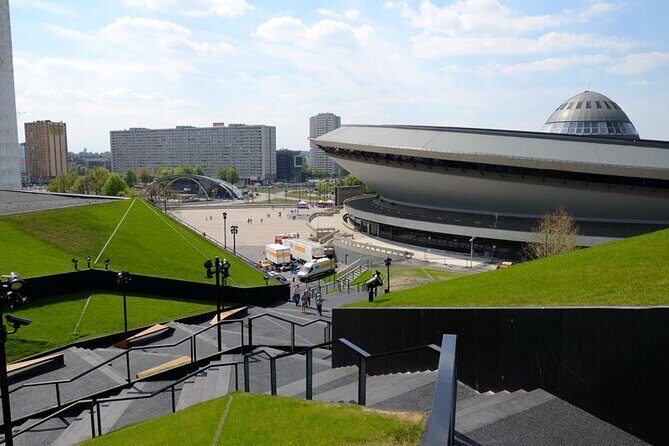
Then you reach Spodek, described as the symbol of the city. Spodek tends to act like a visual shortcut: you look at it and instantly understand you’re in a modern Katowice, even though the tour has just spent time in older cores and religious buildings.
This pairing works well. Uprisings and a sports/arena-style symbol feel far apart, but on the map of the tour they connect: past conflict fuels present identity, and the city expresses that identity through modern landmarks too.
Who should book this Katowice Old Town walking tour
This tour is a great fit if you:
- Want a short, focused walk (about 3 hours) that actually explains what you’re seeing.
- Care about Silesian culture and identity—especially the way faith and politics overlap.
- Like architecture and memorials that come with context, not just sightseeing.
- Prefer a private setup where your group gets attention and can move at a comfortable pace.
It’s less ideal if:
- You hate walking and don’t want a 6.5 km route.
- You’re traveling when weather is unpredictable and you can’t be flexible with a rescheduled date.
The tour is offered in English and is set up as a group activity with a confirmation timeline of within 48 hours of booking (based on availability). It also notes it’s near public transportation, which is helpful if you’re coordinating other plans.
Should you book this walking tour?
I’d book it if you want an efficient way to understand Katowice as a Silesian borderland city—where churches, civic buildings, and memorials all tell one connected story. The best reasons to choose it are the guide-led clarity and the structure that keeps you from wandering without direction.
If you’re on the fence, compare your priorities:
- If you want a personal, English-speaking explanation plus free-admission stops, this is a strong value play for $81.62.
- If your goal is only photos and quick landmarks, you might find a less structured route more your style.
FAQ
How long is the Katowice Old Town Walking Tour?
It’s about 3 hours.
How far do you walk during the tour?
You walk about 6.5 km.
Is the tour offered in English?
Yes, the tour is offered in English.
Is this tour private?
Yes. It’s a private tour/activity, and only your group participates.
Are any admissions included?
The tour description lists admission tickets as free for each included stop.
Where is the meeting point?
The meeting point is Silesian Theatre, Rynek 10, 40-003 Katowice, Poland.
What’s the weather policy?
The experience requires good weather. If it’s canceled due to poor weather, you’ll be offered a different date or a full refund.
Can you cancel and get a full refund?
Yes. You can cancel up to 24 hours in advance for a full refund.