REVIEW · KRAKOW
Krakow: Jewish Ghetto Guided Tour
Book on Viator →Operated by excursions.city · Bookable on Viator
A short walk with heavy meaning. This Kraków Jewish Ghetto guided tour brings the Podgórze story to life through key remnants and memorials you can’t easily piece together on your own. You’ll move on foot through places like the Ghetto Wall fragment and the Chair Memorial, guided in English so the facts land without you doing homework first.
Two things I especially like: the tour saves you serious research time by pointing you to the most important moments, and you never have to worry about navigation—the guide handles the route. I also appreciate the way guides (like Olga and Phil) keep the pace steady and the story clear, including the human stakes behind each site. One drawback to consider: today the area is not preserved like a time capsule. Some things you’ll see are fragments and memorial markers, not the full original street grid you might picture.
In This Review
- Key things to know before you go
- Why this Kraków Jewish Ghetto walk is such good value
- The meeting point and your first 10 minutes matter
- Stop 1: The Ghetto Wall fragment and what you should notice
- Stop 2: Ghettos Heroes Square and the Chair Memorial
- Stop 3: Under the Eagle Pharmacy and the Museum of Krakow angle
- What the guide adds: pacing, clarity, and respectful tone
- The walk itself: short route, real context
- Who this is best for (and who may want something else)
- Weather, clothing, and comfort you can plan for
- Practical value checklist before you book
- Should you book this tour of the Kraków ghetto?
- FAQ
- FAQ
- How long is the Kraków Jewish Ghetto guided tour?
- What is the price per person?
- Is the tour offered in English?
- Where do I meet the guide, and where does the tour end?
- Does the tour include admission fees?
- What should I bring or wear?
- What if I arrive late?
- Is the tour near public transportation?
- Can I cancel for a refund?
Key things to know before you go
- 1-hour, 3-stop walking route with a focused focus on the ghetto’s most meaningful markers
- English-only guide with a group cap of 20 people, which keeps questions easy
- Free admission at the first two stops, while the Eagle Pharmacy museum ticket isn’t included
- Weather-proof format: rain or shine, the tour goes ahead
- Comfortable shoes help because this is real walking on city sidewalks
Why this Kraków Jewish Ghetto walk is such good value
At about $15.60 per person for roughly one hour, this is one of those tours that feels practical, not just performative. You’re not paying for a long bus ride or a big “see everything” promise. You’re paying for a tight route with interpretation—plus the guide takes care of where to go next.
The value gets better because part of the tour uses free-to-enter sites. The ghetto wall fragment stop includes admission free, and the Chair Memorial area is also free. The only built-in paid component is the Eagle Pharmacy museum segment, where admission is not included. In other words, you can budget the base price confidently, then decide whether you’ll add the museum ticket when you’re standing there.
And because it’s a walking tour, you reach areas that car-only routes often miss. The guide’s route is designed for understanding, not just sightseeing. You get a sense of how confinement and movement affected daily life, rather than treating the ghetto as a list of landmarks.
You can also read our reviews of more guided tours in Krakow
The meeting point and your first 10 minutes matter
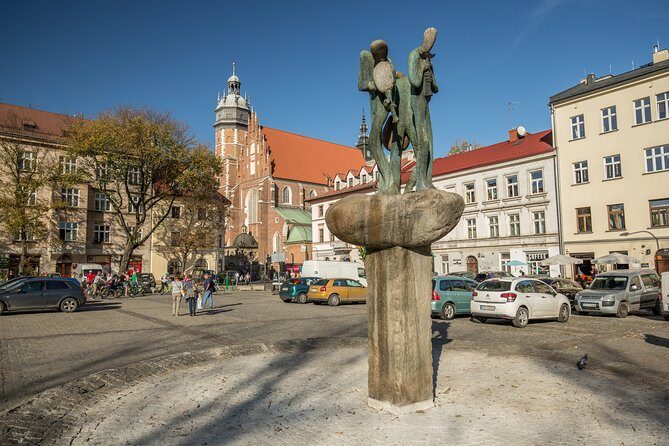
This tour starts at Lipowa 4, 32-051 Kraków, Poland and ends near Apteka pod Orłem, Plac Bohaterów Getta 18, 33-332 Kraków.
You’ll want to arrive about 10 minutes early. Once the group departs, latecomers can’t join, and tickets can’t be refunded. It’s a small thing, but it can make or break your day—especially if you’re combining this with another popular Kraków stop earlier.
The good news: the starting area is near public transportation, so you shouldn’t have to stress about parking or complicated transfers.
Stop 1: The Ghetto Wall fragment and what you should notice
Your first stop is the remains of the Ghetto Walls. This is one of those locations where the details do most of the talking.
Even if the wall fragment looks smaller than you imagine from photos, it still hits hard because it’s physical proof of separation. The guide uses the fragment as a starting point for explaining how boundaries were created—then how those boundaries shaped daily life. The point isn’t just what happened, but how confinement worked on the ground.
This stop is scheduled for about 20 minutes. With a good guide, that’s enough time to slow down, look closely, and understand why it matters—without dragging the tour out.
Also, admission at this stop is ticket free, so you can focus on the guide’s explanation rather than squeezing in a purchase.
Stop 2: Ghettos Heroes Square and the Chair Memorial
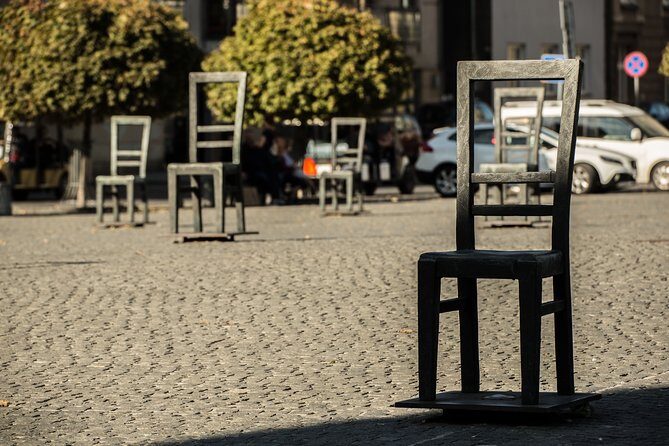
Next you’ll walk to the Square of Ghettos Heroes, where deportations to extermination camps took place. This square is marked by the Chair Memorial, with each chair representing lives lost.
What I like about this stop is the way it translates scale. Large tragedies can feel vague until you see a design meant to represent individual absence. The chairs make the story easier to grasp in your body, not just in your head.
Expect another 20-minute segment here. Since admission is free, you’ll spend your time listening and reading the memorial context without extra steps.
One practical note: squares can feel windy and exposed, so if the weather is rough, plan your clothing accordingly. (The tour still runs—just be ready for the elements.)
Stop 3: Under the Eagle Pharmacy and the Museum of Krakow angle
Across the square stands Under the Eagle Pharmacy, tied to the story of Tadeusz Pankiewicz and his staff, who helped ghetto residents by preserving medicine and hope.
This is where the tour adds a different kind of perspective—still grounded in WWII reality, but focused on rescue and resistance rather than only confinement and loss. The message isn’t sugarcoated. It’s about what people did when the situation was unbearable.
Important logistics: admission for the Museum of Krakow / Eagle Pharmacy portion is not included. So if you want that museum content, you’ll need to plan for an extra ticket purchase on site (or check in advance if the museum has separate ticket rules).
This last stop rounds out the tour neatly: you start with boundaries, move to deportation memory, then end with a story of courage and survival efforts. At about 20 minutes, it’s enough time to absorb the narrative without turning the experience into a long museum marathon.
What the guide adds: pacing, clarity, and respectful tone
A guided tour is only worth it if the guide makes the story understandable without flattening it. This is where the experience earns its top marks.
I’ve seen guides vary wildly in how they handle sensitive history. Here, the consistent pattern is calm pacing and clear explanations—people mention guides using an approachable tone, taking their time with important points, and making room for questions. Guides like Anna, Olga, and Phil stand out in the way they connect details into a story you can follow.
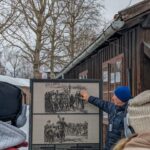
One specific detail worth knowing: some guides use printed images to help you understand the context as you’re standing near the sites. That’s a smart way to handle something hard to visualize. When you can compare what you’re seeing now with what the area meant then, the tour becomes easier to hold onto.
Also, because the group size is capped at 20, it’s not a free-for-all. You get the energy of a small group with enough social breathing room to ask questions when something doesn’t make sense.
And yes—one thing to keep in mind: the tour is guided in one language (English). If you’re counting on bilingual explanation, this may not be the fit.
The walk itself: short route, real context
The tour is about one hour total and structured around three 20-minute stops. That makes it a good choice when your Kraków schedule is packed.
The route is designed for learning in sequence:
- you start with the physical boundary evidence,
- you move to the memorial marking deportation-era history,
- you finish with the pharmacy rescue story.
That flow matters. It prevents you from treating each location as a standalone photo. Instead, you start building a mental timeline.
It also helps that this is a walking tour. Car tours can point at spots from a distance. Walking forces you to slow down and notice the space between places—how close certain sites are, how far you have to travel, and how that affects what you feel.
Who this is best for (and who may want something else)
This is a strong fit if you:
- want an efficient way to understand Kraków’s ghetto story without doing a research deep-dive on your own,
- like walking tours where the guide directs your attention,
- prefer a guided pace that doesn’t rush, but still stays focused.
It can also be a great pairing tour with other Kraków WWII sites. Just give yourself time to arrive early. If your morning plan runs long, you could miss the start and lose your place—latecomers can’t rejoin once the group is gone.
Who might want a different format? If you’re expecting a perfectly preserved, museum-like reenactment of the ghetto streets, you may feel let down. This area today includes remnants and memorials, not a restored historical set. The tour will still be meaningful, but it won’t look like your imagination.
And because it’s English-only, language comfort matters. If you want interpretation in another language, check other tour options.
Weather, clothing, and comfort you can plan for
The tour goes ahead in all weather, rain or shine. That’s great because you’re not gambling with your itinerary.
So do the boring prep: check the forecast and wear shoes you can walk in for an hour. A practical tip that keeps coming up is simply to wear comfortable shoes, because sidewalks and memorial areas aren’t always smooth or flat.
Also consider layers. Kraków weather can shift. If you dress for comfort, you’ll focus better on the story.
Practical value checklist before you book
Here’s how I’d decide quickly:
- If you want guided interpretation that helps you understand what you’re seeing fast, this fits.
- If you want a route that’s short enough to still enjoy the rest of the day, this fits well.
- If you care about the Eagle Pharmacy museum, remember the admission isn’t included in the base tour price.
- If you dislike walking or need a fully indoor experience, you might find the outdoor memorial segments a mismatch.
One more scheduling thought: this kind of tour often books ahead. Planning in advance can help you lock in the time you want.
Should you book this tour of the Kraków ghetto?
I’d recommend booking this tour if you want a clear, respectful, efficient way to understand major ghetto locations in Kraków’s Podgórze area. The best part is that you don’t have to guess what each spot means. The guide connects the wall fragment, the deportation-era memorial, and the pharmacy rescue story into one understandable walk.
It’s also a good choice for first-time visitors because it reduces the risk of missing key places. You get a structured route, a steady pace, and a group size that doesn’t turn questions into a chore.
If you’re the type who needs the past to look exactly like the old photos, temper expectations: you’ll be seeing remnants and memorial markers, not a fully preserved streetscape. But if your goal is understanding—this tour delivers.
FAQ
FAQ
How long is the Kraków Jewish Ghetto guided tour?
It lasts about 1 hour.
What is the price per person?
The price is $15.60 per person.
Is the tour offered in English?
Yes, the tour is offered in English only.
Where do I meet the guide, and where does the tour end?
Meet at Lipowa 4, 32-051 Kraków, Poland. The tour ends at Apteka pod Orłem, Plac Bohaterów Getta 18, 33-332 Kraków.
Does the tour include admission fees?
Admission is free at the Ghetto Wall fragment and the Square of Ghettos Heroes area. Admission for the Eagle Pharmacy / Museum of Krakow stop is not included.
What should I bring or wear?
Wear suitable clothing and footwear for walking. The tour goes in all weather, rain or shine.
What if I arrive late?
Try to arrive 10 minutes early. If the group has departed, latecomers can’t join and tickets can’t be refunded.
Is the tour near public transportation?
Yes, it’s near public transportation.
Can I cancel for a refund?
You can cancel for a full refund up to 24 hours in advance. If you cancel less than 24 hours before the start time, the payment won’t be refunded.