REVIEW · KRAKOW
Krakow: Jewish Ghetto Walking Tour
Book on GetYourGuide →Operated by Thousand Miles Cracow Adventure Company · Bookable on GetYourGuide
Brick by brick, the past comes alive. This Krakow Jewish Ghetto Walking Tour takes you through the Poguzhe district where a WWII Jewish ghetto existed, with stops that make the story feel concrete: Ghetto Heroes’ Square, a surviving fragment of the ghetto wall, and a walk past buildings tied to crowded wartime life. I especially like that it ends at the famous Under the Eagle pharmacy, because it gives you something memorable to anchor the whole walk.
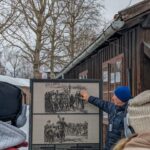
What makes it work is the live guide—and when guides like Aga share personal storytelling and local context, the buildings start to make sense fast. One thing to consider: the subject matter is heavy. If you want a light, casual stroll, this isn’t it. If you’re ready for a thoughtful, reality-based walk about displacement and the need to prevent it from happening again, you’ll probably find it deeply worthwhile.
In This Review
- Key Highlights You’ll Actually Remember
- Why This 1-Hour Krakow Jewish Ghetto Walk Works
- Meeting by Schindler Factory: Getting Oriented Fast
- Ghetto Heroes’ Square and the Deportation Checkpoints
- Surviving the Wall: The Fragment You Can Still See
- Walking Past Former Apartments in the Poguzhe District
- Under the Eagle Pharmacy: The Final Stop and Practical Tip
- Price and Value: What You Get for $15
- Who This Tour Fits Best (and Who Should Think Twice)
- Should You Book This Krakow Ghetto Walking Tour?
- FAQ
- How long is the Krakow Jewish Ghetto Walking Tour?
- What does the tour cost?
- Where do I meet the guide?
- What are the main stops on the tour?
- Is entry to Under the Eagle pharmacy included?
- What languages are available for the live guide?
- Is there free cancellation?
Key Highlights You’ll Actually Remember
- Under the Eagle pharmacy finale that turns the walk into a clear, memorable end point
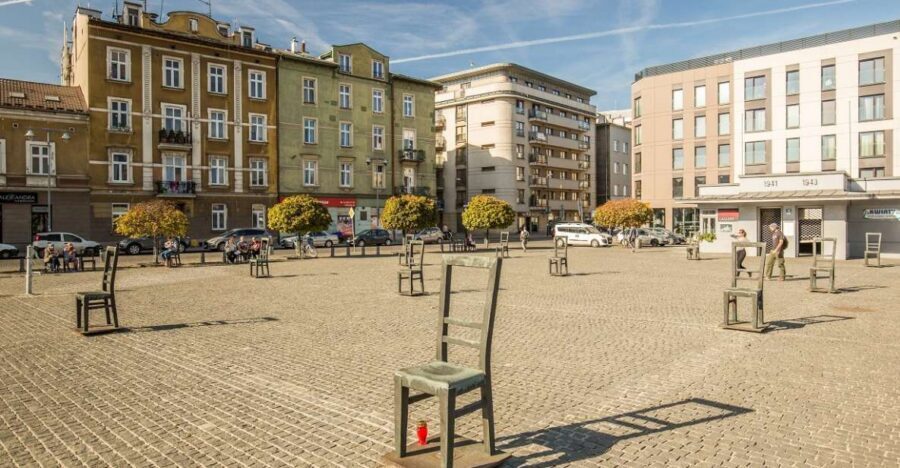
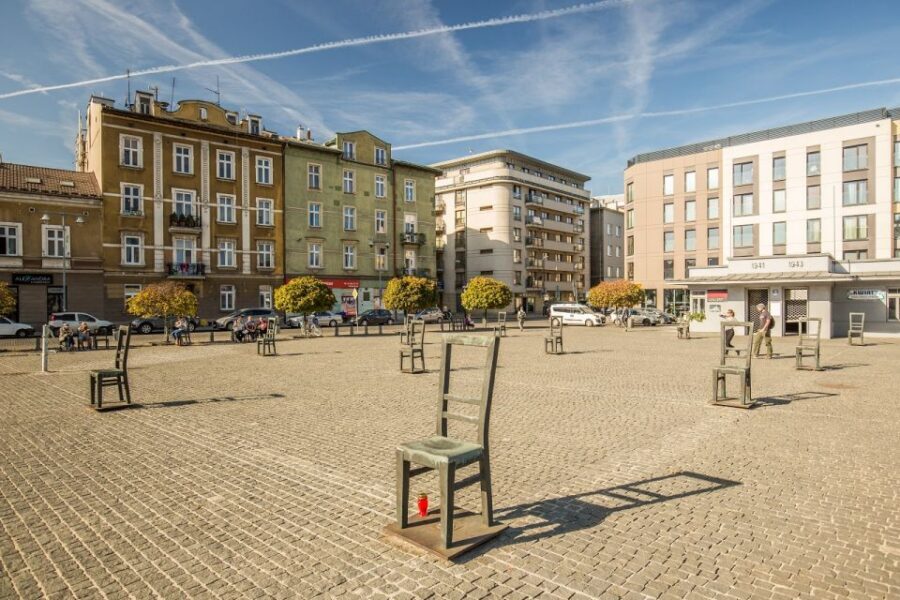
- Ghetto Heroes’ Square for the area where Jewish residents were identified and sent off to concentration camps
- A surviving ghetto wall fragment that now functions as a monument and pilgrimage spot
- Poguzhe district street-level context for understanding how daily life got squeezed into cramped buildings
- A one-hour format that fits well even when you’ve got a tight Krakow schedule
Why This 1-Hour Krakow Jewish Ghetto Walk Works
This tour is short on purpose: you get a focused walk (about 1 hour) that hits the most important remnants and locations. In a city full of major attractions, it’s easy to run out of time. This one helps you spend your time where it counts—on the places tied to the Jewish ghetto’s boundaries and the fate of residents—without turning your day into a marathon.
I also like how the route is built around “look closely” moments. You’re not just staring at old stones. You’re learning what you’re seeing and why it matters, from the square connected to deportations to the wall fragment that still marks the ghetto boundary. Then you finish at Under the Eagle, which feels almost unexpected at the end—but that’s part of the value. It prevents the tour from being only about trauma. It ends with something culturally iconic that stands in the same city as the tragedy.
There’s a practical side too: the live guide keeps the pacing humane. One review called out that the timeline feels right, which matches what you want on a walking tour—enough time for understanding, not so long that you rush through the meaning just to make the next stop.
You can also read our reviews of more walking tours in Krakow

Meeting by Schindler Factory: Getting Oriented Fast
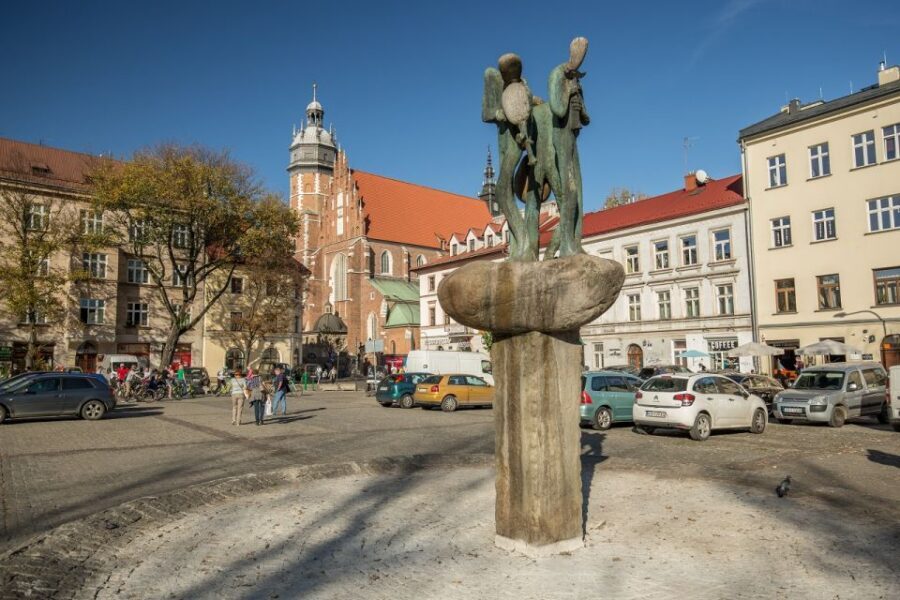
You meet at the entrance of the Schindler Factory Museum, and your guide will have an excursions.city sign. That’s a smart setup. Schindler’s story is closely tied to Krakow’s WWII reality, so starting nearby helps you build a mental map quickly before you head into the Jewish ghetto area.
From a practical point of view, starting at a known landmark matters. You’re not trying to hunt for a meeting spot on tiny side streets. Once you spot the sign, you can relax into the walk and let the guide do the work of connecting dots.
What I’d keep in mind: even though the meeting point is clear, the content is emotionally intense. It helps to arrive a few minutes early, take a breath, and get ready for a serious walk. If you start rushed or distracted, it’s harder to absorb the context.
Ghetto Heroes’ Square and the Deportation Checkpoints
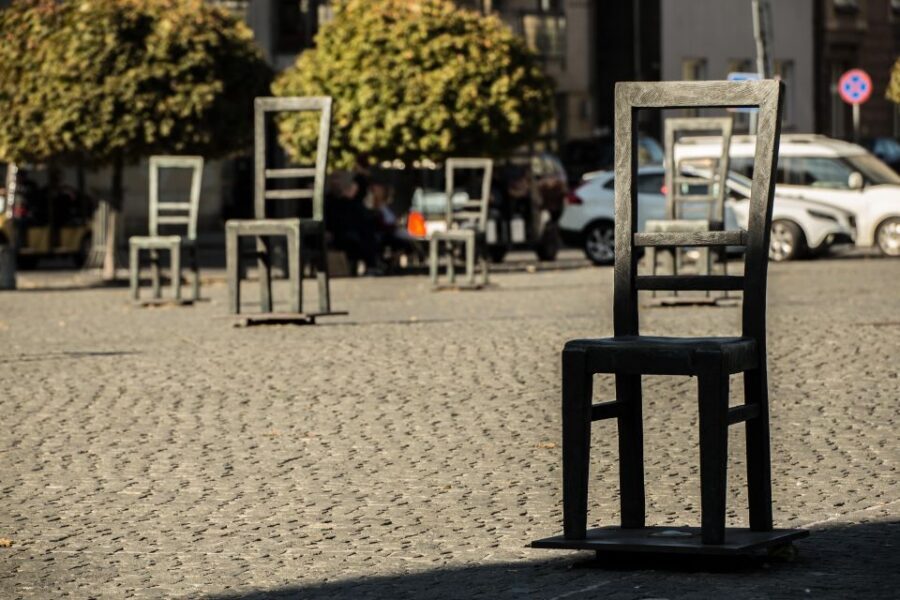
The walk begins building toward Plac Bohaterów Getta (Ghetto Heroes’ Square), a key area where Jewish inhabitants of Krakow were identified and then sent off to concentration camps. This is where the tour shifts from “historic area” to “events that changed lives.”
I love that the tour frames the square around process and consequence. It’s not vague. You’re told what happened there, and you’re also shown the meaning behind why the site is remembered. A square can sound too open-ended for something this grim, but that’s exactly why it matters. Public spaces were part of the machinery of persecution.
This stop is also where a good guide can really change your experience. If the guide is telling the story with care, you’ll start noticing how the space functions—where movement would have been, how people would have been separated, and why today’s memorial landscape carries weight. If your guide includes personal or lived context, it can make the names and locations feel less like a textbook entry and more like people you’re trying to understand.
Surviving the Wall: The Fragment You Can Still See
One of the most concrete highlights is seeing a remaining piece of the ghetto wall. It now serves as a monument and a place of pilgrimage for many Jewish visitors coming from abroad.
This is the moment where the tour becomes physical. Paper facts are one thing; a wall fragment in front of you is another. Even without extra signage from you, your brain starts doing the math: boundaries cut people off, they concentrate suffering, they control movement. A fragment can’t show the full scale of what stood here, but it can still make the idea of confinement real.
A small but important tip: when you reach this stop, give yourself a minute to look slowly. Let your guide finish the explanation, then do one more quiet scan of the surroundings. The point is not just to take in the wall fragment—it’s to understand how an urban environment can become an instrument of captivity.
This is also a good time to feel the contrast. Krakow is a beautiful city. That beauty can trick you into thinking history is “over.” This wall fragment resists that. It keeps the past close.
Walking Past Former Apartments in the Poguzhe District
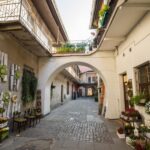
After the memorial square and the wall, the tour continues through the streets where thousands of displaced Jews used to live in cramped conditions. The Poguzhe district is central to this, and the tour uses it to help you understand the day-to-day reality behind the bigger story.
This is often where people learn more than they expect. From the street, you might see typical buildings. With the guide’s context, those same buildings become evidence: evidence of overcrowding, disruption, and how life can be stripped down until survival becomes the main plan.
I like this approach because it’s not only about the extreme events. It’s about how quickly normal life gets reduced. A guided walk can teach you to spot what you might otherwise miss: why certain structures feel like they were meant for something entirely different, or how the layout reflects limited space and forced proximity.
One practical consideration: the content can be emotionally exhausting. Plan for it. If you’re sensitive to WWII topics, take breaks during the walk in your head—pause, breathe, and keep going only as far as you can comfortably handle.
And if you have the chance to meet a guide with strong storytelling (some guests mention guides like Aga), that’s a bonus. Personal narrative can make the buildings feel readable, not random.
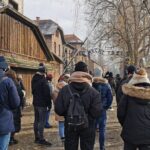
Under the Eagle Pharmacy: The Final Stop and Practical Tip
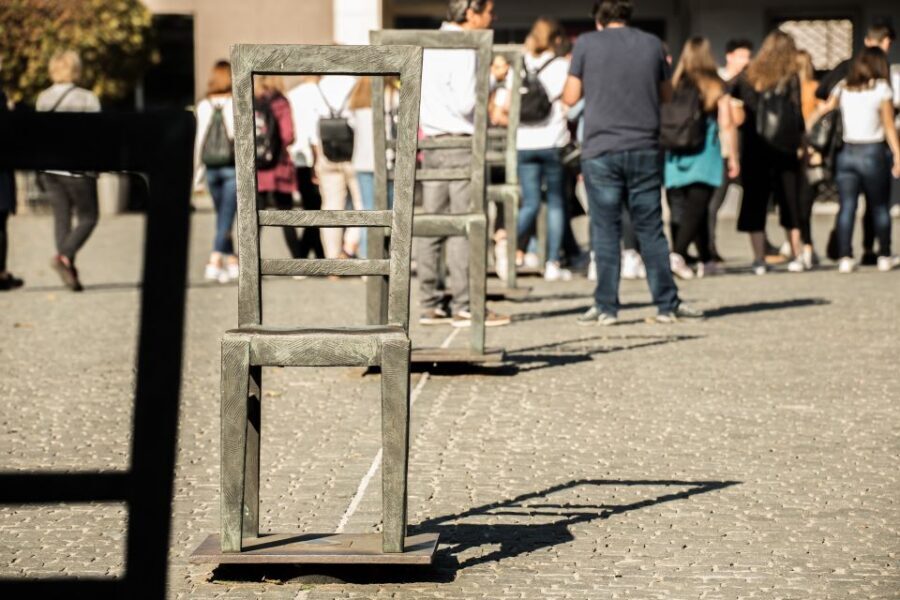
The tour ends at the famous Under the Eagle pharmacy. It’s a well-known Krakow landmark, and it works as a finale because it pulls you out of the most intense “site-of-horror” mode and back into everyday historical texture—what this city held before and during the war, and what still exists now.
One important detail: entry ticket to the Pharmacy Under the Eagle is not included. So if you want to go in fully and take your time inside, plan for possible extra payment at the site. The tour still takes you there, but you may need to handle the pharmacy admission separately.
Why this stop is worth your attention: it gives you a different kind of connection to place. Instead of only thinking about walls and deportations, you also get a living landmark—something that’s part of Krakow’s identity. That contrast can help you remember the bigger story without feeling stuck in grief.
If you’re the kind of visitor who likes to understand the meaning of a landmark, you’ll probably enjoy this ending. The guide’s explanation can help you see the pharmacy as more than a postcard stop.
Price and Value: What You Get for $15
At $15 per person for a 1-hour guided walk, this tour is priced like a solid “smart add-on.” You’re not paying for an all-day program. You’re paying for interpretation—someone to point you to the key sites and explain what they meant during WWII and what they mean now.
That interpretation is the value. Without a guide, it’s easy to walk past buildings and squares and only collect surface impressions. With the guide, you’re learning what to look for: the square connected to identification and deportations, the wall fragment that became a monument and pilgrimage site, and the surrounding urban fabric tied to cramped living conditions.
The guide is included, and the tour runs in multiple languages (Italian, English, Spanish, German, French). For many people, language coverage matters just as much as the price, because it affects how much you actually absorb in a short timeframe.
Is it “cheap” in the sense of skipping the important parts? No. But it’s not overpriced either, because you’re getting a tight route built around major historical markers plus expert narration. For $15, it’s a practical way to add depth to a Krakow day without derailing your schedule.
Who This Tour Fits Best (and Who Should Think Twice)
This is a good fit if you:
- want a short, structured walking tour rather than a half-day commitment
- like learning what you’re looking at, street by street
- want to connect Krakow’s WWII story to specific locations—not just general background
- prefer a guide-led experience, ideally with strong storytelling
It may be less ideal if you:
- need a carefree, light sightseeing mood
- struggle with heavy historical topics and want something more upbeat
That said, the emotional tone isn’t a surprise. The whole walk is designed to remember horrors of war and stress the need to prevent them from happening again. If that’s your goal, you’ll likely appreciate the seriousness.
Should You Book This Krakow Ghetto Walking Tour?
Book it if you want a focused, meaningful way to understand Krakow’s WWII Jewish ghetto locations in just an hour. The stops are specific and important: Ghetto Heroes’ Square, a surviving wall fragment, and the unforgettable Under the Eagle pharmacy as a finale. With the live guide included and multiple language options, you’re paying for clarity and context, not just movement.
I’d especially recommend it if you tend to walk through cities quickly and want to slow down for the right reasons. This tour helps you slow down in the places where slowing down actually changes what you take away.
One last heads-up: remember that the pharmacy entry itself isn’t included, so budget a little extra if you want to go inside. If you’re ready for a serious topic delivered thoughtfully, this is one of the best “time-efficient, meaning-heavy” options in Krakow.
FAQ
How long is the Krakow Jewish Ghetto Walking Tour?
The tour lasts 1 hour.
What does the tour cost?
It costs $15 per person.
Where do I meet the guide?
Meet at the entrance of the Schindler Factory Museum, and look for a guide holding an excursions.city sign.
What are the main stops on the tour?
You’ll visit Ghetto Heroes’ Square, see a fragment of the original ghetto wall, walk past buildings tied to cramped wartime housing in the Poguzhe district, and end at Under the Eagle pharmacy.
Is entry to Under the Eagle pharmacy included?
No. Entry ticket to the Pharmacy Under the Eagle is not included.
What languages are available for the live guide?
The live guide is offered in Italian, English, Spanish, German, and French.
Is there free cancellation?
Yes. Free cancellation is available up to 24 hours in advance for a full refund.