REVIEW · KRAKOW
Krakow Jewish Quarter and Ghetto Tour by Electric Golf Cart
Book on Viator →Operated by Cracow Boat · Bookable on Viator
If you want context fast, this tour helps.
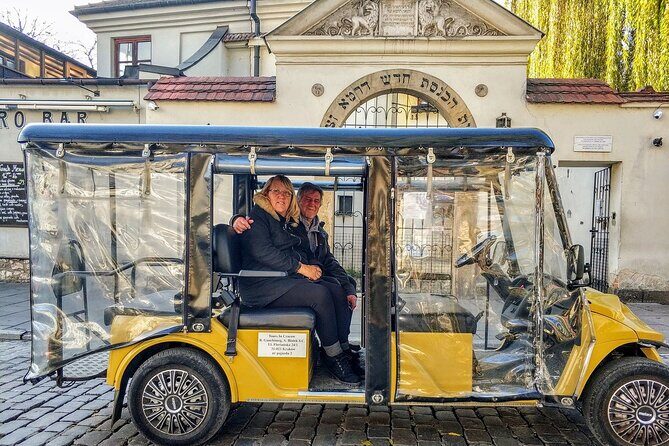
This electric golf cart ride takes you through Kazimierz and the former ghetto area with English commentary plus an audio guide, so you get both the big story and the small details. It is also a practical way to cover a lot of ground in about 90 minutes—useful when your legs are tired, the weather is doing its thing, or you just want a clear orientation before you explore on your own.
I love two parts in particular: the way the tour explains Jewish life in Krakow, then connects it to what happened during the German occupation, and the comfort of the electric cart when stops are spread out. On the guide side, I’ve seen real praise for drivers like Matt, Natalie, Olivia, Martina, Michael, and Phillips—each one brought facts with a tone that fits the subject.
One possible drawback: the route includes major Christian churches as well as Jewish places. If you want purely synagogues and Jewish sites at every stop, you may feel the emphasis shifts. Also, it’s a set route with set stop times, so it is not the best choice if you want to wander at your own slow pace.
In This Review
- Key things you’ll notice on this tour
- Kazimierz and the ghetto in 90 minutes on an electric cart
- Start point and end point: where to meet and how to plan your walk
- Szeroka Street: the heart of Kazimierz and a striking synagogues detail
- Old Jewish landmarks and where your stops become a story
- St Joseph in Podgórze: a distinctive church in a place with many layers
- Finding the ghetto’s preserved wall fragment
- Plac Zgody and Umschlagplatz: the deportation gathering point
- The Podgórze pharmacy stop: shelter, messages, and brief refuge
- How the cart, audio guide, and group size change the experience
- Price and value: what $34.75 buys you in time and coverage
- Who should book this tour (and who might skip it)
- Should you book the Krakow Jewish Quarter and Ghetto Tour by electric golf cart?
- FAQ
- How long is the Krakow Jewish Quarter and Ghetto Tour?
- How much does the tour cost?
- Is the tour offered in English?
- What’s included in the price?
- Is hotel pickup or drop-off included?
- Where does the tour start and end?
- How big are the groups?
- Is it near public transportation?
- Can I cancel for a full refund?
- Is the tour suitable for most people?
Key things you’ll notice on this tour
- Electric golf cart coverage that helps you see more in 90 minutes without exhausting your feet
- Szeroka Street’s former concentration of synagogues, explained as an unusual historic fact in Europe
- Stops tied to the ghetto story, including a preserved wall fragment with a commemorative plaque
- Umschlagplatz at Plac Zgody (Concord Square)—the Nazi designated gathering/deportation point
- The Podgórze pharmacy story, described as a shelter-like refuge during deportation
- English-speaking driver + audio guide, so you get guided context even if you miss a sentence
Kazimierz and the ghetto in 90 minutes on an electric cart
This is the type of tour that does one job really well: it gives you a guided mental map. Kazimierz is layered—religion, neighborhoods, and war history all overlap in close proximity. By the time you’re done, you’ll understand why locals and visitors keep returning to this part of Krakow again and again.
The electric cart matters here. You’re not just “being driven.” You’re being moved efficiently between meaningful points, with commentary timed to each stop. That makes it easier to connect what you see in front of you to what you just heard a minute earlier—especially when the subject turns emotional, like the fate of people trapped in the ghetto system.
Because the tour is about 1 hour 30 minutes and has a maximum group size of 50, it keeps a good pace. It is long enough to cover over 20 important cultural monuments in Kazimierz, but short enough that you should still have energy to do a bit of follow-up walking afterward.
You can also read our reviews of more tours and experiences in Krakow.
Start point and end point: where to meet and how to plan your walk
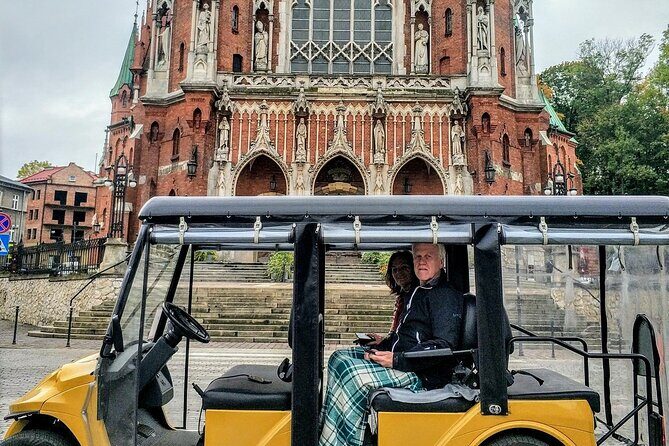
The tour starts at Mikołaja Zyblikiewicza 2 and ends at Mikołaja Kopernika 3. No hotel pickup is included, so you’ll want to build in some time to get there smoothly.
Here’s a practical tip: arrive a little early and check the area around the meeting point, because if you’re late you may end up behind the group. One review mentioned the guide didn’t easily find their cart party on the list, and they ended up farther back than they expected. That kind of hiccup is rare, but it’s enough of a pattern to remind you: be on time, be visible, and double-check you’re at the right meeting location.
The good news is that it’s near public transportation. So if you’re starting your day in the Old Town, you can plan this as a simple midday or afternoon add-on without a complicated taxi plan.
And yes—the cart helps. If you’re visiting in summer heat or winter cold, being carried between stops is a real advantage, not just a luxury.
Szeroka Street: the heart of Kazimierz and a striking synagogues detail
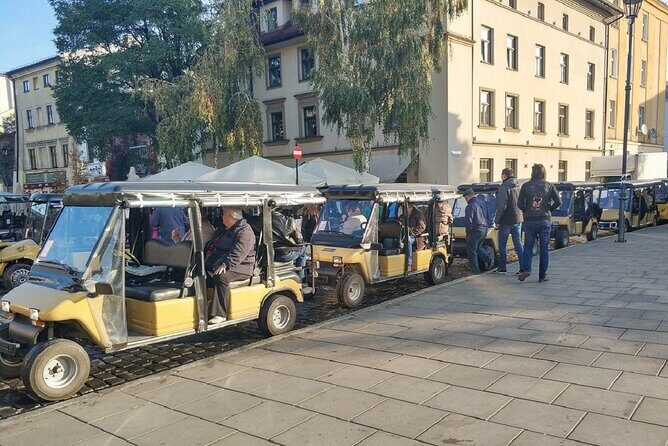
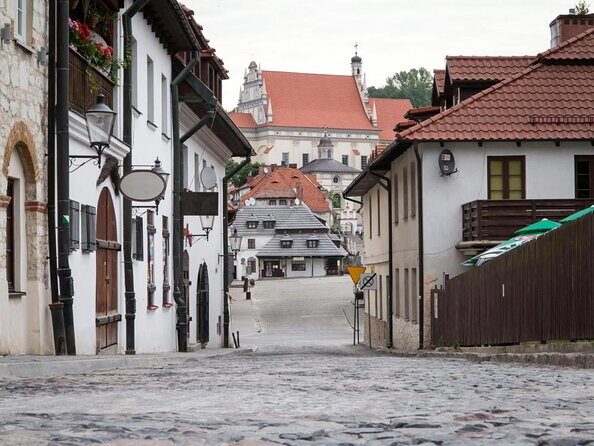
One of the first big ideas you’ll get is how Szeroka Street functioned as the heart of Jewish Kazimierz. The tour explains that four synagogues once stood along this street—an unusual historic concentration in Europe. You don’t just hear a name and move on. You’re given a reason the street matters.
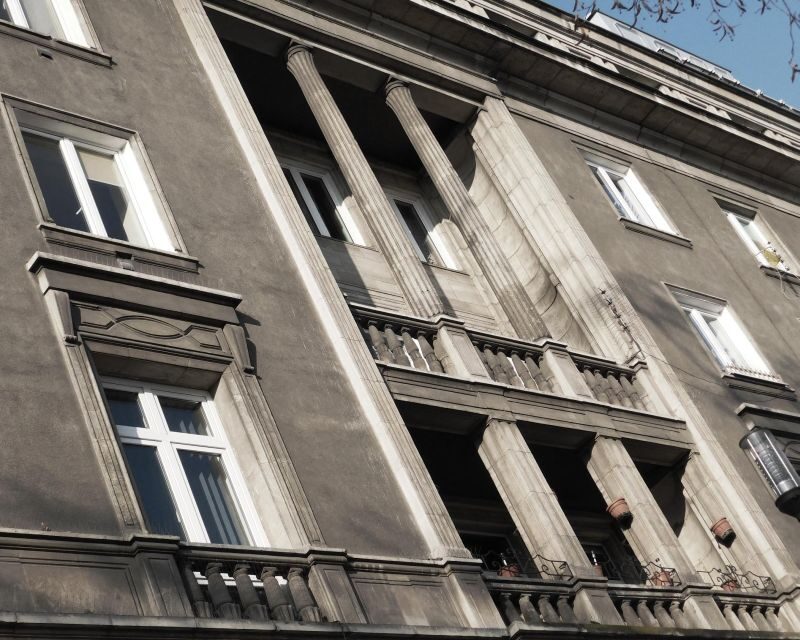
When you’re there, this matters because Kazimierz can feel like a mix of beautiful facades, busy streets, and everyday life. The Szeroka Street framing helps you notice the difference between surface-level architecture and what the buildings represented to the community that lived here for centuries.
You’ll also visit one of the older synagogues preserved in Poland in very good condition. The key point for you is the way the tour connects preservation to memory: seeing something that has survived lets you imagine life continuing here, not only suffering happening here.
Possible downside? A couple of guides/routes lean into interiors in a way that includes Christian sites too. If your personal priority is strictly Jewish architecture, keep that in mind as you plan your expectations. On the flip side, many people like how the tour shows layers of faith and community in the same neighborhood space.
Old Jewish landmarks and where your stops become a story
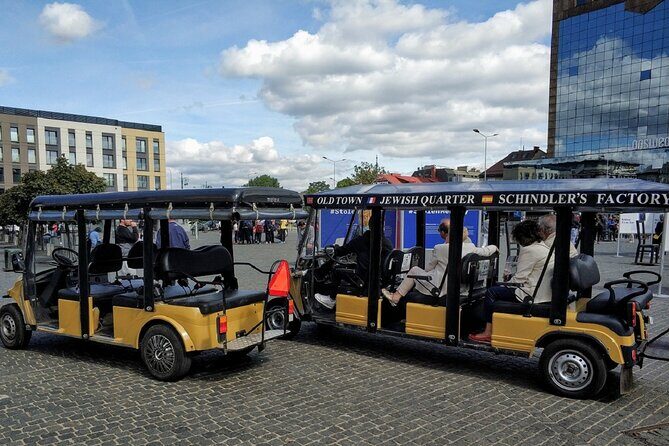
The itinerary is structured like a guided narrative. It starts with the broader idea that Kazimierz was once an independent city south of Wawel and served as the hub of Jewish life for centuries. That is not a throwaway intro. It sets you up to understand why the area is special long before the war-era stops begin.
Then the tour moves stop-by-stop through major landmarks, aiming to reach over 20 cultural monuments in Kazimierz. What you’re really doing is collecting “anchors.” Each anchor gives you a phrase you can use later when you walk the neighborhood yourself.
I like this approach because Krakow has tons of sights. A walking-only plan can scatter you. A fast cart plan like this can concentrate you—then you can go back and slow down later around the places that hit hardest.
One small practical point: the tour includes an audio guide. So even when the driver is speaking, you also have audio content feeding into your understanding. One review noted the tour uses headsets rather than loudspeakers. If you’re picky about audio style, that’s worth knowing, but it also means the sound is consistent and clear without relying on volume across an outdoor crowd.
St Joseph in Podgórze: a distinctive church in a place with many layers
Not every stop is a synagogue. You’ll also see the parish church of St Joseph, described as a distinctive and widely recognizable place of devotion. It dominates over the Podgórze Market Square, which was incorporated into Krakow only in the 20th century.
Why include this? Because Kazimierz and Podgórze aren’t separate worlds that never touch. They are part of one city story with changing borders and shifting identities over time. The tour uses this kind of stop to show how everyday religious life and civic space exist alongside the Jewish history you came to learn about.
When you’re standing in a place like Podgórze Market Square, it can be tempting to separate the past from the present: war history over here, current life over there. But the tour’s inclusion of St Joseph pushes you to hold both at once. You’re not just learning tragedy. You’re seeing how people continued living—how the city rebuilt and reorganized its cultural life after it changed forever.
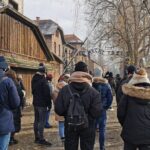
Finding the ghetto’s preserved wall fragment
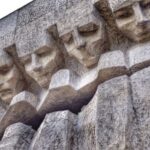
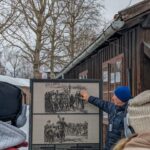
The tour then turns toward the ghetto era. One of the most important stops is a preserved fragment of the original wall around the former ghetto, with a plaque commemorating the fate of the inhabitants.
This is one of those stops where the cart feels almost too comfortable. The contrast can hit you: you’re being chauffeured efficiently through a quiet streetscape, while the wall fragment reminds you that what happened here was brutal, systematized, and deeply personal.
If you want the tour to do its job, give yourself a moment here. Look at the plaque. Read it. Don’t just take a quick photo and move. This is the kind of point where the guide’s words matter, but your own attention matters more.
You’ll come away feeling the ghetto wasn’t an abstract “area.” It had physical boundaries. It affected where people walked, where they gathered, and how their days were structured under occupation.
Plac Zgody and Umschlagplatz: the deportation gathering point
Now we reach Plac Zgody (Concord Square) in Podgórze, which in 1941 was turned into the Krakow Ghetto. Under Nazi occupation, this area was designated Umschlagplatz—the place where Jews had to congregate to be deported.
This stop is one of the clearest narrative moments in the tour. You go from history and identity into the logistics of persecution—where people were forced to assemble, then removed.
The tour also emphasizes that this is one symbolic bright point on a tragic map. That phrasing can sound strange, but it makes sense when you’re standing on the ground. You’re looking at a place that has meaning today because memory is preserved in markers, plaques, and explanations. It’s tragic, yes. But it’s also one of the ways the story gets carried forward.
If you tend to get overwhelmed by heavy history, it can help to treat this as a waypoint. You’re not meant to absorb everything at once. The tour continues with another stop that focuses on survival and shelter, not only deportation.
The Podgórze pharmacy stop: shelter, messages, and brief refuge
One of the most human stops on the tour is the one connected to a Polish pharmacy. The story shared here is that the pharmacy acted like an asylum or embassy during deportation, providing shelter and helping deliver messages or packages inside and outside the ghetto.
This is not the kind of detail you always hear in a basic overview. And it matters, because it adds texture. Even in a system designed to destroy, there were people and networks trying to protect others, pass information, and reduce harm where they could.
You’ll be seeing the place as part of a broader war history. But the pharmacy story turns the volume down just enough to make the human side legible.
If you only read one war fact before a trip, make it this: persecution had administrators and procedures, but people still found ways to resist, help, and communicate. The tour doesn’t ignore tragedy. It also refuses to let the story end at the worst moment.
How the cart, audio guide, and group size change the experience
This tour combines cart transport, an audio guide, and an English-speaking driver. That combination affects how you’ll experience the information.
- The cart reduces physical fatigue and helps you stay focused on the storyline rather than on your footing. That becomes especially valuable if you have limited time or you’re juggling multiple Krakow activities.
- The audio guide provides a steady layer of explanation, which is great when outdoor wind or street noise might make it harder to catch every spoken sentence.
- With up to 50 people, you get a real group vibe, but it still stays manageable. The stop-and-enter moments are usually brief, so you’ll want to be ready to move quickly.
Seat comfort can vary. One review complained about being placed in the back seats with seats facing backward. If seating matters to you, arrive a bit early and ask what options exist when you’re being placed in the cart.
In terms of guide quality, the reviews show a pattern of strong personalities and real engagement. Guides including Matt, Natalie, Olivia, Martina, and Michael got singled out for being informative and respectful, with Martina especially praised for letting people hop on and off for pictures and for entering different churches to see interiors.
Price and value: what $34.75 buys you in time and coverage
At about $34.75 per person for around 1 hour 30 minutes, the value depends on your priorities.
If you’re short on time, this is a strong deal. You’re getting:
- cart transport during the tour
- an audio guide
- an English-speaking driver
- a planned sweep through Kazimierz with many notable stops
You’re paying for efficiency and structure. In a city like Krakow, that can be worth it. A walking tour might let you slow down more, but you’d also spend more time covering distance between far-apart points and less time getting guided connections.
If you already know you’ll want to visit everything deeply on your own, a cheaper walking plan might feel better. But if you want a fast orientation with a coherent story—then come back later to the places that grabbed you—this price makes sense.
One review also noted that it felt less expensive than alternatives quoted in the city. That tracks with the overall idea: this tour is designed for time-compressed sightseeing, not for luxury.
Who should book this tour (and who might skip it)
This is a great fit if you:
- want to cover Kazimierz and ghetto sites quickly
- prefer a comfortable cart over long walking loops
- like guided context before you explore on your own
- appreciate English commentary and an included audio guide
You might think twice if:
- you want Jewish interiors at nearly every stop and dislike church-focused detours
- you strongly prefer your own pace, with lots of lingering and wandering
- you’re hoping for a fully interactive group that moves like a private tour (this is a set route with set stops)
The sweet spot is a short Krakow trip or a day when your legs need a break. One review described it as ideal for people who are time-compressed, and I agree with that logic.
Should you book the Krakow Jewish Quarter and Ghetto Tour by electric golf cart?
If you want a guided route that connects Kazimierz’s Jewish life to the ghetto’s wartime reality, I think this is a smart booking. The cart makes it feel doable. The audio guide plus English commentary keeps it organized. And the stops that include the preserved wall fragment and the Umschlagplatz area give you real anchoring points for understanding.
My main caution is about expectations: this is not a synagogue-only tour. If that mismatch would frustrate you, consider mixing this with a follow-up walking plan focused purely on the religious sites you care about most.
If you book, do this: show up on time at Mikołaja Zyblikiewicza 2, wear comfortable shoes even though you’re on a cart, and give yourself a moment at the wall fragment and at Umschlagplatz. That’s where the tour stops being “sightseeing” and starts becoming memory you can carry with you.
FAQ
How long is the Krakow Jewish Quarter and Ghetto Tour?
It lasts about 1 hour 30 minutes.
How much does the tour cost?
The price is $34.75 per person.
Is the tour offered in English?
Yes. English is offered.
What’s included in the price?
You get an audio guide, transport by electric golf cart during the tour, and an English-speaking driver.
Is hotel pickup or drop-off included?
No. Hotel pickup/drop-off is not included.
Where does the tour start and end?
It starts at Mikołaja Zyblikiewicza 2, 31-029 Kraków, Poland, and ends at Mikołaja Kopernika 3, 31-034 Kraków, Poland.
How big are the groups?
The tour has a maximum of 50 travelers.
Is it near public transportation?
Yes, it’s near public transportation.
Can I cancel for a full refund?
Yes. Free cancellation is available up to 24 hours in advance for a full refund.
Is the tour suitable for most people?
Most travelers can participate.