REVIEW · KRAKOW
Krakow Walking Tour with Audioguide on Your Smartphone
Book on Viator →Operated by TouringBee · Bookable on Viator
Krakow makes sense when you walk it. This self-guided smartphone audioguide route strings together major Old Town sights, university landmarks, and Kazimierz memorial stops, all at an easy walking pace. You get 26 audio recordings narrated by a professional historian, plus an offline map and illustrations so you can keep moving without guessing.
What I like most is the freedom: you can pause, restart, and listen as long as you want. I also like that the stops are practical crowd-anchors, so you’re not just hearing facts—you’re standing in front of the places that shaped Krakow. The one drawback to plan for is weather. One review mentioned -14°C, and even the best audio won’t make cold fun.
In This Review
- Key highlights you’ll notice right away
- How the smartphone audioguide works in Krakow
- Start at the Kraków Barbican: a fortress ring-walk
- St. Florian’s Gate and Florianska Street: Gothic gateway to everyday life
- Market Square and the Town Hall Tower: 70 meters of big views
- Jagiellonian University buildings: when scholarship is the street scene
- Palace of Bishop Erasmus Ciolek: Renaissance rooms with real art
- Kanonicza Street: a quieter cobblestone reset
- Wawel Cathedral and Wawel Castle: Poland’s royal core
- Kazimierz with meaning: Tempel Synagogue and Okrąglak food stop
- Jan Karski and Ghetto Heroes’ Square: remembering in the open air
- Szeroka Street and the Old Synagogue: Jewish Krakow’s living story
- Price and value: $8.27 for a full day’s worth of context
- Winter reality check: clothing matters more than you think
- Should you book this Krakow smartphone walking tour?
- FAQ
- What language is the audioguide available in?
- How long is the Krakow walking route?
- Do I need headphones for the smartphone audio?
- Is there a human guide during the tour?
- Where do I start, and where do I end?
- Are entrance tickets included for the stops?
- What’s included with the tour besides the audio?
- Do I need an internet connection while following the route?
- Can I cancel for a full refund?
Key highlights you’ll notice right away
- 26 historian-narrated audio recordings for a steady flow of context at every stop
- Offline map + GPS route so you can follow along without constant cell service
- No entrance fee for the route stops, but you still handle tickets for specific interiors
- Landmark illustrations that help you identify what you’re looking at quickly
- A smart mix of sights and meaning, from Wawel to Ghetto Heroes’ Square
How the smartphone audioguide works in Krakow
This is a self-guided walk with no human guide at the meeting point. Your ticket is mobile, and you’ll download the TouringBee audio app, activate your purchase, then follow the route on the app map.
You’ll want to bring your own headphones—those are not included. The app includes an offline map with the route, plus illustrations to help you spot each landmark in real life. A helpful detail: the audio guide can be used anytime, and the date/time at checkout is described as approximate.
In other words, this tour works best when you treat it like a flexible walking companion. If you want to linger at St. Mary’s Basilica interior details, you can. If you need to step aside for a coffee, you can. It’s built for pacing yourself rather than marching on someone else’s schedule.
You can also read our reviews of more walking tours in Krakow
Start at the Kraków Barbican: a fortress ring-walk
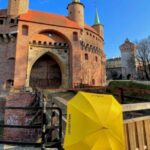
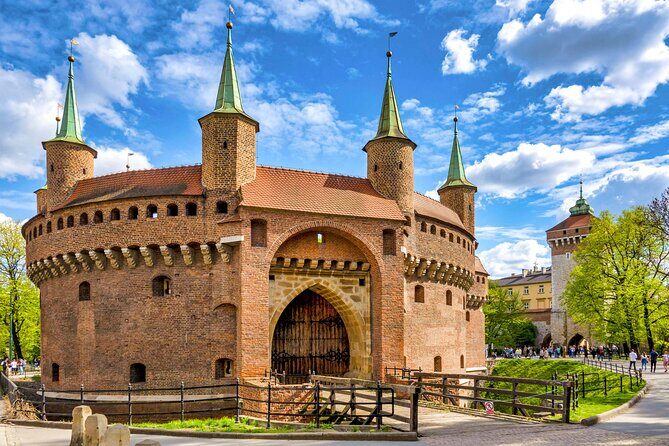
Your walk begins at the Kraków Barbican (Basztowa 30-547). This is a medieval defensive structure from the late 15th century: a circular brick bastion with thick walls and multiple turrets, built to protect the city.
Why it’s a great first stop: it sets the theme fast. Before you move into the Royal Route, you get a real sense of how Krakow defended itself, and how much of the Old Town’s layout grew from those older security needs. Today, it often hosts exhibitions and events, so the area around it feels like living history rather than a dead monument.
If you’re thinking about photos, start here. The Barbican’s shape is distinct, and it’s an easy way to confirm you’re on the right spot before the route gets busy.
St. Florian’s Gate and Florianska Street: Gothic gateway to everyday life
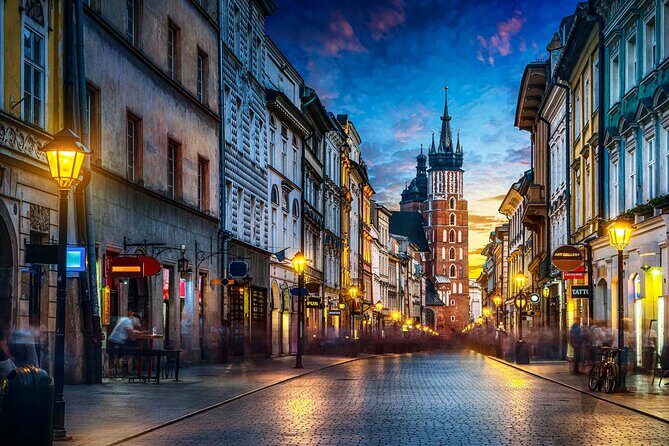
Next you pass through St. Florian’s Gate, the city’s best-known medieval gate. It dates to the 14th century and is about 33.5 meters tall, with a Gothic structure topped by a Baroque roof. Walk under it and you’re essentially stepping into Krakow’s old ceremonial spine—the Royal Route that once saw historic processions.
From there, the route goes along Ulica Florianska (Florianska Street), the classic connector between the gate and Main Market Square. This is where you see the Old Town in motion: shops, cafés, and historic townhouses along one of the most recognizable streets in Krakow.
A practical tip: don’t rush this section. It’s short, but it helps you learn the geography of the city center so later stops feel less like a scavenger hunt.
Market Square and the Town Hall Tower: 70 meters of big views
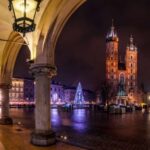
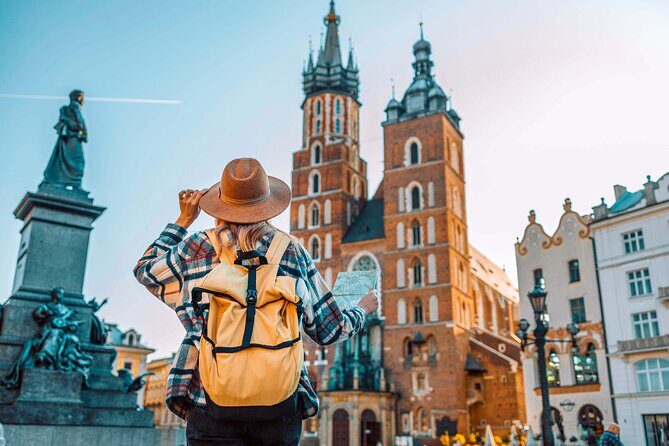
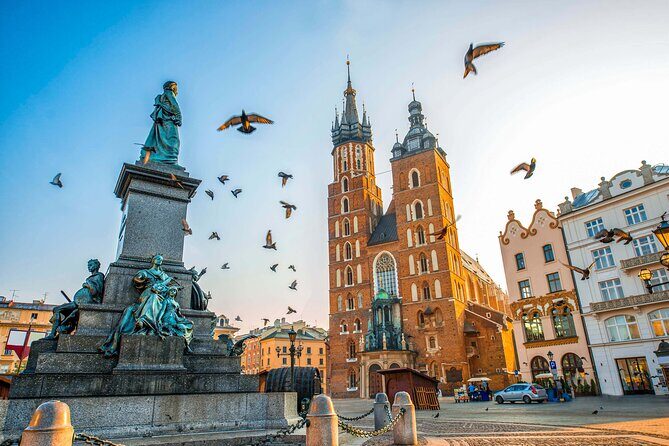
You then hit Market Square, Krakow’s heart and one of Europe’s largest medieval town squares. Around you, you’ll see the big-ticket anchors: St. Mary’s Basilica, the Cloth Hall area, and the Town Hall complex.
This is also where street life is easiest to notice. Even when you’re not buying anything, you’ll feel how the square works as a civic space—people meet, performers pop up, and cafés spill out onto the sidewalks.
The next highlight is ascending the Town Hall Tower. This Gothic tower is 70 meters tall and is the last remnant of the original 14th-century Town Hall. Climb the winding stairs for city views, and you’ll also see exhibits related to Krakow’s civic story.
Two things to consider here:
- Stairs add time, especially if you pause for photos.
- The weather matters—if it’s cold or windy, go with warm layers.
Jagiellonian University buildings: when scholarship is the street scene
From the square area, the route shifts to Jagiellonian University space, starting with Collegium Maius, the oldest building of the university founded in the 14th century. Expect medieval arcades, preserved interiors, and courtyards that feel made for slow wandering.
Why this stop works on a walking tour: it reminds you that Krakow wasn’t only a royal and trade center. It was also a learning hub. The audio points you toward academic highlights, including historic lecture spaces, the library, and collections of ancient scientific instruments.
Then the route continues at Collegium Iuridicum, another older Jagiellonian University site. The tour frames it as part of one of Europe’s oldest higher learning institutions (founded 1364). You’ll move through the university’s halls and architecture, with the overall point being clear: the city’s story includes serious study.
If you’re into architecture or the history of ideas, this is one of the best sections of the route. If you’re short on time, just make sure you don’t skip it entirely—these campus stops add contrast to the churches and memorials.
You can also read our reviews of more tours and experiences in Krakow


Palace of Bishop Erasmus Ciolek: Renaissance rooms with real art
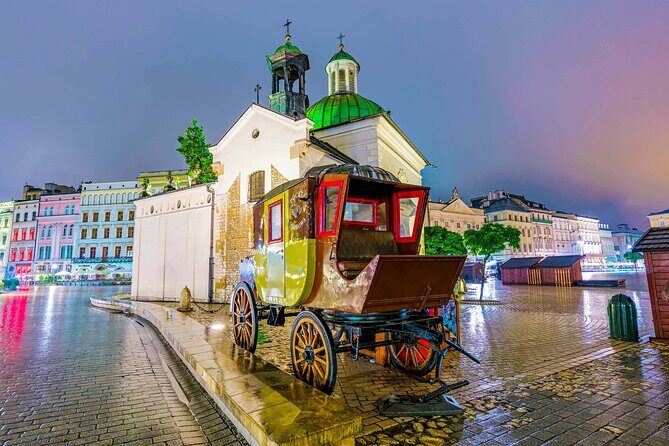
Next up is the Palace of Bishop Erasmus Ciolek, built in the early 16th century. Today it houses a National Museum branch, which is a nice change from only outdoor walking.
In the rooms, you can see Polish art that spans medieval sculpture, religious icons, and early modern paintings. The idea here is simple: you’re walking through Krakow and the tour keeps pulling you into interiors where art and ecclesiastical power overlap.
One consideration: since entrance tickets are not included, you’ll want to check what you plan to see inside. If you don’t want extra costs, skim the exterior details and use your time elsewhere.
Kanonicza Street: a quieter cobblestone reset
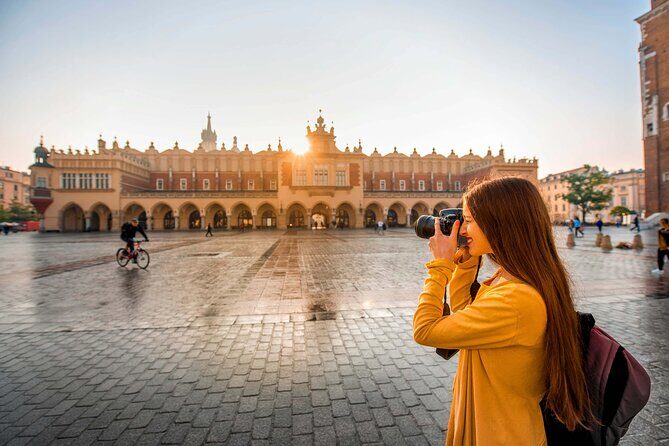
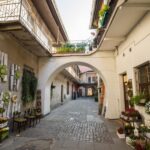
After the big sights, the route goes along Ulica Kanonicza (Kanonicza Street), a charming cobblestone lane in the Old Town area. It’s known for preserved townhouses with Renaissance and Baroque touches, and many buildings historically connected to clergy and scholars.
This stop is valuable even if you’re not shopping. It’s a breather. After churches, towers, and museum rooms, Kanonicza helps you shift pace and just enjoy walking.
If you’re the kind of person who likes “small streets with big vibes” (but without the cliché), this is where you can slow down and re-center.
Wawel Cathedral and Wawel Castle: Poland’s royal core
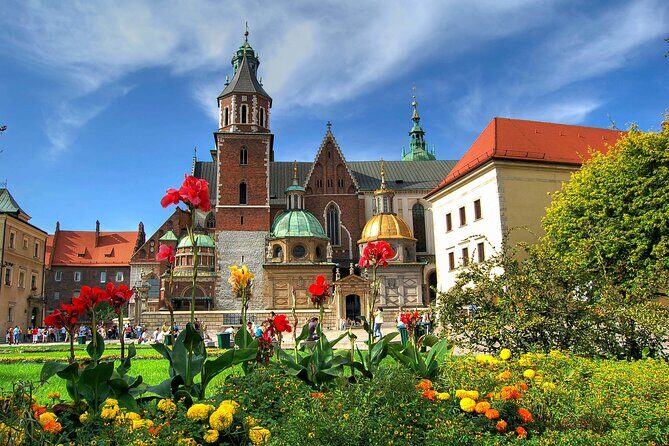
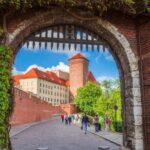
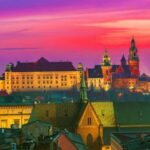
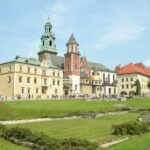
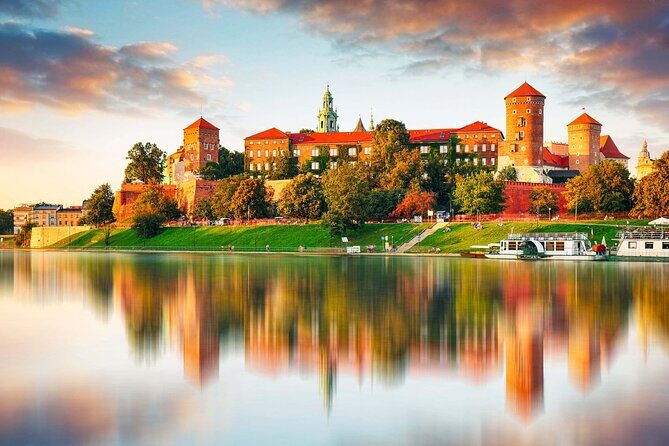
Then you reach Wawel Hill, the spiritual and royal center of Poland. The first major stop is Wawel Cathedral, a Gothic landmark dating to the 14th century. Inside, the tour highlights the coronations and funerals of Polish kings and queens, plus major features like the chapels, the Sigismund Bell, and the Royal Tombs.
A practical planning detail: expect that cathedrals can mean rules around quiet areas and dress codes. If you’re visiting in colder months, bring a layer you can adjust—people often underestimate how long they stand still in stone churches.
After the cathedral, the route moves to Wawel Castle, a UNESCO World Heritage site dating back to the 14th century. The audio frames it as a complex of state rooms, Renaissance courtyards, Royal Apartments, and the Crown Treasury and Armory.
The castle’s main value on a walking tour is the big picture. You’re not just seeing walls; you’re seeing how royal power displayed itself through architecture, collections, and view corridors toward the Vistula River.
Kazimierz with meaning: Tempel Synagogue and Okrąglak food stop
Next comes Kazimierz, Krakow’s historic Jewish district. The route starts with the Tempel Synagogue from 1862, known for Moorish Revival architecture. Inside, you’ll find gilded stuccoes, intricate woodwork, and stained glass windows.
This stop also has a modern role. The synagogue hosts concerts, cultural events, and religious services, so it’s not only an artifact from the past. The audio connects this building to progressive Judaism and to the resilience of the community after historical disruptions.
After that, the walk moves to Okrąglak, a circular market hall in Kazimierz from the early 20th century. It’s famous for a lively food setup, especially zapiekanki, the open-faced Polish street food.
This is one of the most practical breaks on the route. It gives you a chance to warm up, eat something local, and reset before the memorial portion of the walk.
Jan Karski and Ghetto Heroes’ Square: remembering in the open air
The route then includes reflection stops that matter. The Jan Karski Monument is in Planty Park near the Old Town. It commemorates Jan Karski, a Polish World War II resistance figure and diplomat, known in the tour for reporting the horrors of the Holocaust to the Allies. The statue depicts Karski seated with a book.
Next is Ghetto Heroes’ Square in the Podgórze district. This is the heart of the Krakow Ghetto during WWII, and today it includes memorial elements such as 70 empty metal chairs symbolizing absence.
If you’re the type who tends to rush through memorials, slow down here. The whole point of audio guides is that they can change your pace—let the details land before you move on.
Szeroka Street and the Old Synagogue: Jewish Krakow’s living story
The final Kazimierz stretch focuses on Szeroka Street, described as the cultural and historical heart of the district. You’ll pass landmarks tied to Jewish life, including the Old Synagogue, Remuh Synagogue, and the adjacent cemetery.
Then you reach the Old Synagogue, dating back to the 15th century. The audio frames it as one of the oldest surviving synagogues in Poland. It’s now a museum, with exhibits and artifacts tied to Jewish traditions and community life.
What I like about ending this way: it’s not only about trauma. It’s also about continuity—community, faith, objects, documents, and the daily rhythm of a city within a city.
After this, you work your way back to the starting point. The experience ends where it began at the Barbican.
Price and value: $8.27 for a full day’s worth of context
At $8.27 per person for about 2 hours 30 minutes, this is a strong value if you want structure without extra cost for a human guide. You’re paying mainly for the audio content, navigation help, and the stop-by-stop interpretation.
Here’s the practical value breakdown:
- You get time savings versus doing research and trying to piece it together on your own.
- You control pacing, which can reduce the “I missed half of it” feeling that happens with group tours.
- No guided staff is included, so the cost stays low.
The one thing to budget for: entrance fees are not included. The route avoids entry fees for the walking stages, but some of the stops are places where you might want tickets depending on what you care about.
For photography lovers, one review mentioned the app can take special framed photos that act like souvenir shots. That’s a nice small perk, and it’s easier than hauling extra gear.
Winter reality check: clothing matters more than you think
One review summed up the biggest real-world issue: cold weather can make the walk miserable. If you’re visiting in winter, dress for street time, not museum time.
Bring a warm hat, gloves, and a coat you can actually move in. Plan for slower stops. With an audioguide, you can pause, warm up, and then continue without losing your place—so cold doesn’t automatically ruin the tour.
Should you book this Krakow smartphone walking tour?
I’d book it if you want an organized walk through Krakow’s key sights with solid narration, without paying for a human guide. It’s especially good if you like history told in the exact places where it happened—gate, square, university buildings, and Wawel.
Skip or reconsider if you know you don’t handle cold well, or if you hate phone-based navigation. You also should feel comfortable bringing your own headphones and following an app map.
If you’re on a tight schedule, this is one of the most cost-effective ways to build a clear mental picture of Krakow fast.
FAQ
What language is the audioguide available in?
The tour is offered in English.
How long is the Krakow walking route?
It’s about 2 hours 30 minutes (approx.).
Do I need headphones for the smartphone audio?
Yes. Smartphones and headphones aren’t included, so you’ll need your own headphones.
Is there a human guide during the tour?
No. This is a self-guided tour with no guide at the meeting point.
Where do I start, and where do I end?
You start at Kraków Barbican (Basztowa, 30-547 Kraków, Poland), and the activity ends back at the same meeting point.
Are entrance tickets included for the stops?
No. Entrance fees/tickets are not included. The walking route stages don’t require entry fees, but interiors may.
What’s included with the tour besides the audio?
You get 1 year access to the tour in your preferred language, 26 historian-narrated audio recordings, an app for iPhone and Android, illustrations to identify landmarks, and an offline map with the route.
Do I need an internet connection while following the route?
You’ll have an offline map for the route, which helps with navigation. You’ll still use the app on your phone to follow along.
Can I cancel for a full refund?
Yes. You can cancel up to 24 hours in advance for a full refund.