REVIEW · KRAKOW
Nowa Huta Tour Krakow: Ideal Communist City Small Group Walk
Book on GetYourGuide →Operated by Krakow Urban Tours · Bookable on GetYourGuide
Krakow hides a time-capsule district. On this Nowa Huta walk, you get a guided reading of Soviet planning as it was meant to work, and how it actually turned into something very different. I really liked how the guide ties the politics to what you can see in front of you, and how the stops move from architecture to daily life, with food like vodka tasting and zapiekanka that makes the era feel immediate.
I also appreciated the small-group feel described in guide-led sessions with people like Anna and Barbara, where it’s easy to ask questions and hear real everyday stories rather than just dates. One thing to consider: you’ll spend a chunk of the 4 hours outdoors, and the visuals can be heavy—Lenin’s former monument spot and a Soviet tank are part of the route.
In This Review
- Key things to know before you go
- Entering Nowa Huta: Soviet Planning in Plain Sight
- Plac Centralny and the Lenin-Monument Area
- The Communist Museum Ticket: Reading the Past Like Architecture
- Vodka Tasting and Zapiekanka: Eat the Communist-Era Comfort Food
- Russian Tank Photos and the Protection-System Stop
- The Market Scene: Where Social Life Continues
- Lord’s Ark Church: Freedom and Faith Built by Residents
- A Café Pause: Seeing Nowa Huta After the Blueprint
- Small Group Energy with Guides Anna and Barbara
- Price and Value: What $112 Buys in 4 Hours
- Who Should Book This Nowa Huta Tour
- Should You Book the Nowa Huta Communist City Walk?
- FAQ
- What is the tour duration?
- Where does the tour start in Krakow?
- What’s included during the experience?
- Is the tour guided in English?
- What should I bring?
- Can I cancel or pay later?
Key things to know before you go

- Soviet ideas made physical: You’ll learn how ideology shows up in the street layout and buildings.
- Museum stop included: You get an entrance ticket to a dedicated communist-era site.
- Hands-on history moments: A real Russian tank and a protection-system/bunker-style stop are on the program.
- Taste the era: Vodka tasting plus zapiekanka, a typical communist-era street-food bar snack.
- Freedom and faith landmark: Lord’s Ark is presented as a symbol of the long fight for freedom and democracy.
- Nowa Huta today, too: A pause for coffee helps you see what locals made of the planned city.
Entering Nowa Huta: Soviet Planning in Plain Sight
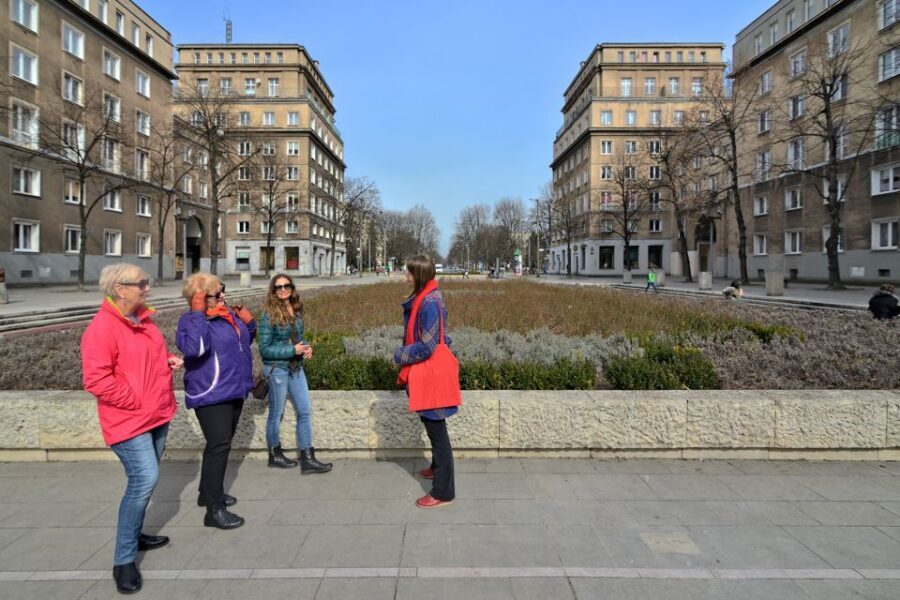
Nowa Huta is the Krakow district that feels like someone left the communist blueprint out on the table. The area was built to showcase the Communist ideal, but today it reads like a story with twist endings—grand planning outside, real human life inside. The best part is how the tour teaches you to “see” ideology: not as abstract politics, but as where people walk, where monuments were planned, and what buildings were meant to communicate.
You start with an orientation that helps you stop guessing. When you learn what the designers were aiming for, the neighborhood stops looking random. Instead, it becomes a kind of open textbook.
You can also read our reviews of more walking tours in Krakow
Plac Centralny and the Lenin-Monument Area
You’ll begin at the Central Square, Plac Centralny, which the tour frames as the heart of the former communist city concept. This square is your first big clue. Once you understand why it mattered, you start noticing how space was designed for gatherings, messaging, and control.
From there, you’ll move through the area with an emphasis on what was planned right after WWII—and what happened later. One of the most striking moments is the spot where a huge monument of Lenin used to stand. Even after the monument is gone, the location still works like a marker in the story, and the guide’s job is to help you connect why it was placed there and what its removal meant.
The Communist Museum Ticket: Reading the Past Like Architecture
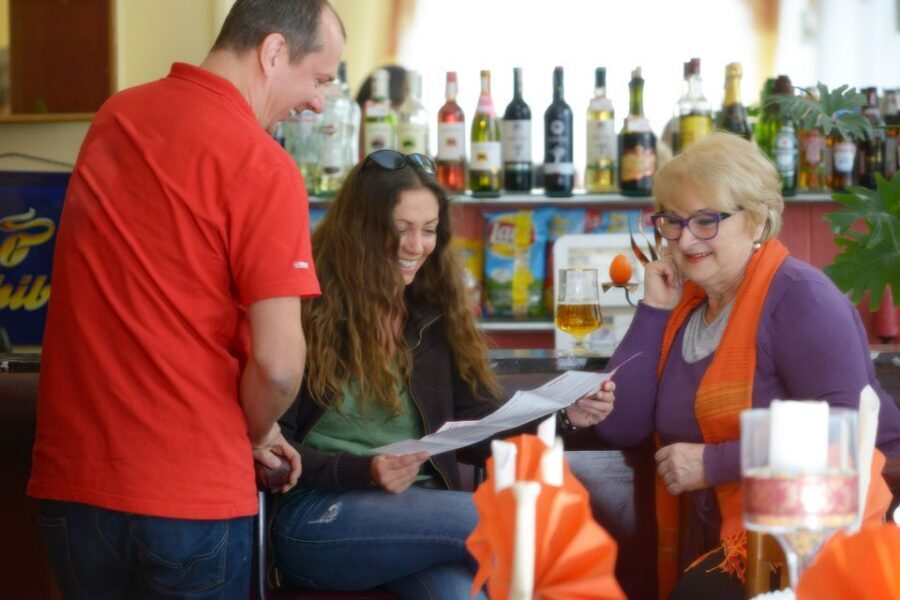
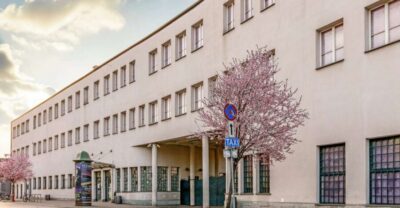
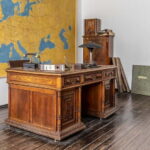
A key part of this experience is the communist museum entrance ticket, which gives your walk more depth than a sightseeing loop. You’re not just looking at buildings; you’re learning how the era packaged its own ideals—what it wanted people to believe and how it wanted them to behave.
You’ll also hear how architectural choices carried meaning. The tour highlights that the planned city includes a mix of ideas and architectural styles from different periods, including the communist-era plan versus later realities. That mix is part of the point: Nowa Huta isn’t a single frozen moment. It’s a layered outcome.
Practical note: the museum stop is where you’ll likely get the clearest explanations of the physical design choices you’ll see outside afterward.
Vodka Tasting and Zapiekanka: Eat the Communist-Era Comfort Food
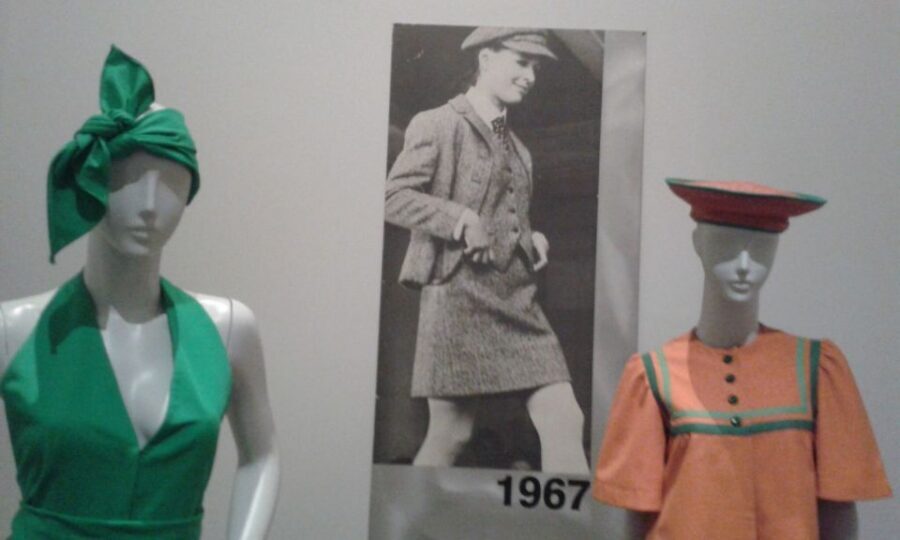
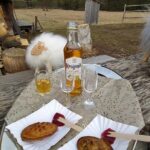
Yes, there’s a tasting. And no, it’s not just a gimmick. The tour includes a visit to a local communist restaurant area for a shot of vodka, framed in the way it might have been part of everyday routines in the era. It’s a small moment, but it helps you understand how culture and politics overlap—how people made social life even inside a system that was meant to shape them.
Then comes zapiekanka, the classic Polish bar snack that the tour presents as a typical communist-era treat. You can think of it as comfort food made practical: filling, easy to share, and tied to the kind of informal social spaces where people gathered.
If you’re sensitive to alcohol, you can still enjoy the food side and watch your pace with the tasting.
Russian Tank Photos and the Protection-System Stop
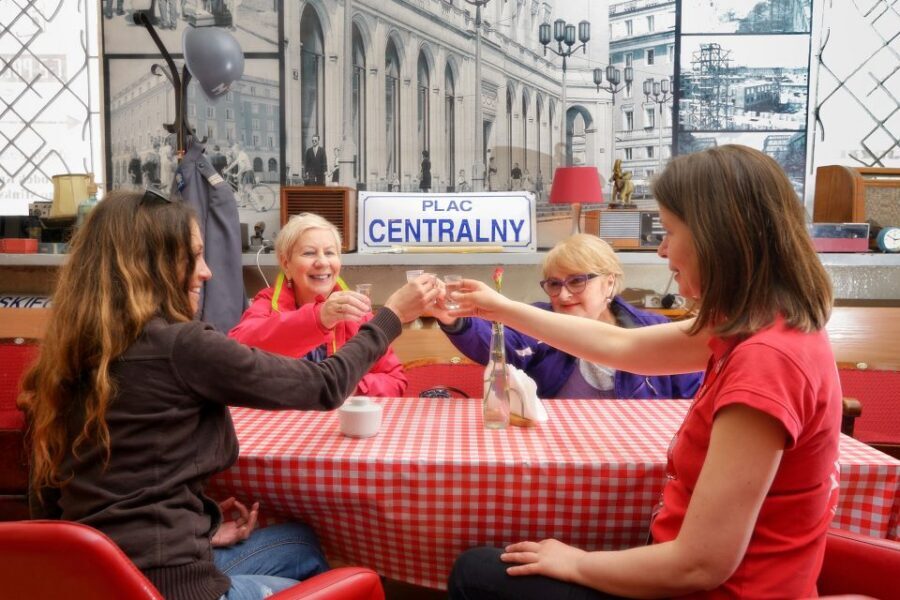
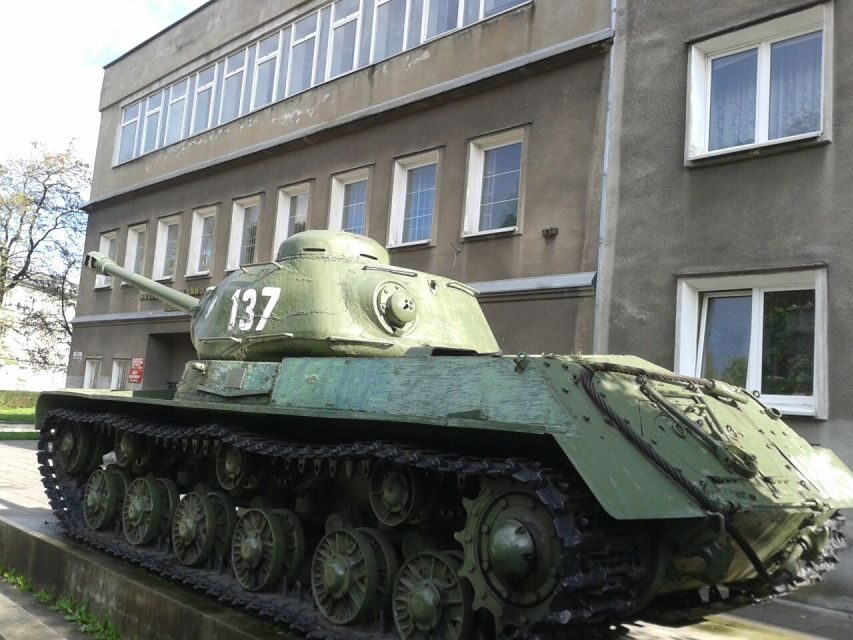
This is one of the more cinematic parts of the route. You’ll pause to take photos of a real Russian tank left after the war. The tour treats it as more than a prop; it’s evidence of the physical aftermath of conflict and the way the communist period lived with that shadow.
Right after that, the guide focuses on the “huge protection system” invented by the communist architects. A review mentions a bunker visit that works well for kids and adults, which makes sense when you think about the contrast: you’re walking above-ground city planning, then getting a look at what was designed to protect people when life went sideways. It’s history with a literal undercurrent.
This segment is a strong choice if you like tangible details. It also means you’ll want your camera ready, because the tank stop is built for photos.
You can also read our reviews of more city tours in Krakow
The Market Scene: Where Social Life Continues
You’ll visit a market where locals spend time socializing, buying groceries, and trading clothes along with homemade sweets. This stop changes the feel of the tour fast. It shifts the focus from the big symbolic monuments to the everyday rhythm that kept going regardless of ideology.
The market is also a good reality check. Planned cities can look controlled on paper, but markets show how people actually use their neighborhood: small conversations, practical shopping, and the informal economy that fills in any gaps big systems create.
If you like watching how people live rather than only what they say, this is where you’ll feel the tour becoming more personal. It’s also an easy moment to slow down and take in Nowa Huta as it is today, not only as it was planned.
Lord’s Ark Church: Freedom and Faith Built by Residents
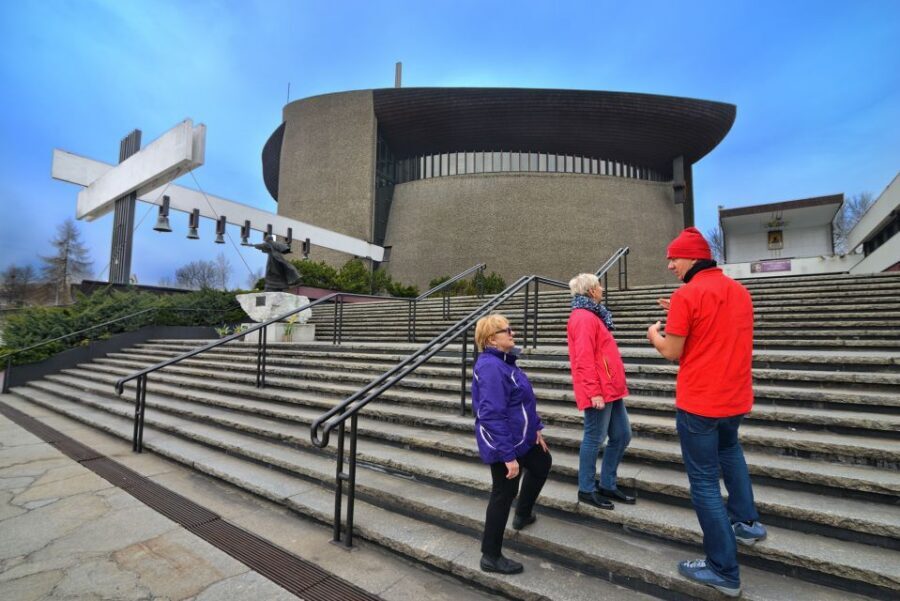
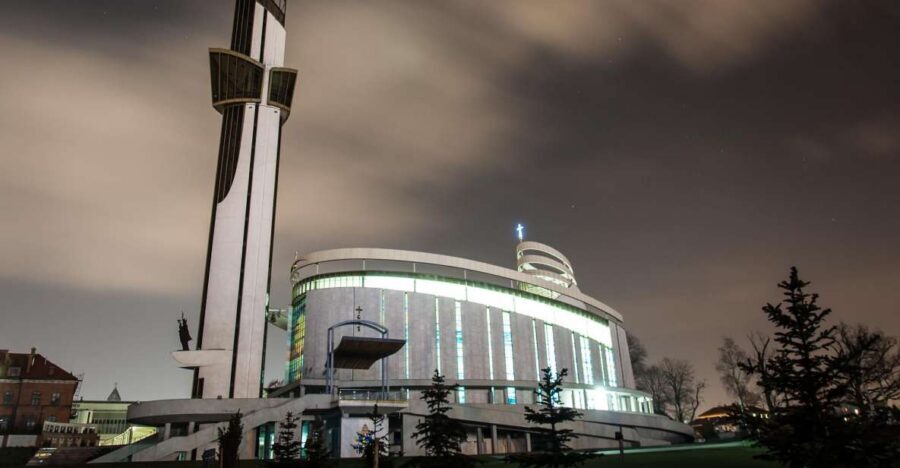
Lord’s Ark is described as a huge church that became a symbol of the long fight for freedom and democracy. What makes it stand out in this tour isn’t just its size—it’s the story of how it was built.
The tour emphasizes that residents built it completely by hand. That detail lands because it flips the communist narrative. Instead of an imposed system creating grand structures, you get community effort creating a landmark of hope.
The church’s architecture is also part of the lesson. You learn to connect design choices to meaning: what the building represents, why it mattered during the struggle for democratic freedoms, and how Nowa Huta’s identity evolved around that kind of resistance.
If you want one stop that feels emotionally satisfying rather than just educational, this is often the one.
A Café Pause: Seeing Nowa Huta After the Blueprint
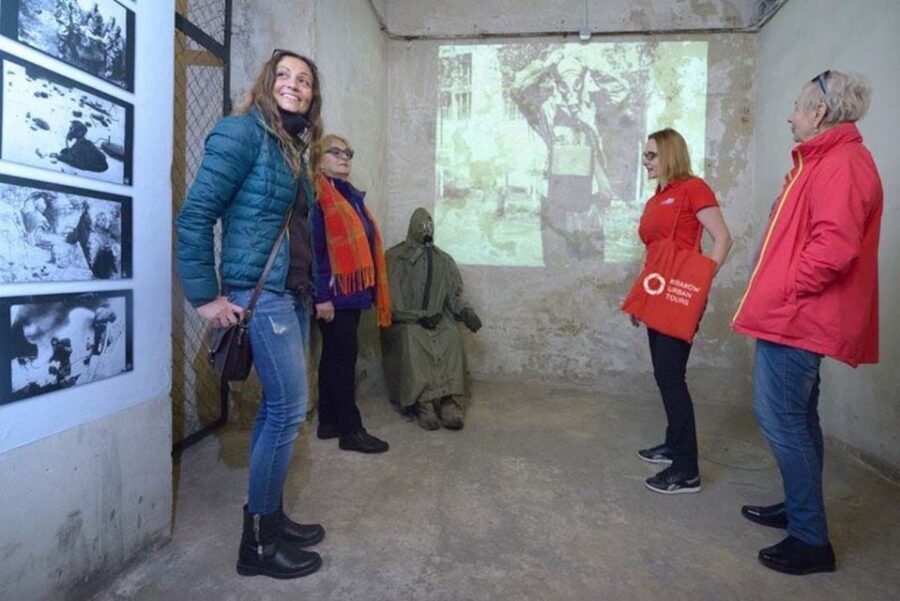
After the heavier, symbolic moments, the tour includes time to pause at a neighbourhood café. The aim is simple: you shouldn’t leave with only a past-perfect story. You should feel the district as it exists now.
This short break also helps the tour flow. By the time you sit down, you’ve walked through monuments, food, military remnants, and faith-based resistance. Having coffee lets you process all those themes without racing back to the next photo.
It’s also a practical reset. You’re on your feet for hours, and a scheduled pause keeps the whole experience from feeling like homework.
Small Group Energy with Guides Anna and Barbara
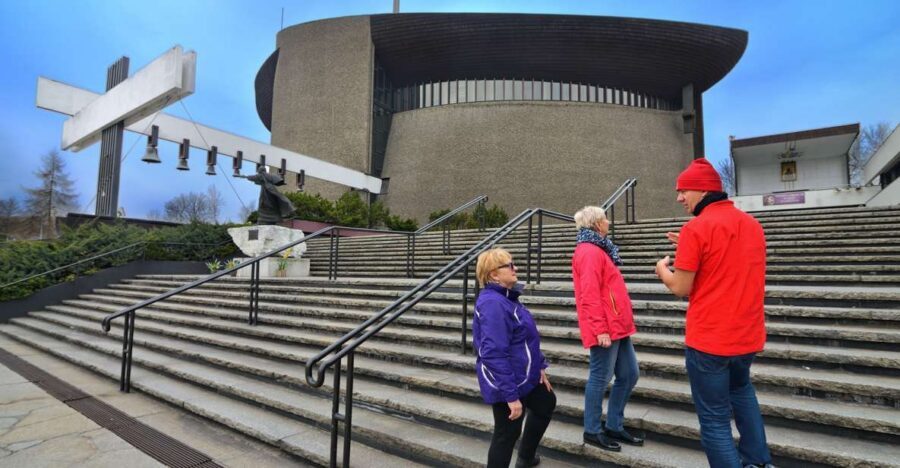
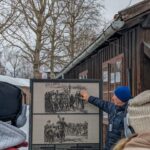
The reviews you provided highlight a strong pattern: the guides make the story come alive. Anna is praised for being wonderful and bringing everything to life with stories, and Barbara is described as friendly, enthusiastic, and able to explain the complexity of Poland during the communist period. A small group matters here, because it makes room for actual questions instead of one-way lecturing.
That interactive feel is part of the tour’s value. When you can ask why something was placed, or what a specific architectural detail is meant to communicate, you remember it longer. The tour isn’t just about hearing; it’s about connecting.
If you prefer walking tours where you can talk back, this format fits well.
Price and Value: What $112 Buys in 4 Hours
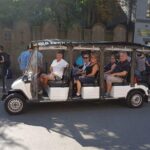
At $112 per person for a 4-hour small group walk, you’re not paying only for the guide’s time. You’re also paying for built-in costs that make the experience smoother: transport by tram to and back from the communist district, an entrance ticket to the communist museum, a vodka tasting, and a zapiekanka snack.
Here’s how I’d think about value. If you arrived on your own, you’d still have to get transit, figure out where to go, pay for any museum entry, and then somehow build an itinerary that includes both major landmarks and everyday-life stops. This tour packages all that decision work for you, with guided explanations that turn the route into a coherent story.
Also, the tour notes that some proceeds support local conservation, heritage, and culture. That’s not a substitute for good guiding, but it’s a bonus when a district’s physical fabric needs care.
Who Should Book This Nowa Huta Tour
This experience is ideal if you want more than a surface-level Krakow highlight. It’s especially good for people who like context: you want to know what you’re seeing and why it was built that way.
It also fits well if you’re traveling with mixed interests. You’ll get:
- architecture and planning ideas you can actually read as you walk
- food stops with vodka tasting and zapiekanka
- military remnants like the tank and a protection-system/bunker-style look
- a major landmark tied to democratic resistance, Lord’s Ark
The most important requirement is simple: comfortable shoes. You’re moving through a district on foot.
Should You Book the Nowa Huta Communist City Walk?
If you enjoy guided walks that explain what places meant to the people who built them—and what happened when that system collapsed—this tour is a strong pick. The blend of Soviet design lessons with tangible stops (tank, protection system, museum) plus food and everyday markets makes it more than a themed stroll.
I’d book it if you want a balanced, story-driven way to understand Poland’s communist era using real neighborhood details, not just museum plaques. Skip it only if long outdoor segments and politically loaded sights would ruin your day.
FAQ
What is the tour duration?
The tour lasts 4 hours.
Where does the tour start in Krakow?
Meeting point is 1 Dluga Street (ul. Dluga 1), at the corner of Dluga and Basztowa, by the entrance of the bookshop Pod Globusem. The guide will be holding a Krakow Urban Tours sign.
What’s included during the experience?
Transport by tram to the communist district and back, an entrance ticket to the communist museum, a vodka tasting in a communist restaurant, and a local snack of zapiekanka.
Is the tour guided in English?
Yes, it’s a live tour guided in English.
What should I bring?
Wear comfortable shoes.
Can I cancel or pay later?
You can cancel up to 24 hours in advance for a full refund. You can also reserve now and pay later.