REVIEW · KRAKOW
The Jewish Quarter – Walking Tour
Book on GetYourGuide →Operated by ZeeTour · Bookable on GetYourGuide
Krakow has a second heartbeat. This Jewish Quarter walking tour in Kazimierz puts Jewish life and Christian-Jewish coexistence into a clear timeline, from early settlement to what changed in the 20th century. I really like the strong focus on WW2 history, and I also love the film-world bonus of Schindler’s List filming locations along the way.
One thing to consider: it’s a 2-hour walk packed with many stops, and admission tickets are not included, so you may need extra time and money for specific entrances if you want to go inside everything.
In This Review
- Key things you’ll notice on this Jewish Quarter walk
- Starting at Restaurant No7: Finding ZeeTour in Kazimierz
- Kazimierz’s role: Why Jewish and Christian history are tied together
- The walk begins at Kazimierz Main Square and Miodowa Street Walls
- Synagogues you’ll see: Tempel, Kupa, Izaak’s, and the oldest 1400s structure
- Mikveh and the gendered lens of 16th-century ritual life
- Szeroka Street and personal connections: Helena Rubinstein and local memory
- Schindler’s List filming locations: WWII history you can see
- Remuh Synagogue and the Jewish Cemetery: ending with continuity and loss
- How the $33 price makes sense for a 2-hour tour
- Who this Jewish Quarter tour is best for
- What stood out in the guide experience
- Should you book this Jewish Quarter walking tour with ZeeTour?
- FAQ
- How long is the Jewish Quarter walking tour?
- Is the tour available in English?
- What is included in the price?
- Are admission tickets included?
- Where do I meet ZeeTour?
- Can I cancel for a full refund?
Key things you’ll notice on this Jewish Quarter walk
- Licensed English guides lead the whole route end to end
- Kazimierz’s streets and synagogues connect centuries of daily life, not just big events
- Schindler’s List filming locations add an extra layer to the stories of WWII
- Multiple synagogues on the same walk: Tempel, Kupa, Izaak’s, Remuh, Popper’s, and the Old Synagogue
- Memorial stops that focus on survival, warning, and remembrance, including a monument and a statue tied to trying to stop the Holocaust
Starting at Restaurant No7: Finding ZeeTour in Kazimierz
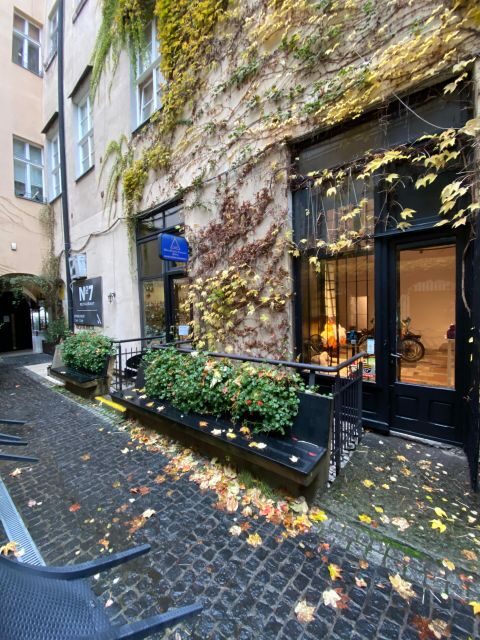
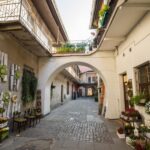
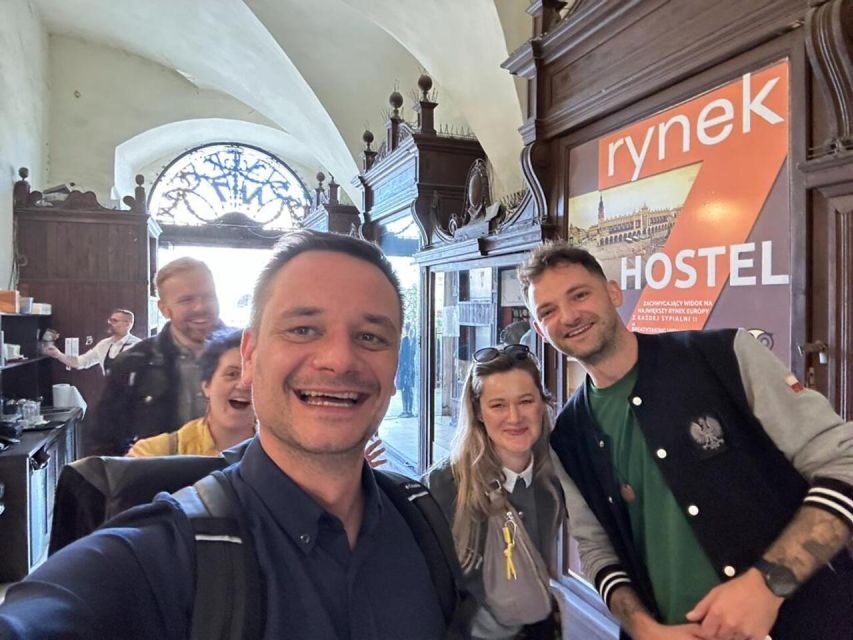
I like tours that start clean and easy, and this one does. Your meeting point is Restaurant No7. Walk into the building, then head to the courtyard where ZeeTour’s office is located in the courtyard of the building—listed as the second shop on the left.
Why I think this matters: Kazimierz can feel a bit like a maze when you first arrive. A clear meetup point reduces stress, so you can start the walk focused on the history instead of hunting streets.
The tour is in English with live licensed guides, so you’ll get answers on the spot rather than trying to piece things together from a phone screen. Also, the experience is described as wheelchair accessible, which is a helpful detail if you need a route that works for mobility limitations.
You can also read our reviews of more walking tours in Krakow
Kazimierz’s role: Why Jewish and Christian history are tied together
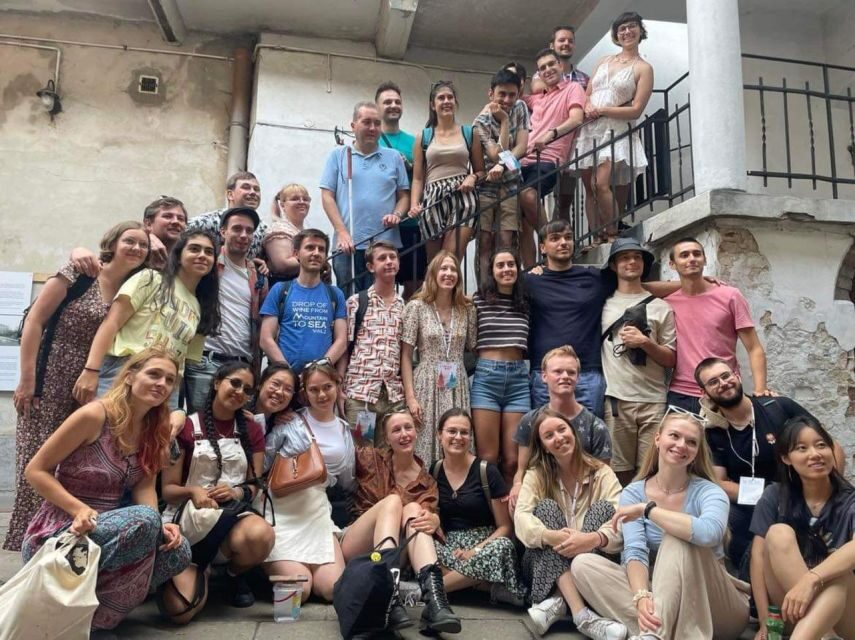
This walk starts with a big idea: you can’t really separate Jewish and Christian history in Krakow. Kazimierz today is commonly called a Jewish district, but the guide frames it as a place built on coexistence across long stretches of time.
That focus makes the history feel practical. Instead of treating Jewish life as a separate “topic,” you see it as part of the same city story—who lived where, what religious spaces looked like, and how those spaces sat inside everyday street life.
You also get a world-scale perspective. In the 16th century, the tour highlights that about 75% of the world’s Jewish population lived in Poland. That’s not just trivia. It helps explain why Krakow and Kazimierz mattered so much, and why the changes of the 20th century hit with such force.
Then the guide ties the past to the present. Krakow and Poland used to look more multicultural and diverse than they do in recent decades. You leave with a clearer sense of how that shift happened and why the old buildings and street names still carry echoes of what used to be.
The walk begins at Kazimierz Main Square and Miodowa Street Walls
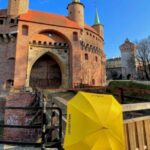
The route gets you oriented fast. You start at Kazimierz’s Main Square, then move to Miodowa Street, which the tour connects to the city walls of Kazimierz.
This is one of those “small geography” moments that pays off. When you understand where the edges were, you understand why certain communities clustered and why religious institutions held their shape for generations.
From here, the walk begins to transition into specific places of worship and communal life. That shift is useful: you don’t just get a lecture. You watch how the story changes block by block.
If you’re the type who likes photos, this is also your early opportunity to settle into the area’s look and layout. You’ll later hit places tied to film and WWII memory, and it’s easier to remember what you saw when you start with a sense of position.
Synagogues you’ll see: Tempel, Kupa, Izaak’s, and the oldest 1400s structure
A major reason this tour is worth your time is the density of stops. Instead of doing one highlight, you go through several synagogues and related historic sites in a single 2-hour walk.
First up is the Tempel Synagogue. Then you keep going to the Kupa Synagogue, followed by Izaak’s Synagogue. The route also includes the oldest building inside the Jewish Quarter from the 1400s.
What I like about this synagogue circuit: it encourages you to think about Jewish life as layered, not one-size-fits-all. Each stop is tied to how a community built institutions, managed faith, and organized public life.
Practical tip: since these are specific religious sites, I’d dress with respect in mind. Even if you’re outside most of the time, it’s a neighborhood of sacred history.
One more thing. The tour doesn’t just name places—it groups them. By the time you reach the later synagogues, you’ll start noticing patterns in why certain buildings ended up where they are and how the community’s spaces relate to the surrounding streets.
Mikveh and the gendered lens of 16th-century ritual life
A stop I find especially compelling is the Mikveh, described here as a ritual Jewish cleansing or bath house for females from the 16th century.
This is the kind of detail that changes how you read the neighborhood. It turns “old buildings” into real-life settings: when people would go, what rituals meant, and how religion structured the rhythms of everyday life.
It also helps you avoid a common mistake: thinking history is mostly about big events. A mikveh is a big deal, even when it feels quieter than a dramatic monument. It’s part of how a community maintained identity and continuity.
If you like learning through specific objects and spaces, this stop is a highlight. It’s also where the tour’s theme of coexistence becomes more human—you see how different communities shaped daily life across the same city streets.
Szeroka Street and personal connections: Helena Rubinstein and local memory
As the walk moves on, you head through Szeroka Street and stop at Helena Rubinstein’s birth place.
This matters because it ties the neighborhood’s story to a person you can picture, not just institutions and dates. When a guide connects place to an individual, it helps the history stick.
You also visit the Nissenbaum Family Foundation monument and a statue of a man who tried to stop the Holocaust.
Those stops take the tour in a heavier direction. They shift your attention from life before catastrophe to the moral choices and pressures around WWII. You don’t just learn what happened—you get a way to think about who tried to help and what it meant to act, even when survival was not guaranteed.
I’d treat these points as moments to slow down. It’s easy to rush on a walking tour. Don’t. Look at the details the guide points out, and let the story land.
Schindler’s List filming locations: WWII history you can see
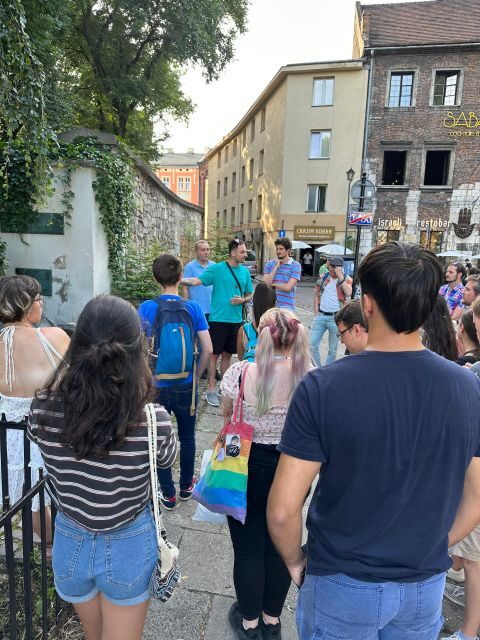
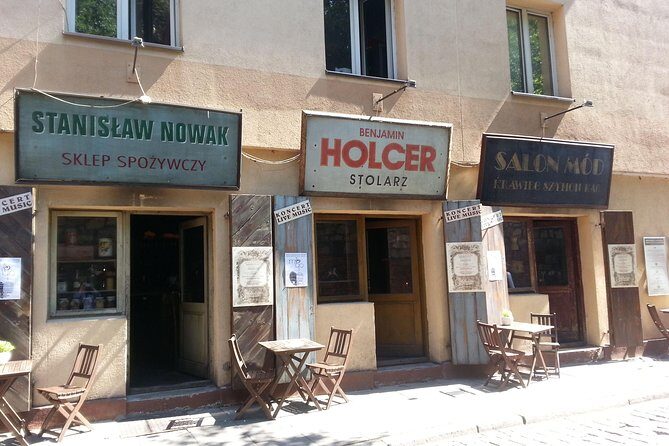
One of the declared highlights is numerous filming locations of Schindler’s List. That’s a strong hook, especially if you’ve seen the film, but even if you haven’t, it works because the guide uses the locations as anchors for the WWII story.
Here’s the value for you: film locations can be distracting if they become the focus. But on this tour, they function like waypoints. You’re shown how the WWII narrative connects to physical spaces in Kazimierz, so history doesn’t float in the air—it sits on the same streets you’re standing on now.
Because the tour also includes WW2 history as a central theme, the film connection turns into something practical: you can connect scenes, locations, and memory without needing to research on your own afterward.
If you’re the type who likes photos, you’ll likely take plenty here. Just remember: the point isn’t to “collect shots.” The point is to understand why those spots matter.
Remuh Synagogue and the Jewish Cemetery: ending with continuity and loss
The tour reaches the Remuh Synagogue and the Jewish Cemetery. Then it continues to Popper’s Synagogue and the Old Synagogue.
Ending in this area makes emotional sense. Synagogues are places of worship and community gathering. Cemeteries hold the record of names and lives, and they change the mood of the walk quickly.
This part is where you see the tour’s theme fully: the story isn’t only about what people built. It’s about what they endured and what remains. When you stand near cemetery grounds, the history turns personal fast.
Practical note: cemeteries and synagogue areas can involve more walking on uneven surfaces or longer pauses while you listen. Wear shoes you trust. Bring a small bottle of water if it’s warm out.
Also, if you’re hoping to go inside every synagogue, keep in mind admission tickets are not included. Some of the experience may be outside-focused depending on the site rules and what’s available at the time you go.
How the $33 price makes sense for a 2-hour tour
At $33 per person for a 2-hour walking tour, you’re paying for a lot of guide-led value: licensed English commentary, multiple historic stops, and a route that links everyday street life to WWII memory.
Is it a bargain? It’s priced like something that expects you to use the guide as the “translating layer.” You’re not paying for a private car, museum tickets, or a long day. You’re paying for a concentrated walk through Kazimierz with context you won’t get from just wandering.
What’s not included is important. Admission tickets aren’t included, so if you decide you want entry to certain places, you may spend extra. Still, the core value is the guiding itself, and it’s the guiding that makes the neighborhood feel legible.
If you want the best return on your money, do this early in your Krakow trip. Getting your bearings and your historical framework fast makes the rest of the city easier to understand.
Who this Jewish Quarter tour is best for
I think this tour fits especially well if you:
- Want a start-to-finish introduction to Jewish history in Krakow and how it connects to WWII
- Like walking tours that give you names, locations, and context instead of generic stops
- Prefer an English guide who can explain as you go
- Appreciate the extra layer of Schindler’s List filming locations
It may be less ideal if you:
- Want a slow, low-stop pace with lots of independent exploring
- Don’t like walking or standing for explanation at multiple sites
- Are only interested in one or two major attractions and don’t care about the broader story
What stood out in the guide experience
The guide quality is a big part of why this tour gets strong marks. I’d expect to hear clear explanations and get helpful answers, and the tour’s descriptions point to licensed guides leading in-person.
In the past, people highlighted the guide’s knowledge and the way the guide went beyond the standard route—showing interest in what the group wanted to see. That’s exactly what you should look for in a history tour: flexibility, not just a scripted path.
Should you book this Jewish Quarter walking tour with ZeeTour?
If you want a well-structured way to understand Kazimierz—from centuries of Jewish life to WWII remembrance—this is a smart booking. The mix of synagogues, a 16th-century mikveh, street-level context, and Schindler’s List filming locations gives you both story and place.
Book it if you like history that feels connected to the streets you’re walking, and if you’re comfortable with a 2-hour schedule that packs a lot into a small area.
Skip it if you want a very short tour, zero walking stops, or if you’re only looking for a quick photo route without guided context. And if you plan to go inside multiple sites, budget for admission tickets since they’re not included.
FAQ
How long is the Jewish Quarter walking tour?
It runs for 2 hours.
Is the tour available in English?
Yes, the live tour guide speaks English.
What is included in the price?
The guiding service with licensed guides is included.
Are admission tickets included?
No, admission tickets are not included.
Where do I meet ZeeTour?
Meet at Restaurant No7. Go into the building, then find ZeeTour’s office in the courtyard of the building (the second shop on the left).
Can I cancel for a full refund?
Yes. You can cancel up to 24 hours in advance for a full refund.