REVIEW · KRAKOW
Auschwitz-Birkenau Memorial Entrance Ticket and Guided Tour
Book on Viator →Operated by DISCOVER CRACOW · Bookable on Viator
This is history you feel in your stomach. A guided Auschwitz-Birkenau visit is one of the few things that turns Nazi-era records into something human, vivid, and unforgettable—starting at Auschwitz I and continuing to Birkenau.
I like how the tour is built around clear walking routes through the museum and the prison blocks, with a professional guide who explains what you’re looking at instead of leaving you to guess. I also like the practical side: pickup and drop-off in Krakow plus air-conditioned transport, which matters because this is a long day. The one drawback to plan for is that timing can shift because guide availability at the museum can change departure time.
What really makes the difference is the guide. I’ve seen praise for guides such as Bart, with remarks about tours that don’t soften the horrors and still keep everything dignified and structured.
In This Review
- Key things to know before you go
- Entering the Auschwitz-Birkenau site from Krakow: what the day looks like
- A note about the timing
- Auschwitz I: passing through Arbeit Macht Frei and the camp’s original core
- What to notice as you walk
- The museum exhibitions and prison blocks: why guided explanations are worth it
- Birkenau (Auschwitz II) in Brzezinka: seeing the scale that system created
- What you’ll feel as you look around
- Transport, group size, and why this tour runs as a “real day” outing
- Food isn’t included
- Price and value: is $36 a fair deal?
- What to pack and how to handle Auschwitz security fast
- The guides: what good instruction looks like at Auschwitz-Birkenau
- Should you book this Auschwitz-Birkenau tour from Krakow?
- FAQ
- How long is the Auschwitz-Birkenau guided tour from Krakow?
- What parts of Auschwitz-Birkenau does the tour cover?
- Is the admission ticket included?
- Do I need food or drinks?
- Do I need ID or a passport?
- Is this experience refundable if I cancel?
Key things to know before you go
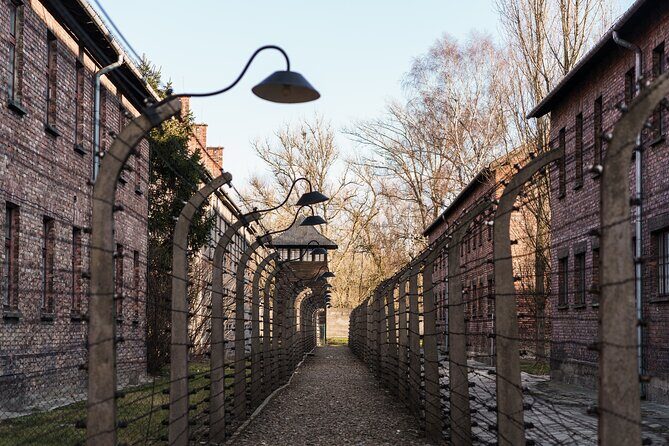
- Two different camps, one story: Auschwitz I shows the system’s early form; Birkenau shows the scale and machinery of mass extermination.
- Original site features matter: you walk past original roads, fences, watchtowers, and railway areas that still shape how the place reads.
- You go with a guide, not a lecture: the visit is designed to keep you moving block by block, so facts connect to what’s in front of you.
- It’s a full-day commitment: expect roughly 4 to 8 hours, depending on timing and the pace of the day.
- ID is not optional: security checks ask for ID or passport before entry.
- Small enough to stay organized: the group max is 30 travelers.
Entering the Auschwitz-Birkenau site from Krakow: what the day looks like
Auschwitz-Birkenau is not something you squeeze into a half-day with snacks and good vibes. This tour is built for a serious, guided experience, and the structure reflects that. You’ll start in Krakow with pickup from the city center, ride out in an air-conditioned vehicle, then step directly into the Auschwitz-Birkenau National Museum experience.
The practical advantage here is simple: you’re not sorting buses, ticket windows, and entry timing while you’re trying to absorb something overwhelming. The tour includes transport, pickup and drop-off, and a professional guide, plus the right entry for the Auschwitz I portion. The group limit (30) helps keep things from turning into a chaotic shuffle.
Plan your expectations around the emotional weight. The tour includes exhibitions and walking through prison blocks. Even if you’ve read about Auschwitz before, the physical layout is what makes it hit. And it’s big—both in area and in what it represents—so you’ll want to conserve energy before you arrive.
You can also read our reviews of more tours and experiences in Krakow

A note about the timing
Departure time might change due to availability of guides at the museum, and that change won’t trigger a refund. So it’s smart to keep your Krakow schedule flexible on the day you go.
Auschwitz I: passing through Arbeit Macht Frei and the camp’s original core
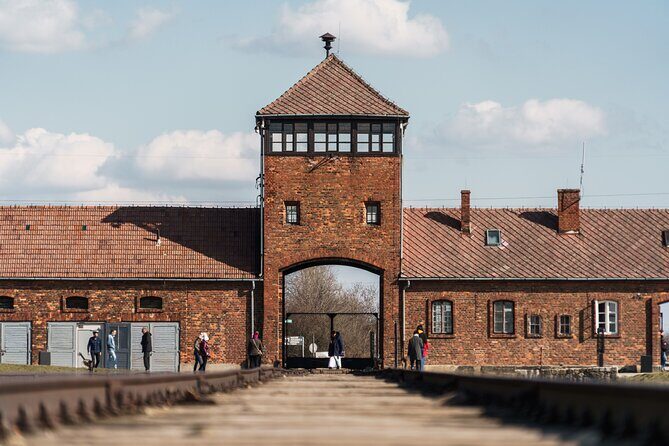
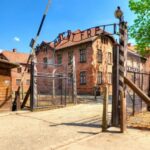
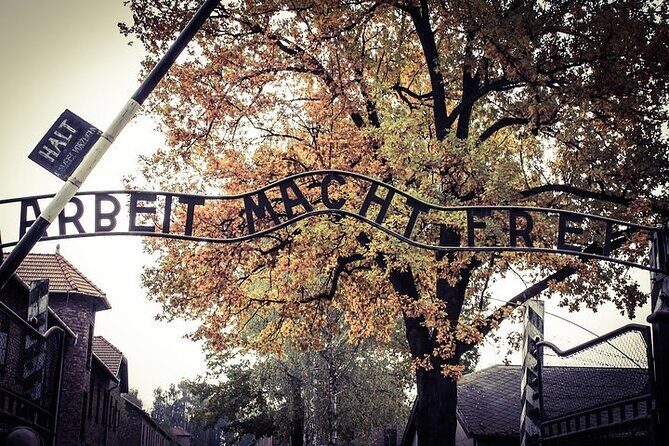
Auschwitz I is the part of the complex that introduces the system. You enter through the main gate area and then move into the camp grounds beneath the inscription Arbeit Macht Frei. Seeing that slogan in place—on the real gate you walk under—does a specific kind of damage to your assumptions. It’s propaganda, but it’s also a functional part of the camp’s design.
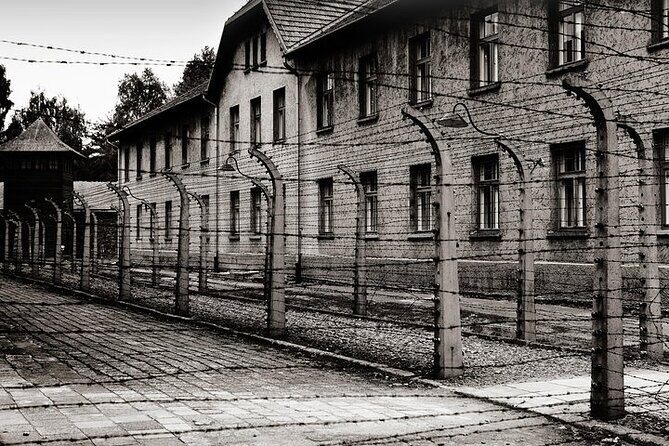
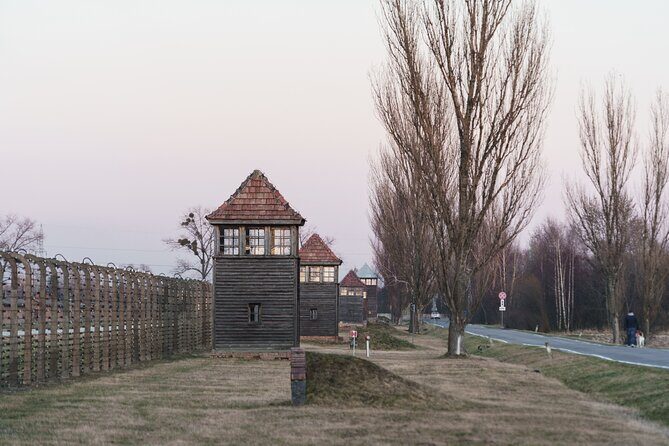
The tour then focuses on original structures and site elements. You’ll see the real roads, fences, watchtowers, and railway-related features that helped control prisoners and logistics. That matters because Auschwitz is not just a museum of objects. It’s a museum of decisions—how space was engineered to control human lives.
Here’s what Auschwitz I gives you that Birkenau alone can’t. It shows you the beginnings and organization of the camp system, including how prisoners were processed and contained. It’s also where you get the strongest sense of the camp’s role over time, from its establishment in 1940 (in place of old Polish army barracks) until liberation by advancing Soviet forces in 1945.
What to notice as you walk
Keep your eyes open for how the camp layout supports confinement. The fences, watchtowers, and controlled routes aren’t background scenery. They’re the camp working as designed—day after day, prisoner after prisoner.
The museum exhibitions and prison blocks: why guided explanations are worth it
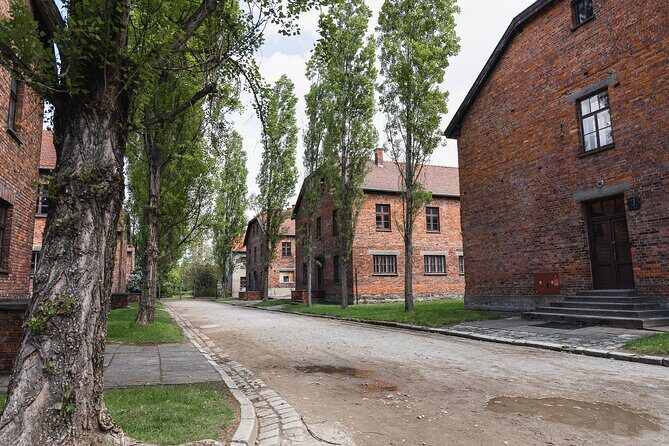
The exhibitions and prison blocks at Auschwitz I are where the history shifts from general to specific. You’ll be guided through moving displays and the prison-block area, where the place becomes harder to treat like a sightseeing stop.
A guided approach is a big deal here. Without a guide, it’s easy to get lost in dates and captions, and harder to connect what you’re seeing to the larger system behind it. With a guide, you get a framework: what the camp was used for, how it evolved, and what different categories of prisoners endured.
The best guides don’t just list facts. They help you recognize patterns in the way prisoners were treated and why particular areas were built the way they were. That’s also why you’ll hear strong praise in reviews for guides who don’t hold back on the reality of what happened, while still keeping the visit respectful and controlled.
You can also read our reviews of more guided tours in Krakow
Birkenau (Auschwitz II) in Brzezinka: seeing the scale that system created
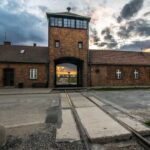
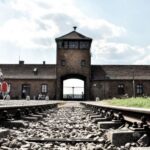
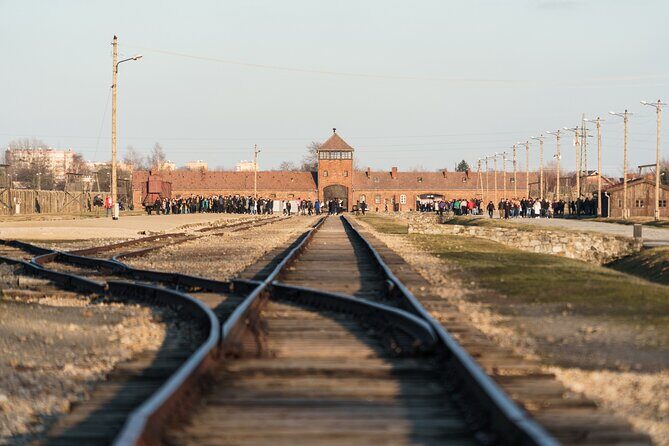
Birkenau, also called Auschwitz II, is where the story expands into something terrifyingly large. The tour transfers you to Birkenau, located about three kilometers from Auschwitz I, in the area of Brzezinka (where a village was displaced and mostly demolished).
This is also the camp that started as something else on paper. It was originally planned as a camp for Soviet prisoners of war, then used as a concentration camp for prisoners of multiple nationalities and ultimately became a center of extermination of Jews.
Construction began in October 1941 using slave labor, and Birkenau was designed to hold 125,000 prisoners at one time. The key word in how you understand the place is designed. The camp’s design wasn’t built for survival. It was built for processing and destruction, in ways that prisoners experienced as cold, hunger, disease, and exhaustion—conditions meant to break people quickly.
What you’ll feel as you look around
Birkenau’s layout pushes you to confront scale. It’s not just that more people suffered. It’s that the place itself was made to handle mass imprisonment and mass killing with industrial efficiency.
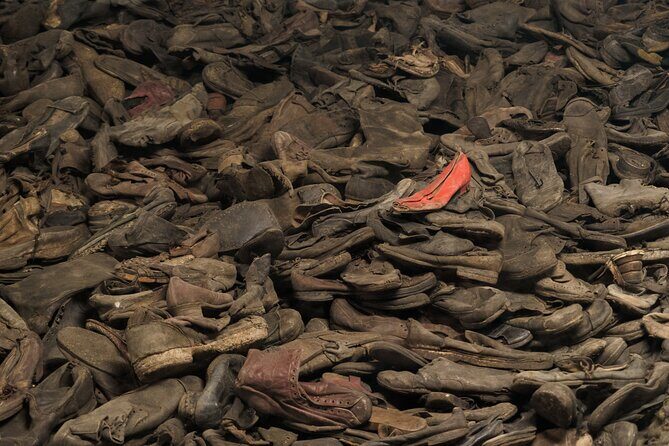
The tour includes time to see the living conditions and the realities of captivity there. Even if you’ve seen photos before, walking through the camp area changes your sense of distance and density. You can’t fully comprehend what happened from a single picture, but you can start to understand why the camp is remembered as such a central symbol of genocide.
Transport, group size, and why this tour runs as a “real day” outing
This experience typically lasts about 4 to 8 hours. That’s a wide range, but it matches how Auschwitz-Birkenau visits work: entry timing, the pace of walking, and the order of stops all affect how long you’ll be on site.
The tour caps at 30 travelers, which is a practical sweet spot. Big enough to keep costs reasonable, small enough that your guide can actually manage the group.
Also, the vehicle includes air-conditioning. In summer, that’s a comfort upgrade. In winter, it’s the difference between arriving able to stand and arriving with your legs already half done.
Food isn’t included
Food and drinks are not included. If you want a full day of low-stress walking, bring something simple for later. One review also mentioned that a pack lunch was offered on the tour, which suggests some groups may have food options, but you shouldn’t count on that as your plan.
Price and value: is $36 a fair deal?
At about $36 for a guided day trip from Krakow, the value is mostly in what’s bundled. You’re getting:
- Pickup and drop-off in Krakow city center
- Transport by air-conditioned vehicle
- A professional guide at Auschwitz-Birkenau National Museum
- All fees and taxes
- Admission ticket inclusion tied to Auschwitz I (and the Birkenau portion is described as admission free)
For this kind of destination, the big cost isn’t just the ticket. It’s the time, the guide, and the logistics of getting there and back without you doing the coordinating. When those elements are bundled, $36 can feel like a budget price rather than a luxury add-on—assuming your departure time works and you show up ready for a long, heavy walk.
Where the value can wobble is not the tour itself, but booking clarity. A couple of lower-score comments pointed to confusion around ticketing for other bundled museum items when booked through third-party channels. So if you’re booking through a reseller, make sure your confirmation clearly matches what’s included in your specific Auschwitz-Birkenau day ticket and tour.
What to pack and how to handle Auschwitz security fast
There’s one practical instruction you should treat like a rule: bring ID or passport. Before entrance security, you’ll be asked for it. Don’t show up with a digital photo only. Bring the real thing.
Then dress for weather. January visits can be very cold, and one review specifically called out the need to wrap up well. That advice holds in any season where you’ll spend time outdoors between buildings and fenced areas. Layers beat one bulky coat because you may find yourself walking hard and then freezing again.
A simple packing mindset works best:
- warm layers and gloves if it’s cold
- comfortable shoes for standing and slow walking
- a water plan (since drinks aren’t included)
- a small snack plan for later in the day
The guides: what good instruction looks like at Auschwitz-Birkenau
Auschwitz-Birkenau is the kind of place where a guide can either help you understand or leave you overwhelmed. The reviews here lean strongly toward the first option.
People praised guides for being passionate and for not dodging the horrors. The name Bart came up in one review as an example of a guide whose knowledge was praised, and there’s a pattern in other feedback: friendly, well-organized, and able to explain what you’re seeing without turning it into a cold checklist.
That matters because you’ll face a lot of sensory input—structures, exhibits, rooms, and corridors—and you need context to keep it from turning into noise. A good guide gives you the thread: why this area exists, how it functioned, and what the camp system was doing at that stage.
Should you book this Auschwitz-Birkenau tour from Krakow?
If you want a guided, structured visit to both Auschwitz I and Birkenau with pickup from Krakow, this is a sensible choice. The price is reasonable for the amount of logistics and guidance included, and the small group limit makes it easier to manage.
I’d especially recommend it if:
- this is your first Auschwitz-Birkenau visit
- you want explanations while you’re walking the grounds
- you prefer having transport handled
- you’re traveling with limited time in Krakow
I’d think twice if your schedule is tight and you can’t handle possible departure-time changes due to guide availability. Also, if you’re booking through a third-party platform, double-check exactly what’s included in your ticket so you don’t get stuck sorting out anything on the day.
If you go in with firm expectations—warm clothes, ID in hand, and patience for a heavy walk—you’ll get an experience that is guided, organized, and deeply educational.
FAQ
How long is the Auschwitz-Birkenau guided tour from Krakow?
It’s listed as about 4 to 8 hours, depending on timing on the day.
What parts of Auschwitz-Birkenau does the tour cover?
You visit Auschwitz I at the Auschwitz-Birkenau National Museum, then move on to Birkenau (Auschwitz II).
Is the admission ticket included?
The Auschwitz I admission ticket is included, and the Birkenau portion is listed as admission free.
Do I need food or drinks?
Food and drinks are not included, so you’ll need to plan for your own meal and water.
Do I need ID or a passport?
Yes. Security asks for ID or passport before entry.
Is this experience refundable if I cancel?
No. This experience is non-refundable and cannot be changed for any reason.