REVIEW · KRAKOW
Krakauer old town tour
Book on GetYourGuide →Operated by Walkative Tours · Bookable on GetYourGuide
Krakow’s old town feels frozen in time. This 150-minute walk is built around the Royal Route, so you’re not just looking at sights, you’re learning how kings, castles, palaces, and legends fit together in the city’s story. I especially liked the way the tour uses major landmarks to tell connected narratives, and the attention to big-picture context like why the Old Town and Wawel are UNESCO protected.
Two standouts for me: the stop around Collegium Maius (the oldest building at the oldest Central East European university mentioned on this tour) and the Wawel area, where you get the cathedral, castle courtyard, and the Wawel dragon moment in one sweep. One possible drawback: the pace can feel a bit brisk, so if you like lingering for photos, plan to grab quick shots and accept that you might not have long stand-and-stare time at every corner.
If you want a guided route that helps you get it fast, this is a strong choice. You’ll meet near the Barbakan and the St. Florianstor, then spend the morning-or-afternoon moving through medieval walls, the main market, and the Wawel hill while your guide keeps the timeline and the legends straight. One guide name that shows up in praise is Monika, with excellent German and entertaining humor, which is exactly the kind of combo that makes this style of walking tour work.
In This Review
- Key highlights you’ll care about
- Entering the Old Town Through the Barbakan and City Walls
- The Royal Route: How the Walk Builds a Story of Kings and Power
- UNESCO Protection You Can Feel While You Walk
- St. Mary’s Basilica and the Trumpeter Moment
- Collegium Maius: Where Copernicus-Like Curiosity Fits In
- Archbishopric Palace and the Papal Window by Johannes Paul II
- Wawel Hill: Cathedral, King’s Palace Courtyard, and the Dragon
- The Main Market and Tuchhalle: Where Money Meets Ceremony
- How the 150 Minutes Actually Plays Out on Your Feet
- What You Get for About $26, and When It’s a Smart Value
- Who Should Book This Krakow Old Town Walk
- Should You Book the Krakauer Old Town Tour?
- FAQ
- Where is the meeting point for the Krakow Old Town tour?
- How long is the tour?
- What language is the live guide?
- What major places does the tour include?
- Does the tour run in bad weather?
- Is there free cancellation?
- Is the tour wheelchair accessible?
Key highlights you’ll care about
- UNESCO Old Town + Wawel: a protected core that survived the Second World War and still feels medieval
- Medieval city walls and the Barbakan: early context before you hit the main sights
- Main Market and Tuchhalle: the commercial heart tied into the royal story
- Collegium Maius visit: a focused look at academic life from the 15th and 16th centuries
- Wawel hill, cathedral, King’s Palace courtyard, and the dragon: one location, many layers
- St. Mary’s Basilica and the trumpeter: a detail you’ll notice once your guide points it out
Entering the Old Town Through the Barbakan and City Walls
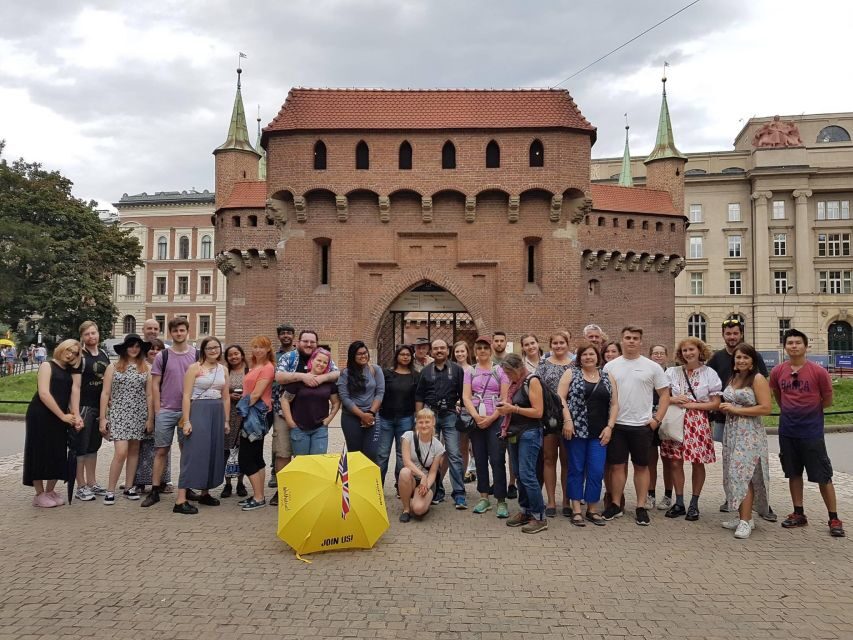
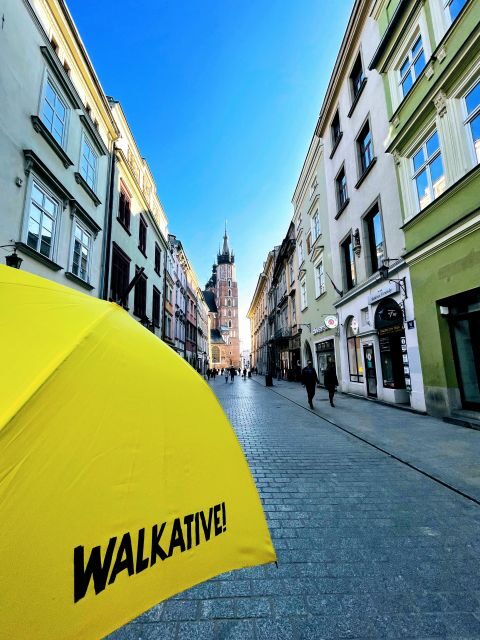
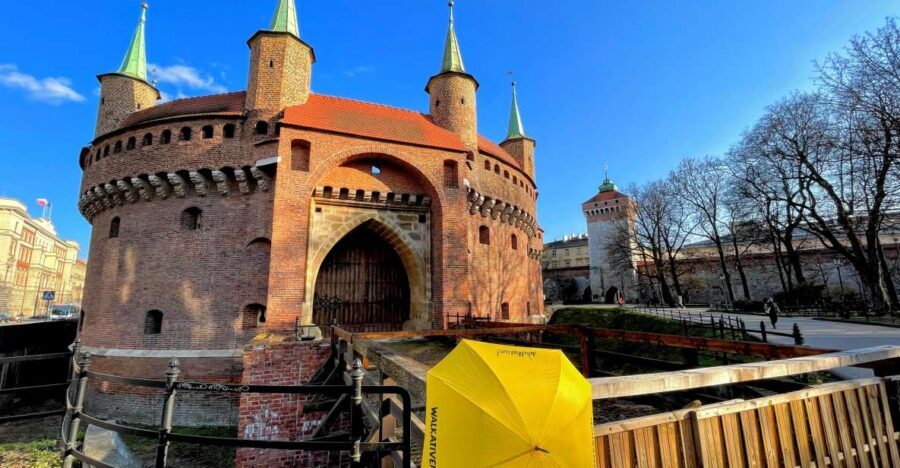
The meeting point is a small place between the Barbakan and the St. Florianstor, so you start with the city’s medieval “edge,” not the modern souvenir strip. That matters. When you begin at the entrance, the Old Town feels like a walled place with boundaries and purpose, not just a list of famous stops.
From there, the tour moves along medieval city walls and includes the Barbakan. This is the kind of introduction that helps you understand why Krakow’s center mattered strategically long before it became a postcard destination. You’re also more prepared for what you’ll see next, because the guide sets up the city as a living system: defense, movement, power, and then culture.
Practical note: the tour runs in any weather, and if it rains or turns cold, you’ll find a roof when needed. That keeps the experience from turning into a frantic “duck-and-dash” walk.
You can also read our reviews of more tours and experiences in Krakow.
The Royal Route: How the Walk Builds a Story of Kings and Power
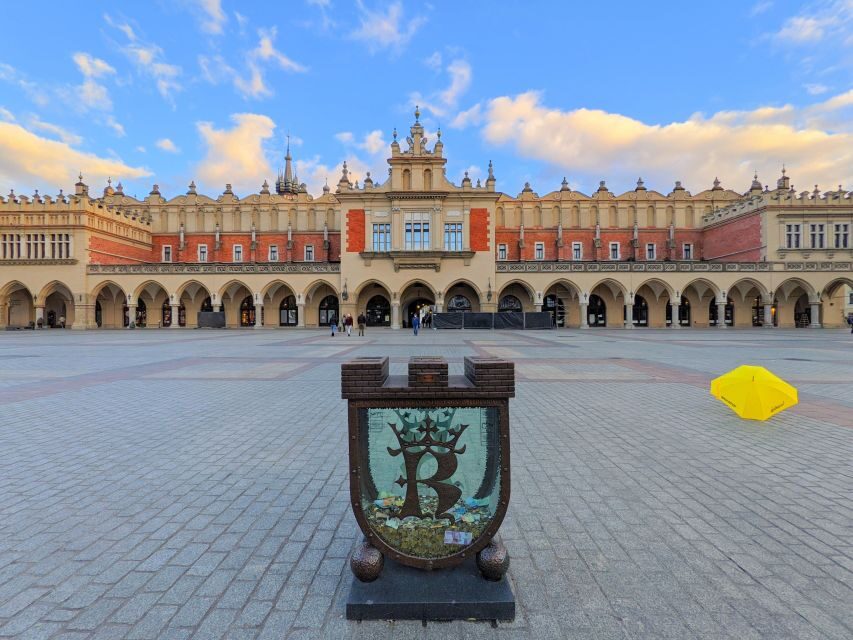
This tour’s backbone is the Royal Route, and you’ll feel that structure in the way the stops connect. Instead of hopping randomly between landmarks, you’re guided along a path that makes the monarchy and the city’s prestige easier to follow.
Key stops along this royal flow include:
- Wawel hill viewpoints and the Wawel lock area your guide highlights
- St. Marien-Basilica
- the main market area, including the Tuchhalle
What I like about this approach is that it turns famous names into meaningful locations. When a guide ties together a basilica, a market building, and the Wawel complex, you start seeing how power expressed itself: religion in one place, administration and gathering in another, and royal life clustered around Wawel.
You also get stories tied to kings and palaces and castles—exactly the kind of “why was this here?” context that makes a walking tour worth the money. This isn’t just facts; it’s a sense of the city’s hierarchy and how people moved through it.
UNESCO Protection You Can Feel While You Walk
The Old Town of Krakow and Wawel Castle are part of the UNESCO World Heritage Site, and the tour leans into why that designation matters. One specific detail to listen for: this Old Town has “hardly changed” since the Middle Ages, and it also survived the Second World War.
That combination is rare. You’re standing in a space where architecture and street layout are still doing the heavy lifting. The guide’s job is to make sure you understand what you’re looking at, but the bigger gift is the setting itself. You don’t have to imagine how it used to feel; the tour helps you read the place like a text.
Another UNESCO-strength point here is that this site was included in the very first UNESCO list mentioned on the tour. That gives the walking route extra weight, because you’re not just visiting something old—you’re visiting something that global heritage experts recognized early on as important.
St. Mary’s Basilica and the Trumpeter Moment
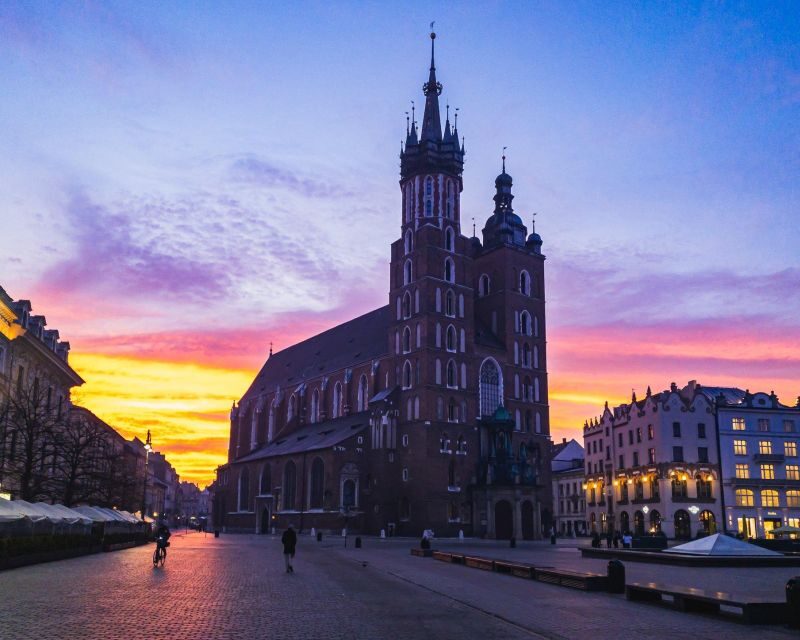
One stop that deserves your attention is St. Mary’s church, also referred to here as St. Marien-Basilica. The highlight is its famous trumpeter.
The trick with details like this is that they can look like a curiosity until someone explains the cultural context and what makes it notable. Once your guide frames it, you’re more likely to watch with purpose rather than just pass by because the building is impressive.
This is also a good moment for quick photos, because this kind of landmark often creates a strong skyline effect. Just remember the pace: you’ll want to treat picture time like a short sprint, not a long pause.
Collegium Maius: Where Copernicus-Like Curiosity Fits In
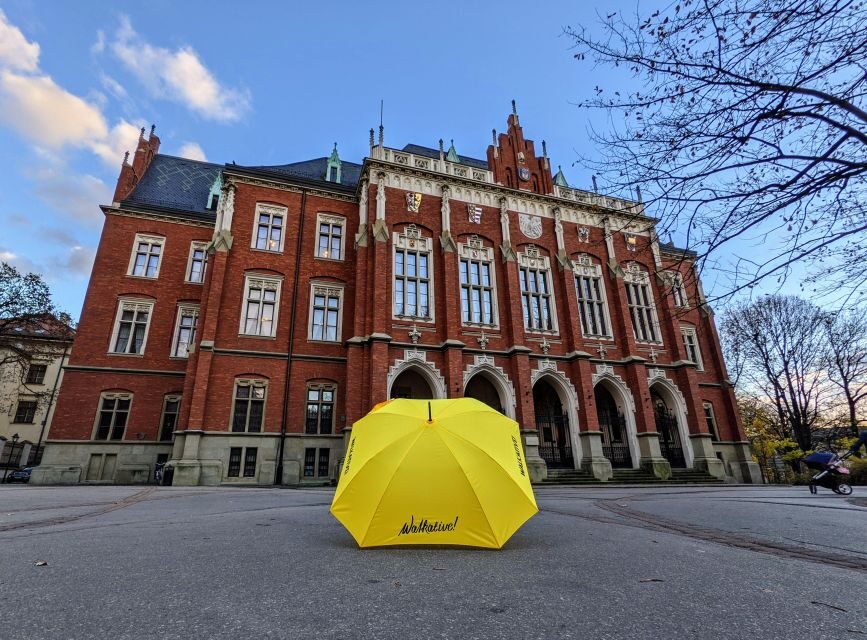
The tour includes a visit to Collegium Maius, described as the oldest building at the oldest university in Central East Europe. Even if you’re not a “history of universities” person, it’s a fascinating stop because it shows how Krakow functioned as more than politics and monuments.
The guide also connects the Old Town to intellectual life in the 15th and 16th centuries, with the tour noting that Copernicus went through these streets. That kind of name-drop matters here, because it turns the walk from architecture appreciation into human stories: students, scholars, and visitors moving through the same corridors you’re standing in.
I like this stop because it’s one of the most “comprehension” points on the route. When you understand that artists and scholars were part of Krakow’s daily reality, the city becomes less like a stage set and more like a working cultural center.

Archbishopric Palace and the Papal Window by Johannes Paul II
Another meaningful stop is the Archbishopric Palace and the “papal window” by Johannes Paul II.
This is where the tour adds a later layer of meaning without losing the medieval feel. Religious power, political symbolism, and public visibility all come through, and the tour gives you a way to connect that with earlier themes of kings and royal routes.
If you like history that reaches beyond one era, this is a smart inclusion. It reminds you that Krakow didn’t stop being important after the Middle Ages. Instead, the city’s role shifted while remaining central to public life.
Wawel Hill: Cathedral, King’s Palace Courtyard, and the Dragon
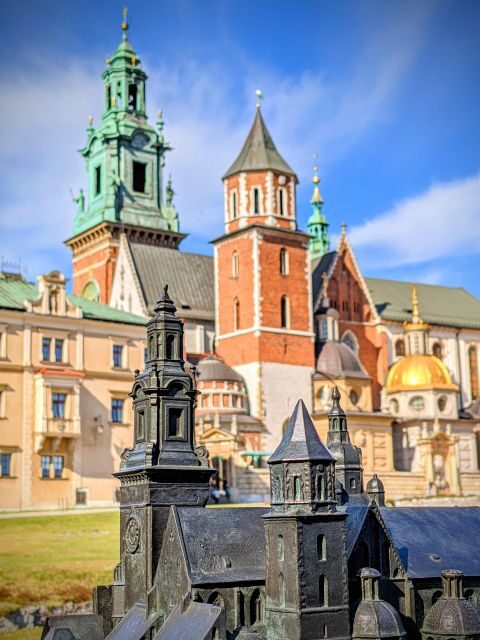
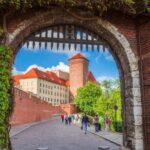
Wawel hill is the biggest “you’re really in it” area of the tour. Here you visit the cathedral and the castle courtyard, and the tour also includes the Wawel King’s Palace as part of the stops.
And then comes the Wawel dragon.
This dragon stop is important because it breaks the spell of “only serious monuments.” Legends are how cities teach themselves to people. You’ll see a different kind of storytelling happening—one that sits alongside architecture and royal power.
I also appreciated that the tour doesn’t treat Wawel as one single photo spot. It’s structured as a layered visit: cathedral authority, palace space, courtyard atmosphere, and then the legend that people keep retelling. That mix makes it easier to remember what you saw, because you’re not just memorizing buildings—you’re collecting scenes.
The Main Market and Tuchhalle: Where Money Meets Ceremony
The tour passes through the main market and includes the Tuchhalle. This matters because markets are where different parts of society actually touch. Even if you’re not buying anything, the guide’s explanation can help you understand why a market hall is tied to the royal route.
Think of it as the city’s “exchange layer.” Power isn’t only ceremonial. It’s also economic and social, with everyday movement happening under the same roofs that symbolize status.
In a 150-minute walk, the main market is also a practical checkpoint. It’s a point where you’ll likely feel the tour’s rhythm: enough time for context, not so much that you get stuck. It’s a good place for you to note directions—so if you want to come back later, you know the geography.
How the 150 Minutes Actually Plays Out on Your Feet
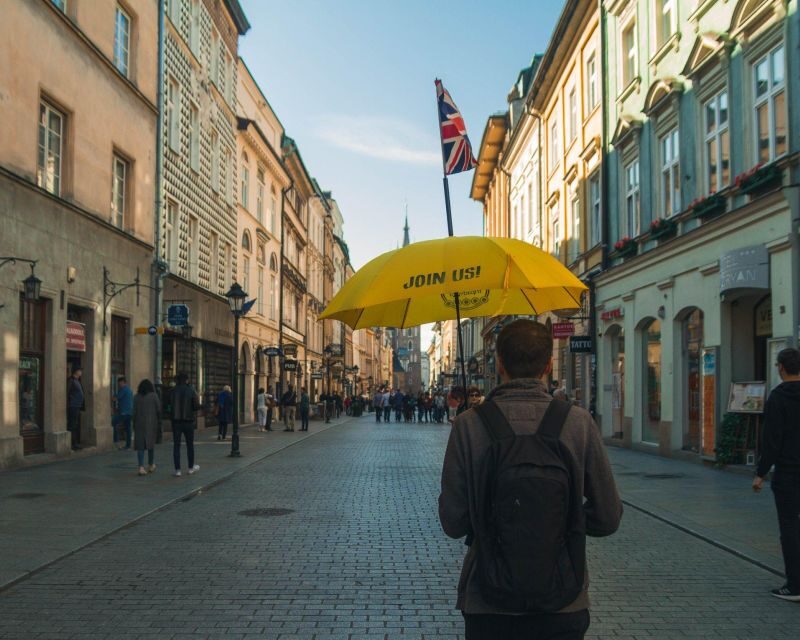
The total duration is 150 minutes, and the tour is designed as a compact route through several anchor points. That means you’ll cover a lot without feeling like you’re on an all-day trek.
One consideration from the overall pacing: the route can feel somewhat fast, since the next group is ready and waiting. If you tend to slow down for photos and then forget you’re holding the line, this might test your patience. My suggestion: treat the walk like a guided “scan,” then circle back on your own later for the one or two stops you love most.
Language is German for the live guide, so if your German is basic, it can still work. Just set expectations: you’ll get much more out of the tour if you can follow the main points.
What You Get for About $26, and When It’s a Smart Value
The price shown is $26 per person, but the tour description also signals a pay-what-you-wish style. That’s a big deal for value, because it suggests you’re paying for a guided narrative and key entries rather than just a generic walk-by.
What’s included that makes this feel worthwhile:
- an expert local travel guide with a structured story
- a visit to Collegium in Maius
- visit to the Wawel King’s Palace
- the guide’s “how it all connects” explanations, not just a list of stops
In other words, you’re paying for someone to connect UNESCO-level places to real scenes in the city’s timeline, including legends like the Wawel dragon and cultural references like Copernicus going through these streets. That’s the kind of value you notice most when you finish and feel like the city makes sense.
If your goal is to see Wawel and the Old Town highlights without guessing what matters, this price point can be a good match—especially because the tour is short enough to fit into a packed day.
Who Should Book This Krakow Old Town Walk
This tour is a good fit if you:
- want a guided route through UNESCO Old Town and Wawel without getting lost
- enjoy story-led sightseeing—kings, palaces, and legends like the dragon
- care about culture and learning places, not just churches and viewpoints
- want a 150-minute plan that keeps you moving and oriented
It’s less ideal if you need very slow pacing, long indoor browsing time, or lots of free roaming without a set path.
Should You Book the Krakauer Old Town Tour?
I’d book it if you want your Krakow first-time experience to feel coherent. The Royal Route structure, the pairing of Wawel with Collegium Maius, and the inclusion of legend and modern-religious symbolism (like the Johannes Paul II papal window) give you more than “big buildings.” You get a guided understanding of how the city tells its own story.
Skip it only if you strongly prefer unstructured exploring or you get stressed by a brisk walking pace. Otherwise, this is an efficient way to hit the core landmarks and leave with a clear sense of what matters in Krakow’s Old Town.
FAQ
Where is the meeting point for the Krakow Old Town tour?
You meet in a small place between the Barbakan and the St. Florianstor, the medieval entrance to the city.
How long is the tour?
The tour duration is 150 minutes (about 2 hours and 30 minutes).
What language is the live guide?
The live tour guide speaks German.
What major places does the tour include?
You’ll see the medieval city walls and the Barbican, the main market with the Tuchhalle, St. Mary’s Basilica (with its famous trumpeter), Collegium Maius, the Archbishopric Palace and the papal window by Johannes Paul II, and the Wawel area including the cathedral and castle courtyard, plus the Wawel dragon. The tour also includes the Wawel King’s Palace.
Does the tour run in bad weather?
Yes, the tour takes place in any weather. If it rains or becomes cold, the guide will find a roof.
Is there free cancellation?
Yes. You can cancel up to 24 hours in advance for a full refund.
Is the tour wheelchair accessible?
Yes, the tour is wheelchair accessible.