REVIEW · KRAKOW
Krakow: Jewish Quarter and Former Ghetto Tour by Golf Cart
Book on GetYourGuide →Operated by See Cracow Tours · Bookable on GetYourGuide
Some places hit hard fast.
This 1-hour Krakow Jewish Quarter and Former Ghetto tour uses a quick golf-cart route plus an audio guide to put everyday life back into focus before and during World War II. I like that you get the big landmarks with just enough context to understand what you’re seeing, and I also like the finish at Schindler’s Factory, where you can decide how much time to spend. One drawback to think about: it is short, so if you want lots of museum time, you’ll still need your own entry ticket.
You start in Kazimierz, Krakow’s historic Jewish center, then roll into Podgórze, where the ghetto was. Along the way you pass major markers like Ghetto Heroes Square and the Eagle Pharmacy, and you end at the former factory connected to Oskar Schindler. The best part is the pace: you learn while you ride, so you don’t waste your limited time wandering without a map.
In This Review
- Key points to know before you go
- Why Kazimierz to Podgórze by golf cart works in real life
- Getting started at Sekret Smaku and the K+R BUS pick-up
- Kazimierz: the Jewish Quarter that set the stage
- Ghetto Heroes Square: empty chairs and the story behind the markers
- Eagle Pharmacy and the ghetto wall fragments you pass by
- Schindler’s Factory finish: your self-paced way to extend the meaning
- Audio guide and language options: how to use them well
- What the 1-hour duration really buys you (and what it can’t)
- Price and value: is $34 a fair deal?
- Who should book this tour, and who might skip it
- Should you book this Krakow Jewish Quarter and Ghetto tour?
- FAQ
- How long is the Krakow Jewish Quarter and Former Ghetto tour by golf cart?
- Where does the tour start and where does it end?
- What is included in the price?
- Is the Schindler’s Factory Museum entry included?
- What do you see on the route?
- What about food and drinks?
Key points to know before you go
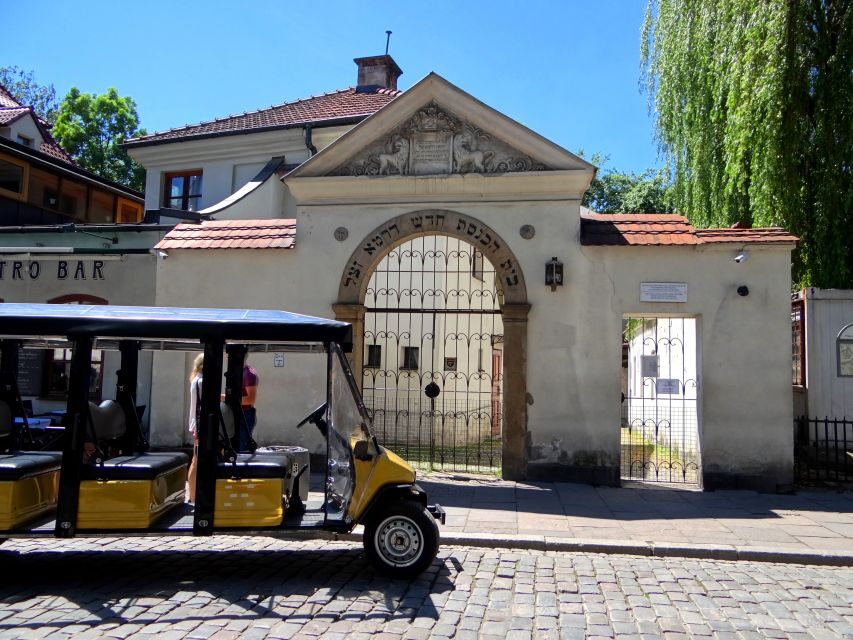
- A maximum of 12 people keeps the experience from turning into a loud production line
- Audio guide included in a long list of languages, with narration for many of the sites you pass
- Ghetto Heroes Square, Eagle Pharmacy, and Ghetto Wall fragments are worked into the route, not just mentioned
- End at Schindler’s Factory so you can choose how long to stay (museum ticket not included)
- Short duration (1 hour) is ideal for first-timers who want context without a full half-day commitment
- No large bags allowed, so travel light
Why Kazimierz to Podgórze by golf cart works in real life
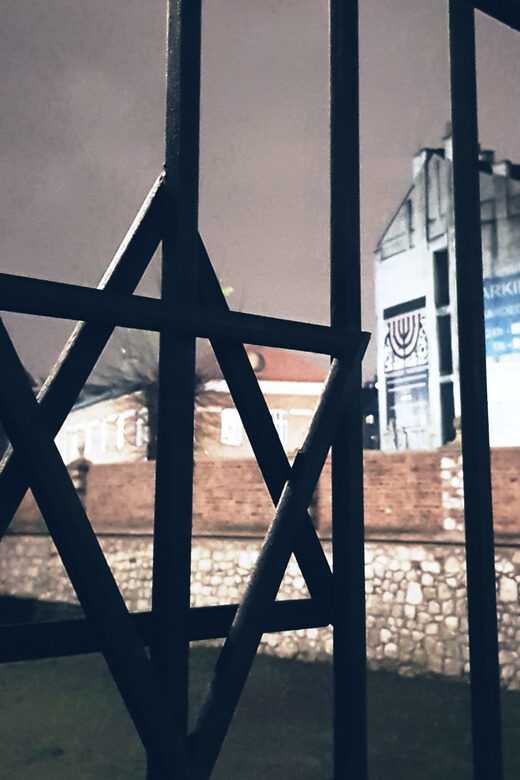
Krakow’s Jewish Quarter area can feel like a puzzle at first: corners look similar, streets twist, and important places aren’t always obvious. This tour solves that problem by doing the hard part—getting you from Kazimierz into the ghetto district—while an audio guide helps you read what you’re looking at.
The golf cart also changes your experience. You’re not huffing uphill while trying to keep track of names and dates. You’re moving at a steady pace, which makes it easier to absorb what the tour explains about occupation, resettlements, and daily conditions.
And because the group is kept small—up to 12 people—the mood stays respectful. You won’t feel like you’re crammed into a bus with a volume-off guide.
You can also read our reviews of more tours and experiences in Krakow.
Getting started at Sekret Smaku and the K+R BUS pick-up
The tour starts at Sekret Smaku Restauracja Kuchnia Polska. Still, the actual meet-up is at a tourist bus stop labeled K+R BUS, and you should arrive 15 minutes early.
This matters because you’ll want a calm start. If you show up late, you can end up rushing to find the right cart and settle in before the narration starts.
One more practical point: large luggage or big bags aren’t allowed. If you’re traveling with a daypack or small bag, you’ll likely be fine. If you’ve got bulky luggage, plan a different transport situation.
Kazimierz: the Jewish Quarter that set the stage
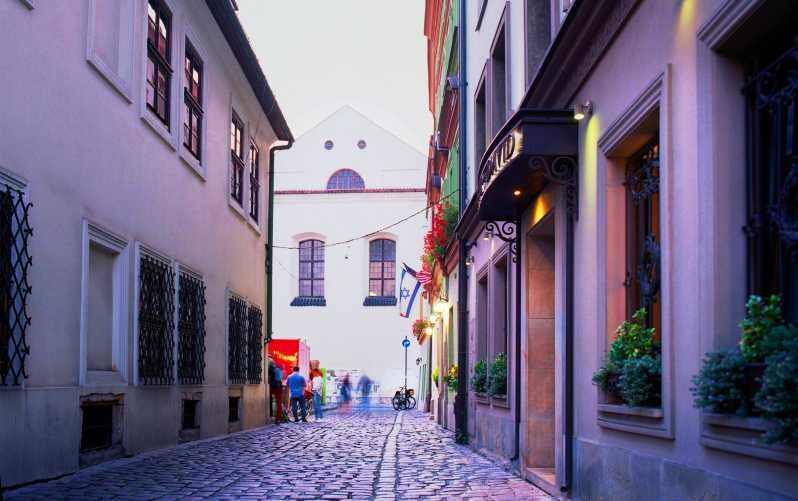
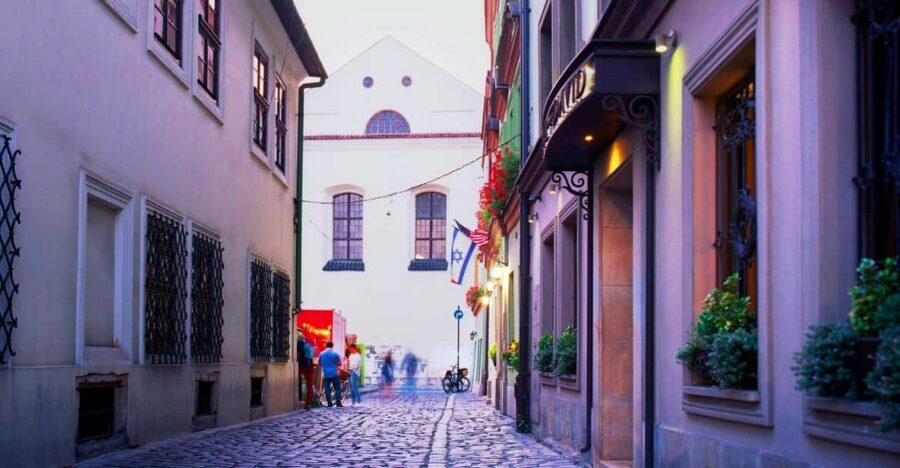
Kazimierz is where you begin, and it’s not just a backdrop. The idea here is to show the center of Jewish life until the beginning of World War II, so the later ghetto material lands with meaning.
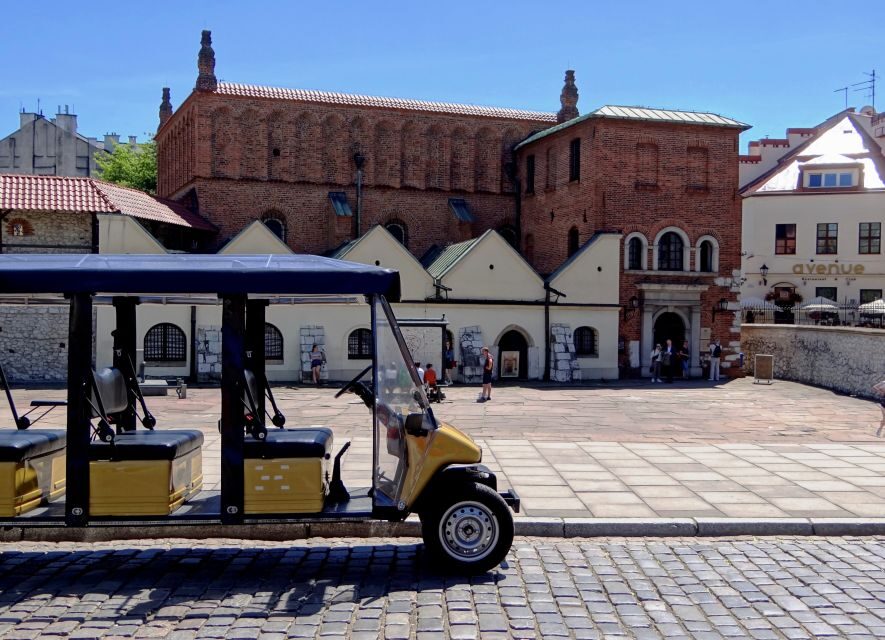
During the Kazimierz portion, you’ll explore the neighborhood for about 30 minutes. You’ll also visit the area connected to one of the largest synagogue complexes in Europe, which helps you understand that this community wasn’t only about religion—it was a full civic and cultural world.
What I like about starting here is that it prevents the tour from becoming only a list of tragedies. You get a sense of normal life first, then the tour turns to what Nazi occupation changed.
Ghetto Heroes Square: empty chairs and the story behind the markers
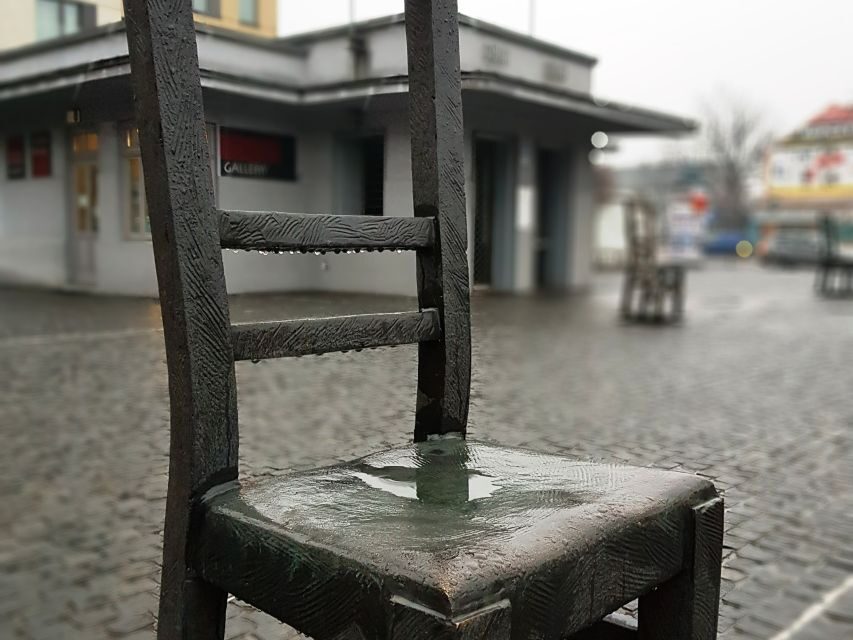
After Kazimierz, you head toward Podgórze, the district where the ghetto was located. The first major stop along that road is Ghetto Heroes Square.
You’ll spend around 10 minutes here, and the focus is the monument of empty chairs. That image is simple, but it’s powerful because it forces you to think of absence as something deliberate, not random. The tour’s audio context helps connect the monument to what happened during the earliest phases of occupation and resettlement.
A good way to get more out of this stop is to slow your pace. Don’t just stand and take photos. Let the audio run, then look around at how the space sits in modern Krakow.
Eagle Pharmacy and the ghetto wall fragments you pass by
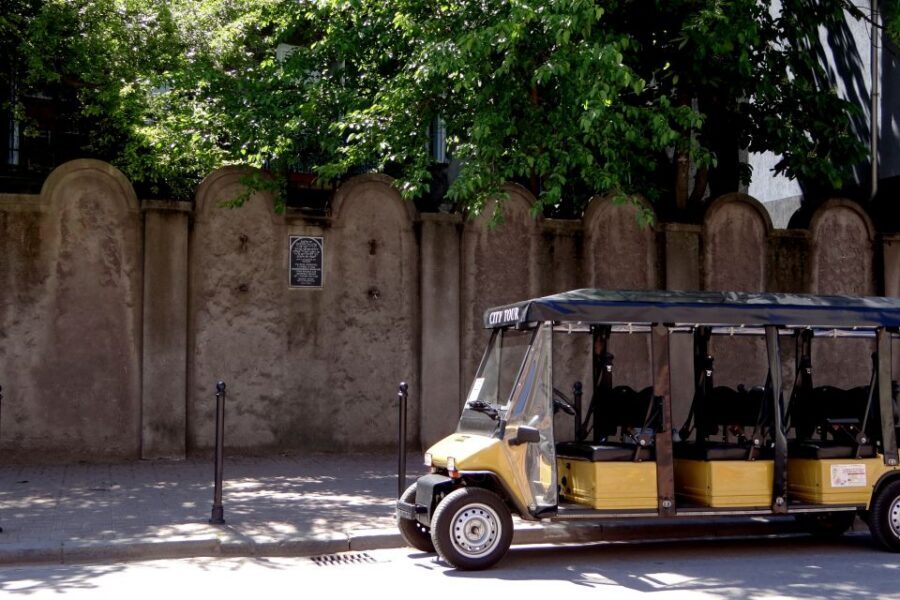
Next comes a quick but meaningful sequence: Pharmacy Under the Eagle, plus nearby sights you pass. This is short—about 5 minutes—so you’ll want to listen closely while you’re moving.
The stop ties into how people lived under pressure. Even when life is being restricted, daily needs still exist: trade, medicine, errands. The audio guide helps you understand why something like this pharmacy location matters in the larger story.
Then you’ll pass fragments of the Ghetto Wall. You don’t have a long walk here, but seeing leftover pieces of wall in the city helps your brain connect the narration to real stone and real space. It’s one of those moments where the tour earns its value: you get pointed to the right place, instead of guessing where the most important remnants are.
Schindler’s Factory finish: your self-paced way to extend the meaning
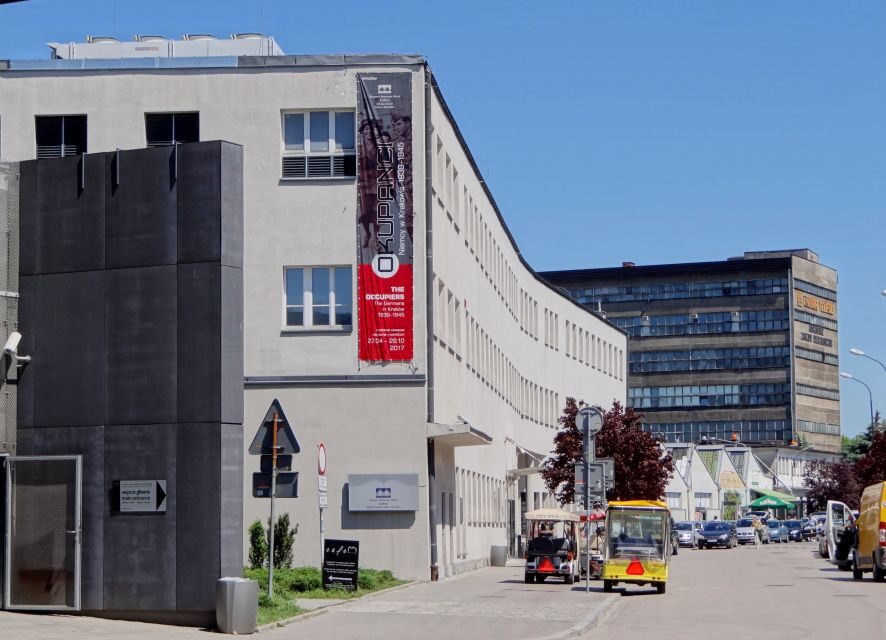
The tour ends at Oskar Schindler’s Factory. You spend about 10 minutes with the vehicle stopping near it, and then the tour lets you continue on your own.
This is smart because Schindler’s Factory is not just a location—it’s a museum experience. The tour connects you to Oskar Schindler’s history, then hands you the steering wheel for how you want to proceed.
Two practical things to keep in mind. First, entry tickets to the museum are not included, so factor that into your budget if you want to go inside. Second, the museum might be closed on holidays, so check ahead if your dates line up with public holidays.
I also like that the tour gives you flexibility. You can explore longer and linger if something catches your interest, or you can head back. Either way, you’re not stuck waiting for a fixed schedule.
Audio guide and language options: how to use them well
This experience includes an audio guide available in many languages, plus a live tour guide in English and Polish. Even if you plan to rely on the cart narration, it’s still worth choosing language carefully before you start.
The audio guide list is extensive, including French, Spanish, German, Italian, Portuguese, Dutch, Norwegian, Danish, Finnish, Russian, Ukrainian, Lithuanian, Slovak, Czech, Hungarian, Greek, Romanian, Serbian, Croatian, Turkish, Hebrew, Japanese, Korean, Chinese, Arabic, and more. That wide coverage is genuinely useful in a city where you’ll often find language gaps.
For a short tour like this, the key is listening without multitasking. If you’re busy scanning your phone, you’ll miss the connections that make the route feel coherent.
What the 1-hour duration really buys you (and what it can’t)
At 1 hour, this tour is designed for orientation and context. You won’t be spending hours reading exhibits. Instead, you’ll get a structured route that connects major points: Kazimierz, the transition to Podgórze, and the finish at Schindler’s Factory.
That’s the upside: you can fit it into a tight Krakow schedule without sacrificing the emotional impact of the sites. A small group also helps, since you tend to move with a steady rhythm.
The limit is obvious but important: if you want to go deep—especially inside Schindler’s Factory—you’ll need extra time and the museum ticket. One review complaint that makes sense in practice is simple: if you already enjoy independent walking and reading on your own, a short vehicle tour might feel like less value than you expected. The fix is easy. Treat this tour as your map and context, then do your own follow-up afterward.
Price and value: is $34 a fair deal?
At $34 per person, you’re paying for more than just transportation. You’re paying for a driver, a short route that hits the right places, and an audio guide built to explain what you’re seeing as you pass key sites.
Value improves if you meet the tour halfway. If you’re the kind of traveler who wants context for landmarks—like monuments, pharmacy locations, and leftover wall fragments—this price becomes easier to justify. You’re essentially buying time and clarity.
Value drops if you expect the museum to be included. Since Schindler’s Factory ticket entry isn’t included, your total cost can rise if you plan to visit inside. Also, because it’s only an hour, you shouldn’t expect a long-form history lecture.
For me, the best way to think about the cost is this: you’re paying for direction and meaning, not for a full museum day. If that matches how you travel, it’s a solid deal.
Who should book this tour, and who might skip it
You’ll probably love this if you want:
- A first-timer route through Kazimierz and into the former ghetto area
- A small-group experience with a steady pace
- Guided context so key landmarks don’t feel random
- A convenient finish at Schindler’s Factory for self-paced museum time
You might skip it if:
- You already have a lot of independent plans for walking and reading and don’t want a timed vehicle route
- You expect museum entry to be included in the price
- You have bulky luggage that doesn’t fit the no-large-bags rule
If you do go, consider pairing it with time for a meal nearby afterward. One review mentioned a Jewish meal stop at Ariel, and even if you’re not chasing the same plan, it’s a good reminder to build in a real break when you’re done.
Should you book this Krakow Jewish Quarter and Ghetto tour?
I’d book this if you want a smart, short way to understand what you’re seeing in Kazimierz and Podgórze—and you like the idea of ending at Schindler’s Factory so you can choose your own pace. The small group size, the audio guide, and the focused route through places like Ghetto Heroes Square and the Eagle Pharmacy make it feel purposeful, not scattered.
If you’re the kind of traveler who wants only deep museum time, or you hate any guided structure, you might find it less satisfying. But as a first pass that sets your bearings fast and points you to the sites that matter, it’s a strong use of an hour.
FAQ
How long is the Krakow Jewish Quarter and Former Ghetto tour by golf cart?
The tour duration is 1 hour.
Where does the tour start and where does it end?
It starts at the area of Sekret Smaku Restauracja Kuchnia Polska and ends in front of Schindler’s Factory. You can also be dropped back at the starting point.
What is included in the price?
You get a driver and an audio guide. A live tour guide is available in English and Polish.
Is the Schindler’s Factory Museum entry included?
No. Entry tickets to Schindler’s Factory Museum are not included.
What do you see on the route?
You visit Kazimierz, then the Ghetto Heroes Square, pass the Eagle Pharmacy (Pharmacy Under the Eagle) and fragments of the Ghetto Wall, and finish at Schindler’s Factory.
What about food and drinks?
Food and drinks are not included.