REVIEW · KRAKOW
Krakow: City Tour by Electric Golf Cart
Book on GetYourGuide →Operated by See Cracow Tours · Bookable on GetYourGuide
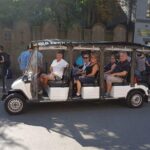
A cart tour saves your legs. This 90-minute ride is an easy way to absorb Krakow’s big landmarks fast, moving by electric-powered golf cart between Old Town, Kazimierz, and the WWII sites. I especially liked the comfort factor—cozy warmth in cold weather showed up in real-world reviews—and I also loved how the driver-guide brings the history to life with extra, human details and practical city tips. The one drawback to keep in mind is that the most famous stop, Oskar Schindler’s Factory, is brief, so plan to return later if you want a deeper look inside.
If you’re arriving for the first time and want your bearings, this is a smart, efficient loop through some of Krakow’s most important neighborhoods. You’ll meet at the K+R BUS tourist stop at Kraków, Plac Jana Matejki 3, then spend the rest of the tour moving and learning with an audio guide offered in 28 languages, while your English-speaking driver fills in questions along the way. It’s also wheelchair accessible, and the route is designed for seeing more with less walking.
In This Review
- Key takeaways before you go
- How the electric golf cart tour really feels (and why it works)
- Meeting at Plac Jana Matejki and settling into the right starting point
- Old Town by electric cart: Market Square, Royal Route sights, and Wawel Castle views
- Kazimierz: synagogues, old cemeteries, and atmospheric streets without the marathon
- Podgórze and Ghetto Heroes Square: the WWII thread, not just sightseeing photos
- Oskar Schindler’s Factory stop: a short pause with big follow-up potential
- The audio guide in 28 languages (and how to make it useful)
- Price and value: why $36 can be a smart deal in Krakow
- Comfort details that matter in winter and summer
- Who this tour suits best (and who should skip it)
- Should you book the Krakow Electric Golf Cart City Tour?
- FAQ
- How long is the Krakow city tour by electric golf cart?
- How much does the tour cost?
- Where do I meet for the tour?
- What areas are included in the tour?
- Is an audio guide included?
- Is the tour wheelchair accessible?
- Are luggage or large bags allowed?
- Are food and drinks included?
Key takeaways before you go
- Old Town without the slog: Glide past the Market Square area and major stops along the Royal Route style of sights.
- Kazimierz storytelling: You’ll pass key synagogues and cemetery areas in the Jewish Quarter.
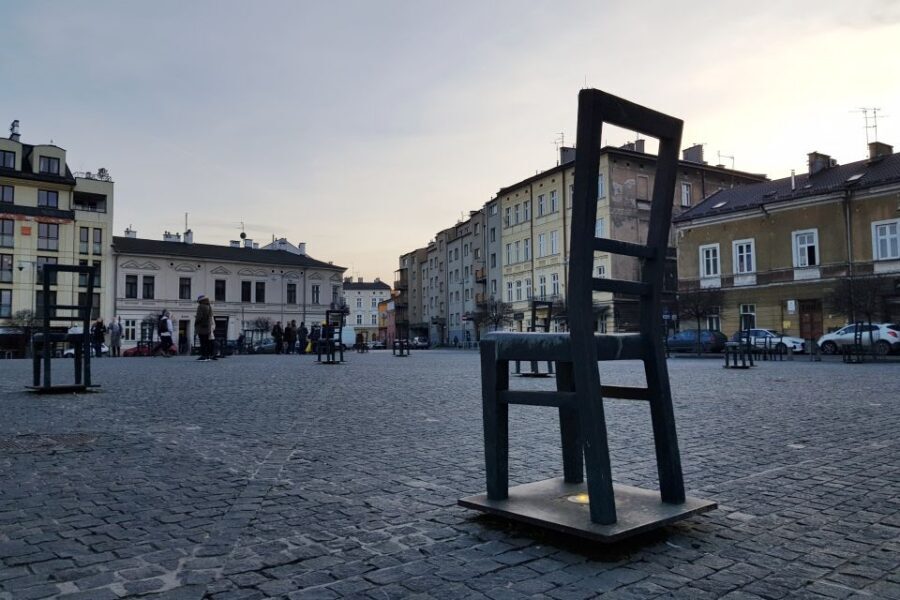
- Podgórze and ghetto locations: Ghetto Heroes Square and the remnant wall areas set the WWII context.
- Schindler’s Factory, but not a full visit: Expect a short viewing stop, not hours inside.
- Audio in 28 languages + live guidance: You get a safety net if you miss a detail.
- Warm ride option: In chilly months, reviews mention blankets and a protected cart setup.
How the electric golf cart tour really feels (and why it works)
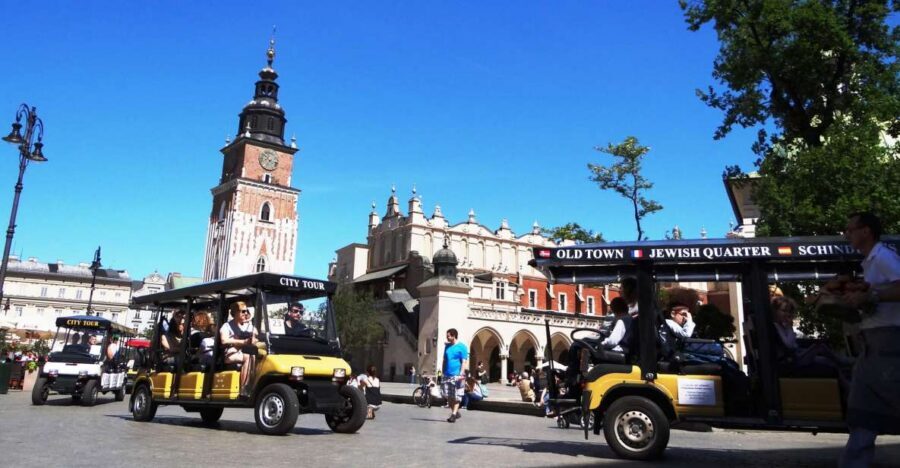
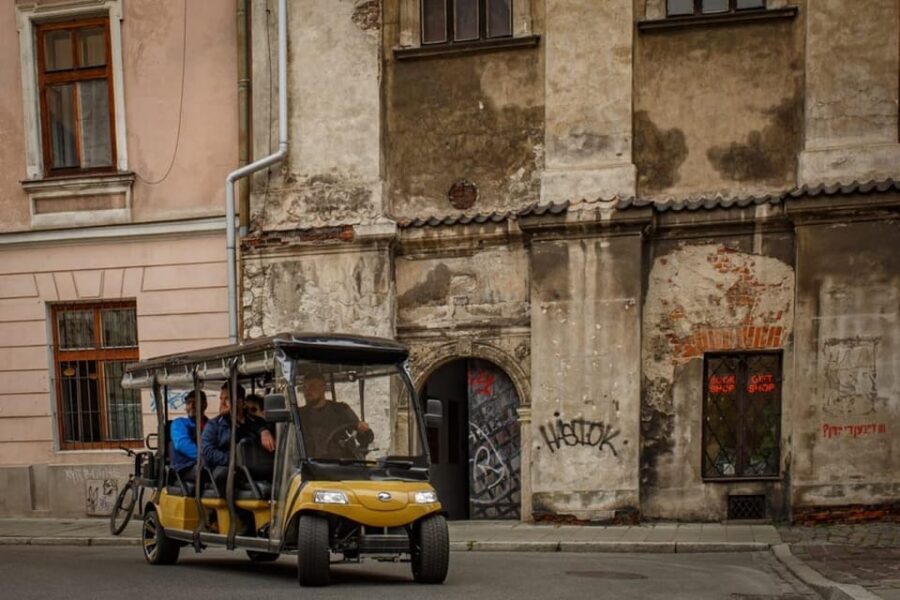
This tour is built for “see a lot, without exhausting yourself.” You’re on an electric golf cart for the sightseeing parts, which means you spend your energy looking instead of hauling yourself around cobblestones and crowds.
The timing is tight in a good way: about 30 minutes for Krakow’s Old Town, about 30 minutes in Kazimierz, then shorter focused stops in Podgórze and at Schindler’s Factory before you return. That structure matters. It gives you a guided mental map of where everything is, so later you can choose which places deserve a longer visit.
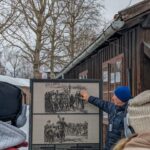
Another reason it works: the driver-guide isn’t just “press play.” Multiple reviews highlight guides like Valentino, Paulina (and even a few similarly named guides such as Pawlina/Paula) who added extra commentary and answered questions rather than relying on the recording alone. If you want history plus practical advice—where to go next, what to prioritize—this format is a strong match.
You can also read our reviews of more city tours in Krakow


Meeting at Plac Jana Matejki and settling into the right starting point
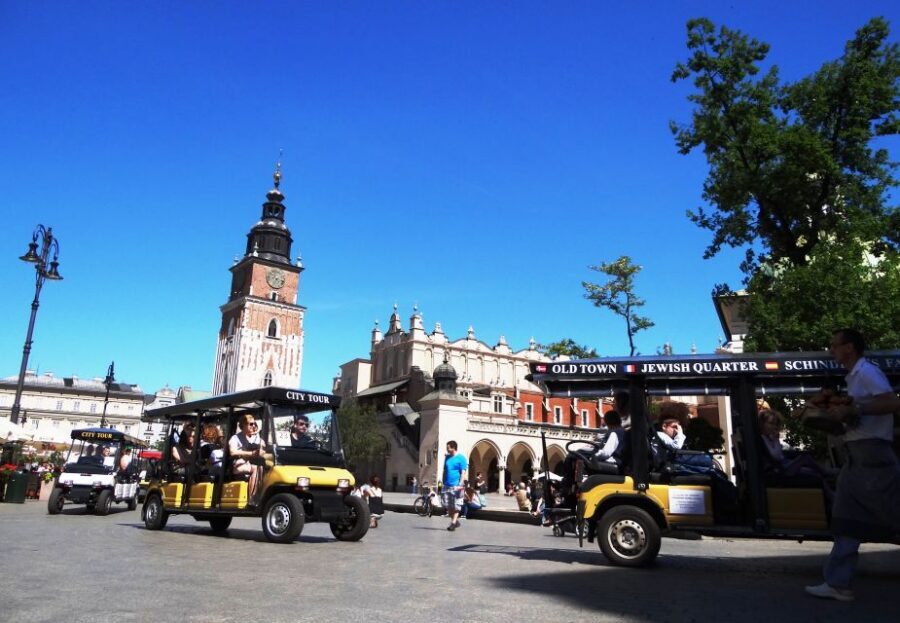
Your meeting point is the tourist bus stop: K+R BUS at Kraków, Plac Jana Matejki 3. From there, the tour loop is organized so you’re positioned to start the Old Town section and then flow naturally toward Kazimierz and Podgórze.
One practical note: luggage or large bags are not allowed. If you’re traveling light, you’re fine. If you’re coming straight from a hotel with a big carry-on, plan to store it before the tour.
Also, this is one of those tours where being on time matters. Even if the carts and guides are organized, you’ll want to start when scheduled so you don’t compress the history stops further.
Old Town by electric cart: Market Square, Royal Route sights, and Wawel Castle views
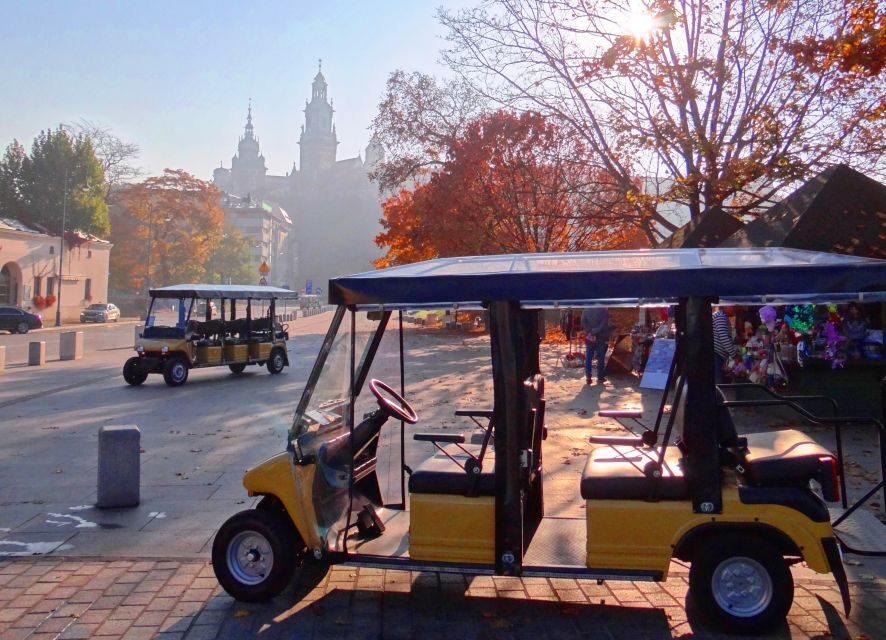
The Old Town portion is where you get your first big “wow” and your first landmarks list. You’ll spend about 30 minutes in the Old Town area, using the cart to move you between viewpoints and prominent streets without walking every segment.
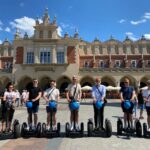
You’ll see the area around Krakow’s largest medieval market square in Europe, plus sights along the Royal Route style of streets. The tour also includes passes by educational and cultural landmarks like Jagiellonian University and Słowacki Theater, which helps you understand that Krakow isn’t only medieval—it’s also a living academic and cultural city.
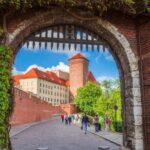
Then there’s Wawel Castle, the headline on many Krakow days. You may not get a full “go inside and wander” visit during this portion, but you do get the right framing: where Wawel sits, what views you can orient to, and how it connects to the rest of the city’s historic core. In practical terms, that helps you later decide whether you want to add castle time on your own.
Tip for getting value here: after this stop, I’d note what grabbed you most—market square atmosphere, university area, theater, or Wawel—and plan your next visit accordingly. This tour is best at helping you choose.
Kazimierz: synagogues, old cemeteries, and atmospheric streets without the marathon
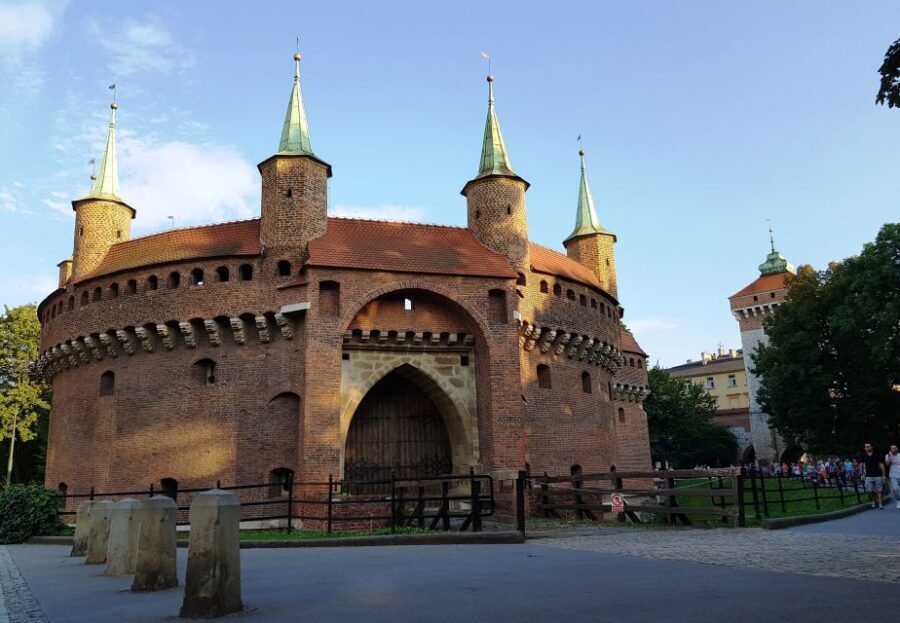
Next comes the Jewish Quarter of Kazimierz, with another 30-minute block built for orientation. This is the part where the cart helps you move through the neighborhood’s layout quickly—especially helpful if you’re short on time or want to avoid leg fatigue before heavier sites later.
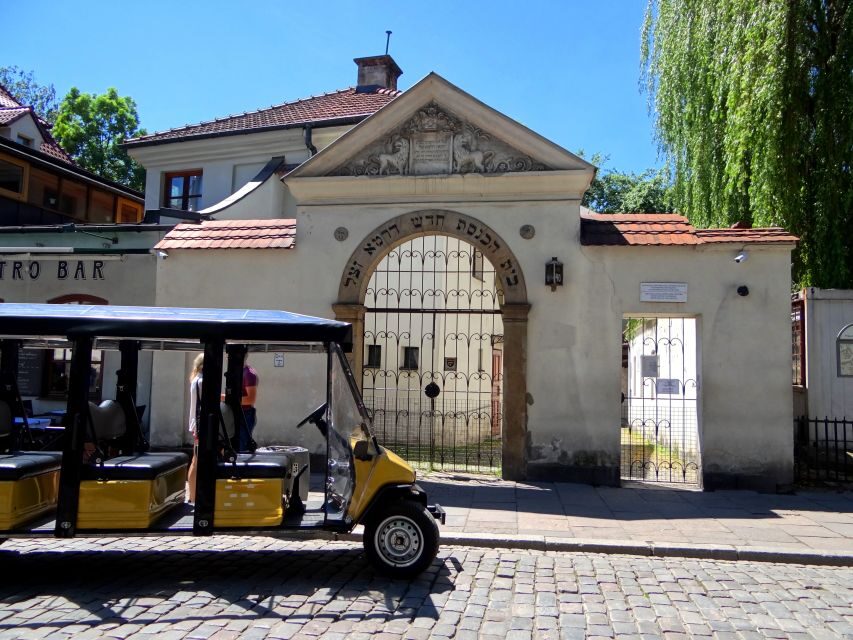
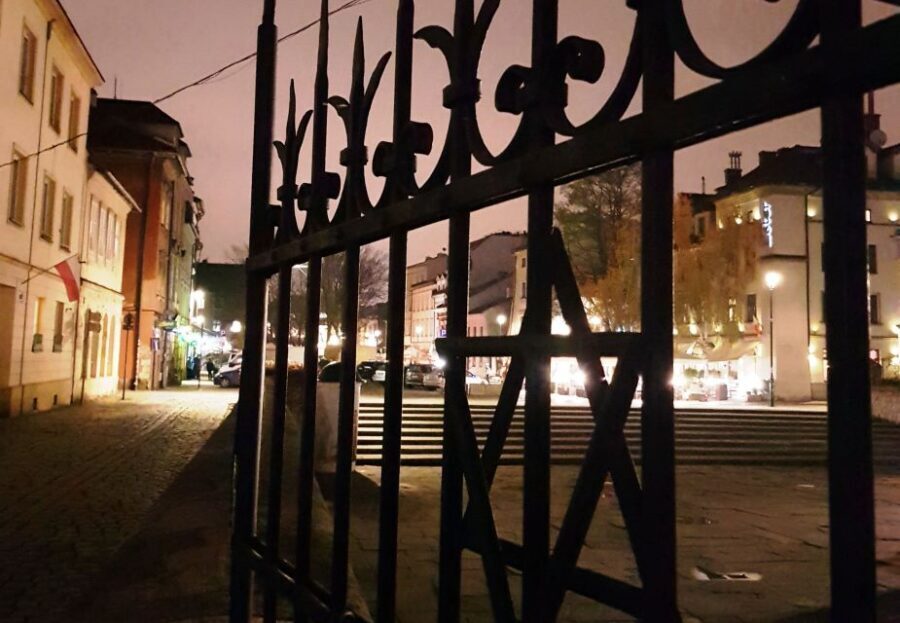
You’ll pass by notable synagogues and old cemetery areas, then roll through atmospheric streets and squares that make Kazimierz feel like a different Krakow. The value here isn’t only seeing buildings; it’s understanding how the neighborhood’s physical space relates to its story.
Reviews consistently mention that guides like Valentino and Paulina delivered strong explanations and took time to answer questions. That’s important in Kazimierz because the meaning of what you’re seeing lands better when the person talking connects it to WWII context and postwar memory.
What to watch for: if you like photographing streets and facades, Kazimierz is where you’ll feel the urge to slow down. The cart doesn’t stop you from doing that—it just gives you the option. After the tour, you can return on foot to the exact lanes you liked most.
Podgórze and Ghetto Heroes Square: the WWII thread, not just sightseeing photos
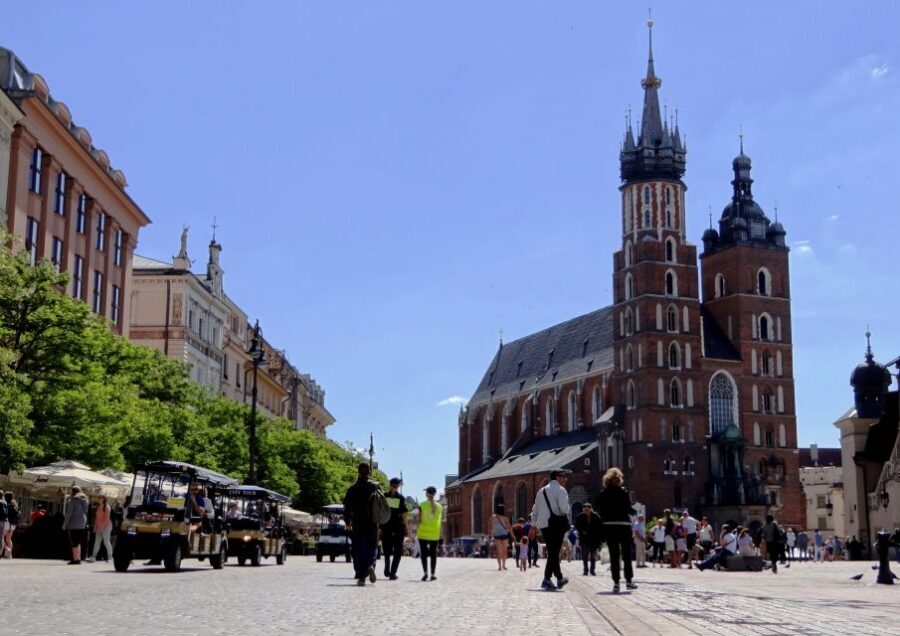
After Kazimierz, the tour shifts to Podgórze and the memory sites that anchor the WWII story. Your stop at Ghetto Heroes Square is about 15 minutes, so you get enough time to absorb what it means without turning it into a rushed blur.
You’ll also pass places like the Eagle Pharmacy and see remnants related to former ghetto walls. That’s a key detail: the tour isn’t only pointing at names on plaques. It uses visible remnants and nearby locations to help you understand how the area worked, how people lived, and why these spots matter.
This part of the tour can feel heavier. The tour’s structure helps, though. You’re guided in a sequence that moves from neighborhood context (Kazimierz) to concentrated memory points (Podgórze). That flow makes it easier to follow along, especially if you’re new to Krakow’s WWII timeline.
Small but useful expectation: you’re unlikely to get a full emotional “all-day” experience in just 15 minutes. Instead, you get a clear start point—exactly what you need if you plan to add a more detailed visit later.
Oskar Schindler’s Factory stop: a short pause with big follow-up potential
The tour includes Oskar Schindler’s Factory for about 10 minutes. Ten minutes is not a lot, so don’t treat it like a museum visit. Treat it like a meaningful marker—a guided way to locate Schindler’s story inside the broader WWII landscape you’ve been learning about.
Why this short stop still works: by the time you arrive, you’ve already heard the neighborhood and ghetto context. That means the Factory stop lands as a checkpoint rather than a random name. And because you’re not spending hours there, you’ll still have energy to do something else after the tour—like returning later for a deeper museum experience on your own schedule.
In practical terms, this is the kind of stop that helps you answer one question fast: should I come back? If the subject hits you, you’ll have a clear reason and a clear target for your later planning.
The audio guide in 28 languages (and how to make it useful)
This tour includes an audio guide in an impressive 28 languages, plus a live English-speaking driver-guide (English and Polish). In other words, you’re not stuck if you miss one spoken explanation—there’s a backup layer of narration.
But here’s the real-world nuance I’d plan for: audio quality can vary by language. One review mentioned an issue with the Danish narration. The solution is simple: rely on the driver-guide for live context, and use the audio as reinforcement rather than the only source.
Also, based on reviews, several guides do more than the recording. Some guides reportedly do most of the talking and use prerecorded parts only sometimes. When that happens, you get a more natural conversation feel—especially helpful if you ask questions like Where should we go next? or What’s the easiest way to connect these sights?
If you do audio, use it like a checklist. Let it guide your attention to the right corners of the street, then when you stop, look with your eyes and let the live narration connect it.
Price and value: why $36 can be a smart deal in Krakow
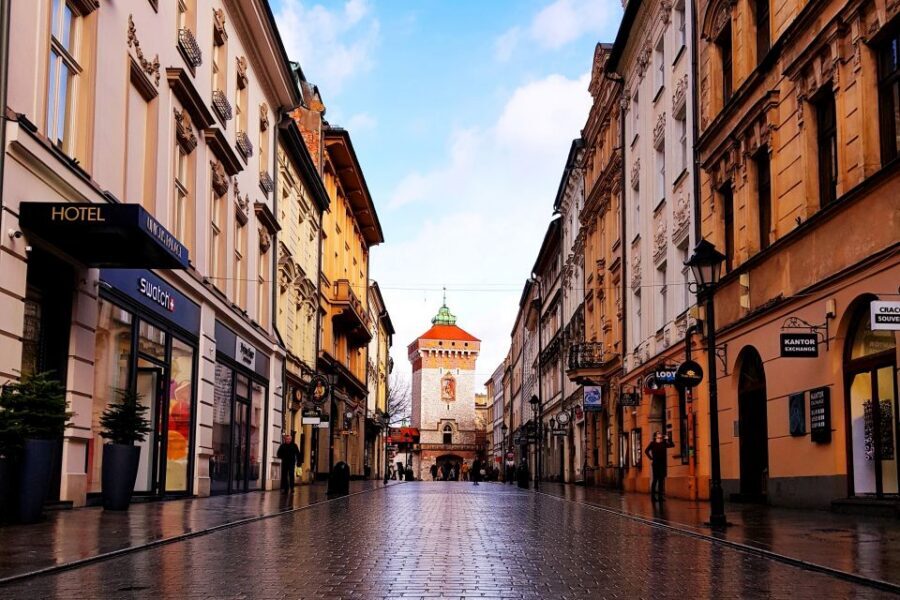
At $36 per person for about 90 minutes, the value comes from the mix: transportation plus interpretation plus speed. You’re paying for convenience and a curated route through major areas—Old Town, Kazimierz, and Podgórze—without spending your whole day walking.
That price looks even more reasonable when you consider what you get for it:
- a cart ride that covers distance you’d otherwise have to hike
- guided storytelling tied to visible landmarks
- audio support in many languages
- the chance to get recommendations you can act on later
If your time in Krakow is limited, this is one of those purchases that can save you from bad planning. Do this early, then you’ll know which neighborhoods deserve a slower second look.
Where value might feel weaker is if you want deep museum time during the tour. The Factory stop is short, and some elements are more “see and understand” than “experience for hours.” For museum lovers, this is still useful, but you’ll likely come back afterward.
Comfort details that matter in winter and summer
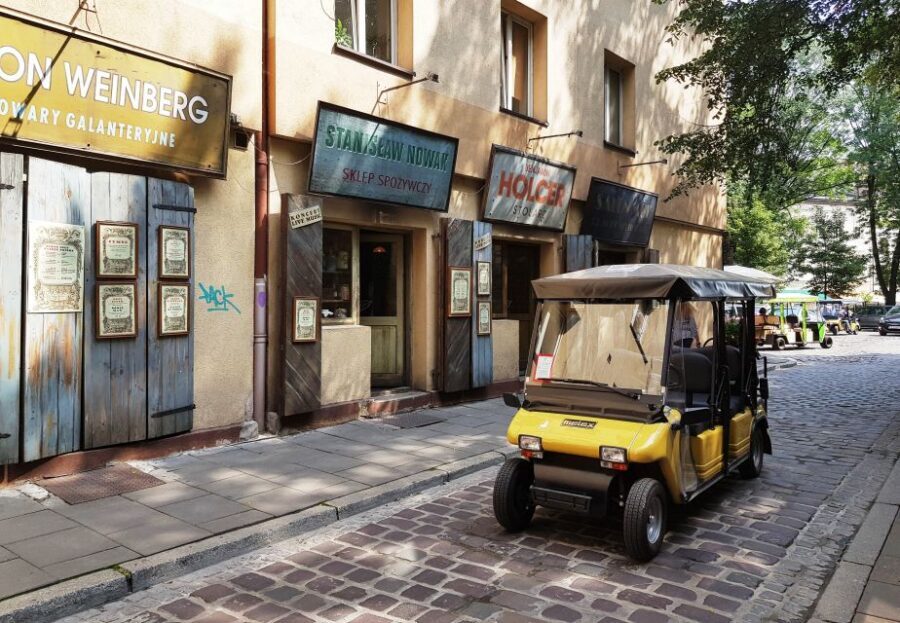
Comfort is not a small detail on cart tours. In reviews, people specifically praised warm setups in cold weather—blankets, covers, and carts that feel protected. One review even mentioned being able to choose between sides open versus clearer drop-down coverage for chilly conditions.
That’s a real deciding factor. Krakow can get cold, and Old Town walking can chew up time and energy. If you’re visiting in winter or shoulder season, this cart format can keep your day from turning into a suffer-fest.
In warm weather, the same idea holds: less walking, more sightseeing. And because your guide is talking while you roll, it feels like you’re getting more learning-per-hour than a purely self-guided day.
Who this tour suits best (and who should skip it)
This tour is ideal for you if:
- you want a fast orientation to Krakow’s top areas
- you don’t want to spend your vacation marching for every viewpoint
- you like history explained in a structured route
- you’re planning to return later for deeper visits and want smart targets
You might want to skip or supplement it if:
- you already have a very deep interest in WWII museum content and want long time inside memorial spaces right away
- you expect every stop to be a full guided entrance experience (this is more overview than long-form)
- you’re traveling with large luggage you can’t store
Should you book the Krakow Electric Golf Cart City Tour?
Yes, I’d book it if this is your first serious day in Krakow and you want to get your bearings fast. The biggest reason is the balance: major landmarks, the Jewish Quarter story, and key WWII memory points, all delivered in a comfortable ride format.
Book it early in your trip so the tour acts like a map. Then use what you learn to decide where you want more time—especially around Kazimierz and Schindler’s Factory, where you’ll likely want a deeper follow-up.
If you’re okay with a short stop at the most famous site and you prefer strong orientation over long museum time, this is a smart value play for $36.
FAQ
How long is the Krakow city tour by electric golf cart?
The tour lasts about 90 minutes.
How much does the tour cost?
The price is $36 per person.
Where do I meet for the tour?
Meet at the tourist bus stop (K+R BUS) at Kraków, Plac Jana Matejki 3.
What areas are included in the tour?
You’ll see Krakow Old Town, the Jewish Quarter of Kazimierz, Podgórze (including Ghetto Heroes Square and the Eagle Pharmacy area), and Oskar Schindler’s Factory.
Is an audio guide included?
Yes. The audio guide is included and available in English, Polish, and many other languages (28 total).
Is the tour wheelchair accessible?
Yes, the tour is wheelchair accessible.
Are luggage or large bags allowed?
No. Luggage or large bags are not allowed.
Are food and drinks included?
No. Food and drinks are not included.