REVIEW · KRAKOW
Krakow Skip The Line Wawel Castle & Old Town Guided Tour
Book on Viator →Operated by Rosotravel - Wawel Castle and other Tours · Bookable on Viator
Four hours that start fast. I love the skip-the-line access into the Wawel Castle State Rooms and the way this tour gives you an organized Old Town walk instead of a vague wandering plan. The one consideration: it’s a guided route with lots of stops, so if you want long, slow museum time at every building, you may need to come back later on your own.
This is built around major landmarks you’ll actually want to see in Krakow: Rynek Glowny, St. Mary’s Basilica, the market area at Stare Miasto, then up to Wawel for the castle and cathedral. You’ll also get practical food and drink guidance—handy when you’re hungry and trying to pick places that match what you’re in the mood for.
I especially liked how the guide approach shows up in the feedback I read: names like Javier come through with clear explanations and a friendly, fun tone. If you get someone like that, you’ll get answers to your questions and recommendations you can use the same day.
In This Review
- Quick hits before you go
- Rynek Glowny to St. Mary’s Towers: your Old Town orientation
- What I’d watch for
- Getting into Wawel Castle State Rooms without the waiting game
- A small reality check
- Wawel Cathedral: royal burials and the bell you can’t miss
- Timing note that helps
- Cloth Hall, Planty Park, and the Old Town rhythm
- Churches and art you can actually point to
- Fortifications and gate views: medieval Krakow under your feet
- Photo-worthy moments: Dragon fire and Eros Bound
- Theater, monuments, and the Royal Way
- How the pacing works in real life (4 to 5 hours)
- Is this tour worth about $198 per person?
- Who should book this Wawel and Old Town guided tour
- Should you book this tour?
- FAQ
- What time does the tour start?
- Where do I meet the guide?
- How long is the tour?
- Is the tour in English?
- What does skip-the-line include?
- Is hotel pickup included?
- Are there any ticket costs for the stops?
Quick hits before you go
- Skip-the-line entry to the Wawel Castle State Rooms so you spend time seeing, not queuing
- A guided walk that connects the Old Town squares, churches, and fortifications into one easy route
- Real-time guidance on where to eat and drink (restaurants, patisseries, pubs)
- A mix of big icons and smaller stops, including Wyspiański’s stained glass and the Wawel Dragon area
- Plenty of photo moments along historic streets like Ulica Florianska and the Royal Way
Rynek Glowny to St. Mary’s Towers: your Old Town orientation
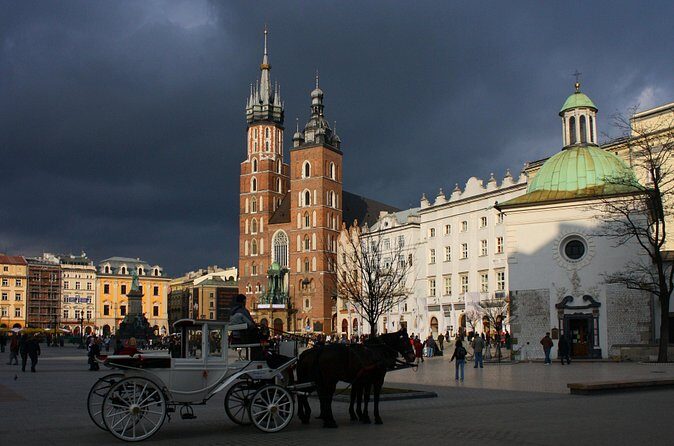
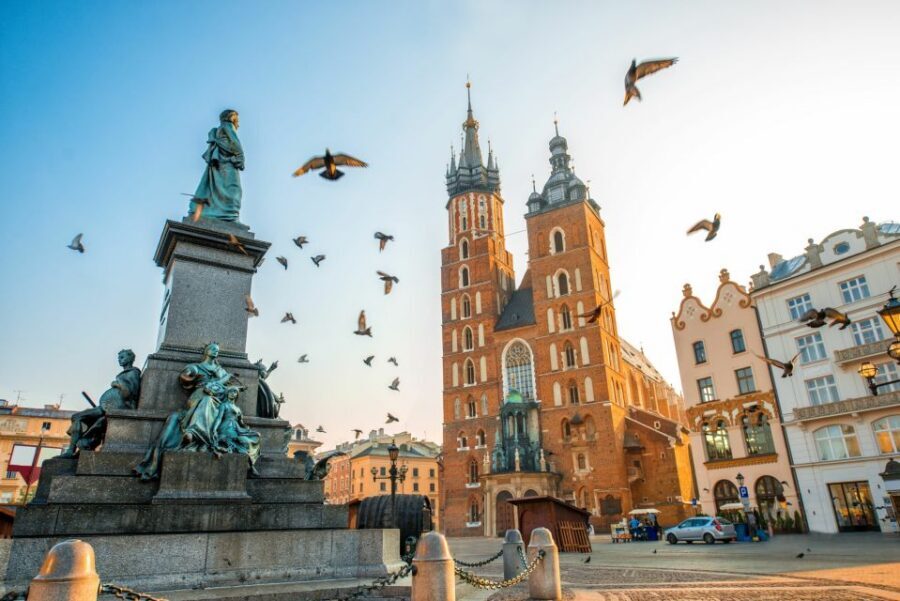
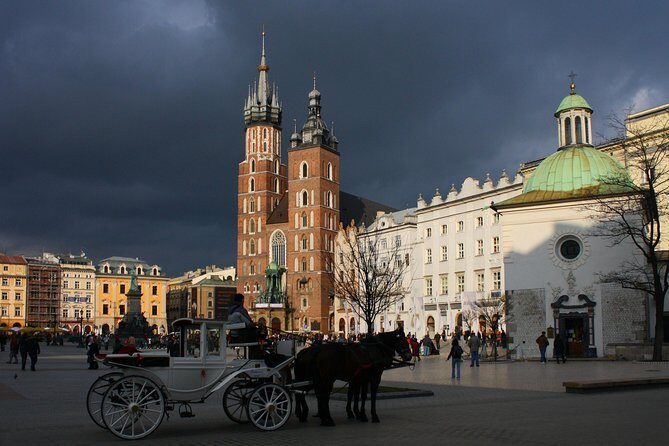
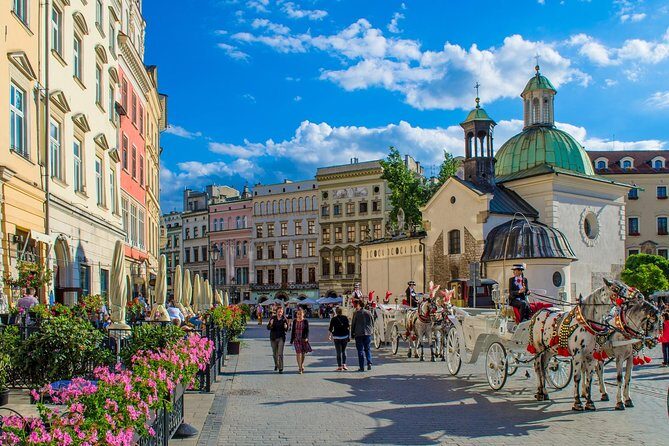
Most Wawel-and-Old-Town trips fail at one thing: you show up, look around, and still don’t know how the city fits together. This one starts in Krakow’s main square, Rynek Glowny, a huge 10-acre medieval plaza that’s the heart of the Old Town. The guide helps you read what you’re seeing—why the Cloth Hall dominates the space, how the square functions as a civic stage, and why Krakow’s center feels so intentional even centuries later.
From there, you move into the “yes, that’s the church” category: St. Mary’s Basilica. You get the Gothic structure basics quickly, and you also learn what makes it feel different once you’re looking closely—especially with its two towers of different heights and the surprisingly detailed interior. If you normally rush churches, this stop is a good chance to slow down just enough to notice the details.
Then you’ll continue into Stare Miasto, the historic merchants’ quarter. This part matters because it gives context: this wasn’t just a backdrop for postcards; it was the economic engine of the city. You’ll see the scale of the market square area and get pointers about historical houses, palaces, and churches, plus the 14th-century fortifications that shaped how people moved and lived.
You can also read our reviews of more guided tours in Krakow

What I’d watch for
Old Town walking tours can feel similar. What makes this one more useful is that the guide doesn’t just point at buildings—they help you understand why each one sits where it sits.
Getting into Wawel Castle State Rooms without the waiting game
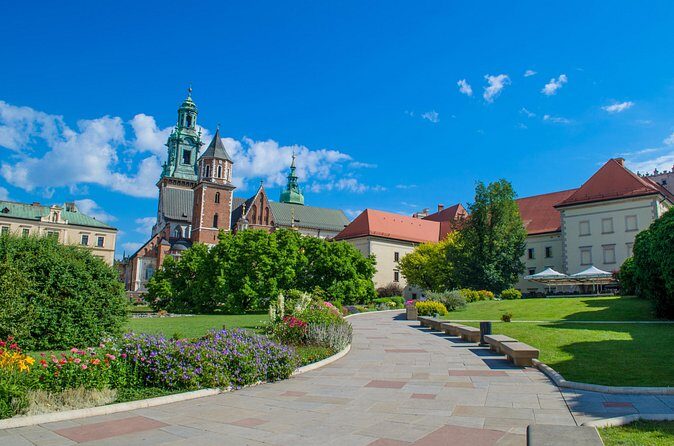
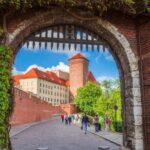
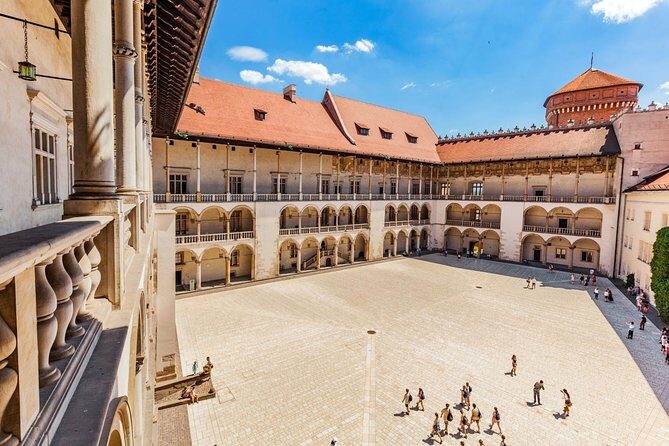
The whole day pivots at Wawel. Wawel Royal Castle is the five-century royal residence where Poland’s rulers governed, and the site still feels like power made stone. You’ll go straight for what most visitors actually want: the State Rooms.
The big value here is the skip-the-line entry. At Wawel, lines can swallow your morning. With this tour, you’re pushed to the front of the experience so you can get inside while your energy is high and the light and crowds cooperate.
Inside the State Rooms, you’ll get a guided walk through the idea of the place—what the rooms were for, what tells you this was a working center of rule, and how the castle’s layout reflects authority. Even if you’re not a hardcore history person, you’ll still benefit because the guide keeps it practical: what to look for, what to ignore, and what the key spaces represent.
A small reality check
A few stops along the route include entry that’s possible on request, which usually means you’ll hear the plan from your guide on the day depending on timing and access. The castle State Rooms are the guaranteed win; the smaller church and museum access points are more “ask and see.”
Wawel Cathedral: royal burials and the bell you can’t miss
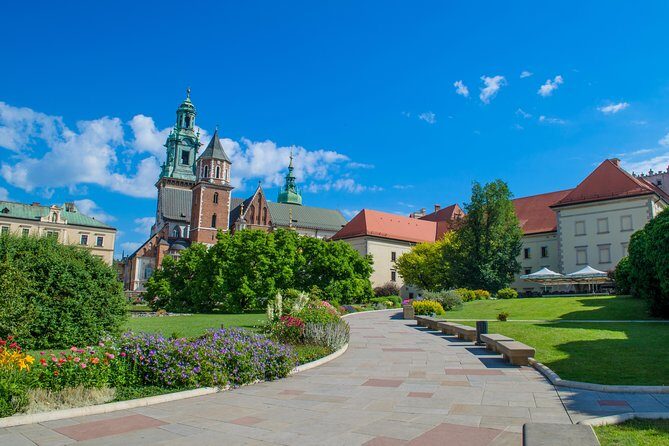
Right after the castle, you shift from royal life to royal legacy at Wawel Cathedral. This is where the site earns its reputation as a national shrine. You’ll hear about the religious art and the key objects that define the cathedral’s character.
One standout is the giant bell of Zygmunt of 1520, often described as one of the world’s largest. Even if you’re not sure you care about bells, this is the kind of detail that changes how you experience the building once you’re standing in it.
You’ll also learn that the cathedral is the burial place of many Polish kings and their families, so the cathedral feels like more than a single church visit—it’s a monument to national memory.
You can also read our reviews of more tours and experiences in Krakow




Timing note that helps
You’ll spend about 20 minutes at this cathedral stop. That’s not enough to read every inscription slowly, but it’s a strong dose. If you want deeper time for tombs or stained glass, use your notes after the tour and plan a separate return visit later.
Cloth Hall, Planty Park, and the Old Town rhythm
After Wawel, you drop back into the Old Town texture in a way that feels natural. Sukiennice (Cloth Hall) is both the past and the present. The building’s Renaissance structure dates to 1555, and you can see how the concept of a trading hub survives even with modern stalls. It’s described as the world’s oldest shopping mall, and even if you don’t care about the superlative, it’s a practical place to browse, snack, and pick up something small without trekking far.
From the market area, you get a scenic walk through Planty Park, a ring of green space circling the Old Town. It works like a reset button. You step away from the densest crowd pockets just long enough to breathe and keep your feet from getting angry.
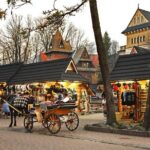
Then the route threads in photogenic streets and small squares, like Ulica Florianska, one of the most camera-friendly stretches in the center. You’ll also hit Little Market Square (Maly Rynek), a compact spot with colorful souvenir energy, and Szczepanski Square, a smaller resting place where it’s easier to sit and regroup without feeling like you’re in the middle of the busiest crosswalk.
Churches and art you can actually point to
Krakow’s church scene can overwhelm you if you treat it like a checklist. This tour avoids that by mixing famous names with specific details, so you remember what you saw.
One of my favorite kinds of stops on this route is when you’re given a clear “look for this” task. For example, at the Franciscan Basilica (Bazylika Franciszkanow Sw. Franciszka Z Asyzu), the highlight is Stanisław Wyspiański’s stained glass window, known as God the Father. That’s the sort of detail you can’t easily forget once you’ve located it.
You’ll also visit the Dominican Church area, though interior entry there is not included. Still, it’s valuable because it helps you identify the building from the outside and understand why it matters in Krakow’s Gothic story.
Another church stop is the Church of St. Peter and St. Paul, where organ concerts are part of the vibe. Even if you don’t catch a concert, the building’s presence gives you a sense of how active church culture remains in Krakow.
Then there’s St. Barbara’s Church, tucked behind St. Mary’s Cathedral. It’s smaller, but that’s part of the point: you’re offered a quieter interior break where you can actually slow your brain down for a minute.
Fortifications and gate views: medieval Krakow under your feet
If you like cities that still show their defensive past, this route delivers. You’ll see Barbican, a medieval fortification added in the late 15th century. It’s described as being styled after Arab defensive architecture, and the circular fortress design is something you can notice quickly even on a short stop.
From there you’ll pass the St. Florian’s Gate, a 14th-century remnant of Krakow’s fortifications. You’ll learn how many of the city’s older walls were destroyed in the early 19th century, which helps you understand why this gate feels like a survivor rather than a full ring.
You’ll also catch the Museum of Krakow Town Hall Tower stop. The tower reaches 70 meters and leans about 55 centimeters, a result of a strong wind in 1703. That’s a great kind of detail for a walking tour because it turns a quick look into a remembered story.
Photo-worthy moments: Dragon fire and Eros Bound
Krakow’s Old Town does playful public art without feeling childish. Two stops show that tone well.
The first is the Wawel Dragon monument. It’s a sculpture concept where the dragon can breath fire, and access is described as possible on request. Whether you catch the effect or not, the point is that it’s a recognizable, fun landmark people build routes around.
The second is Eros Bound, a sculpture of a head occupying a prime position on the square. It’s one of those “you will see it immediately” art pieces, and it gives you a good break from the purely historical buildings without losing the Old Town feel.
Theater, monuments, and the Royal Way
This tour also threads in cultural landmarks that keep the day from turning into only churches and castles.
You’ll see Slowacki Theatre, a baroque-style theater built in 1892, still used for regular plays and operas. Even if you don’t go inside, it’s a visual contrast to the medieval layers.
There’s also the Royal Way (Droga Krolewska), the historic processional route used during royal ceremonies. Walking it even briefly helps you understand that Krakow’s center wasn’t designed only for daily commerce—it was built for public moments of power.
And you’ll pass the Adam Mickiewicz Monument, a bronze statue of the Polish romantic poet. The tour also includes a stop for the Statue of John Paul II, described as a tribute to his legacy and his close connection to Krakow.
How the pacing works in real life (4 to 5 hours)
Plan for 4 to 5 hours of guided walking. That range matters because your actual time can depend on group flow and access at the interior stops that are only possible on request. The tour runs with a 10:30 am start, and it ends at Kraków Barbican (Basztowa).
The pacing is structured, which is the advantage: you get a lot of Krakow in one morning without decision fatigue. The drawback is also the same: it can feel “efficient” rather than “slow.” If you love sitting for long stretches, consider using later hours for cafés and a second walk to linger.
Is this tour worth about $198 per person?
At roughly $198.08 per person, you’re paying for two things: a licensed guide and the skip-the-line benefit at Wawel Castle State Rooms. In cities where top attractions have big queues, skip-the-line access can pay for itself quickly—in time saved, patience saved, and the chance to keep your morning from collapsing into waiting.
The rest of the value is the route logic. Instead of paying separate tickets and guessing what’s closest, you get a curated walk that hits the main squares, key churches, and key city-defense sights, with guidance on what’s most worth seeing in each stop. Also, that food and drink advice tends to be more useful than people expect. A good recommendation for where to eat can turn an average day into a good day fast.
If your travel style is mostly “one big attraction + a relaxed stroll,” this tour may feel packed. If your style is “I want the highlights, but I want them explained,” it’s a strong fit.
Who should book this Wawel and Old Town guided tour
This works best if you:
- Want a guided orientation of Krakow’s Old Town without mapping your own route
- Care about Wawel Castle State Rooms but want to avoid queue stress
- Like church visits when there’s a specific detail to look for
- Appreciate practical tips for where to eat and drink the same day
It’s less ideal if you:
- Prefer long independent museum time over short guided stops
- Get cranky with walking routes that move you from square to square
Should you book this tour?
Yes, if you want a well-structured Krakow morning that gets you into Wawel quickly and then connects the Old Town into one readable loop. The skip-the-line part is the big reason to say yes, and the guide-led explanations are what turn a pile of famous buildings into a route that makes sense.
If your priority is slow pacing and deep time inside a smaller number of places, I’d skip this and plan a more flexible self-guided day. Otherwise, this tour is a solid value way to see the essentials and understand what you’re looking at.
FAQ
What time does the tour start?
It starts at 10:30 am.
Where do I meet the guide?
The start point is Wawel 3, 31-001 Kraków, Poland.
How long is the tour?
The duration is about 4 to 5 hours.
Is the tour in English?
Yes, it’s offered in English.
What does skip-the-line include?
It includes skip-the-line tickets to the Wawel Castle State Rooms.
Is hotel pickup included?
No, pickup from hotels in Krakow is not included.
Are there any ticket costs for the stops?
The tour includes many sites with admission ticket free details as part of the route, but some entries are noted as not included or possible on request (depending on access).