REVIEW · KRAKOW
Discover the Jewish Quarter with a Bike Tour
Book on Viator →Operated by Krakow Tour - Segway, E-scooter, Bike, Walking Tours in Krakow · Bookable on Viator
That Jewish Quarter hits fast.
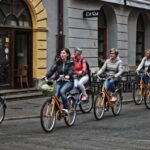
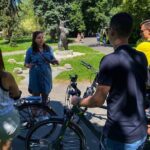
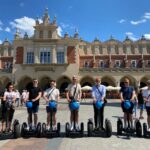
A bike tour of Kazimierz and the surrounding streets gives you a tight, moving way to understand a neighborhood that has seen major change. You stop at places tied to Jewish life, then you connect the dots with stories tied to Schindler’s List, local food at New Square, and churches nearby that show how different communities overlap in Krakow. The pace is built for seeing a lot without feeling rushed.
Two things I especially like: the tour is story-driven stop to stop, and it keeps you moving on a bike instead of getting stuck in one area. When the guide is Arthur, you can expect a lively, engaging walkthrough that ties what you’re looking at to why it matters in Krakow. And I love that you get a built-in food moment: at Market Square, you’re encouraged to try Zapiekanki, Poland’s famous fast snack.
One consideration: a few major sites have admission not included, so you’ll want to plan for optional paid entry if you decide to go inside (notably the Tempel Synagogue, Old Synagogue, and Remuh Synagogue). Also, this is a good-weather kind of activity, so if the day turns ugly, you’ll need a backup plan.
In This Review
- Key things to know before you go
- Kickoff at Wiślna 4: Where the Bike Tour Begins
- Tempel Synagogue: Prewar Jewish Life on the Move
- JCC Krakow and the Prince Charles Connection
- Market Square and Zapiekanki: Snack While You Learn
- Schindler’s List Passage: Film Connections With Real-World Context
- Singer Bar: A Name With Meaning
- Old Synagogue and Popper Synagogue: Two Stops, Two Ways to Understand the Area
- Remuh Synagogue (Synagoga Remuh) and the Optional Cemetery Visit
- Kupa Synagogue to Corpus Christi Church: A Neighborhood With Overlapping Stories
- Plac Wolnica 1 Legends: Finishing With Local Color
- Price and value: Is $30.23 for 2 hours a good deal?
- Who this Jewish Quarter bike tour is best for
- Should you book this tour?
- FAQ
- How long is the Jewish Quarter bike tour in Krakow?
- Is the tour offered in English, and will I get a ticket on my phone?
- Where does the tour start and where does it end?
- Are synagogue admissions included for every stop?
- How big are the groups?
- What happens if the weather is bad?
Key things to know before you go
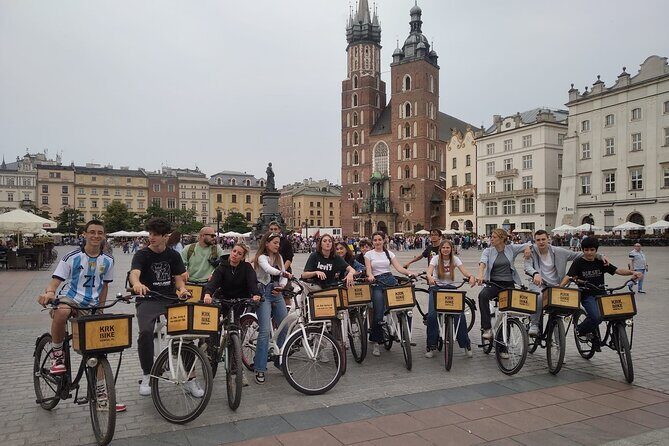
- Wiślna 4 start point: you meet at Wiślna 4 and ride in from there, then loop back to the same spot at the end.
- Many stops, short stays: you’ll hit synagogues, squares, and landmarks with frequent orientation stops rather than long museum time.
- A built-in Zapiekanki break: Market Square is part of the route, and you’ll be pointed toward Krakow’s go-to snack.
- Mixed ticket situations: some synagogues have admission not included, while others are free during the tour.
- Schindler’s List context: you’ll walk a “passage” stop tied to the film and supporting documentaries/facts.
- Remuh includes an optional extra: you can also visit the cemetery area if you want, during that stop.
Kickoff at Wiślna 4: Where the Bike Tour Begins
I like that this tour starts right where you can get oriented fast: Wiślna 4 is your meeting point, and the tour ends back there. That makes it easy to keep your day simple—no hunting for a distant drop-off, no extra transit stress.
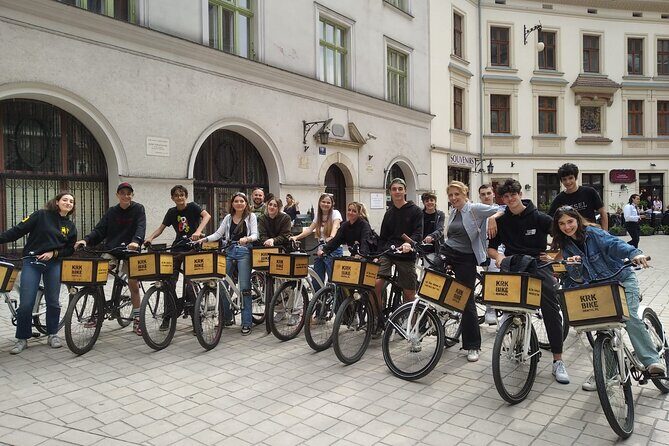
The tour runs about 2 hours and is offered in English, with a mobile ticket you’ll use on site. The group size caps at 30 travelers, which usually helps the guide keep the pace controlled when you’re cycling and stopping often.
One practical note: you’re near public transportation, which matters because you’ll likely arrive a bit early. And since it relies on good weather, I’d plan your day so you can move your schedule if the forecast looks iffy. This isn’t a “huddle in a café” kind of route.
You can also read our reviews of more cycling tours in Krakow
Tempel Synagogue: Prewar Jewish Life on the Move
At the first real stop, the guide turns your attention to the Tempel Synagogue. Expect a guided story about the Jewish community in Krakow before the war—how it was thriving, not just surviving.
Why this stop works on a bike tour: you’re not just staring at buildings. You’re given a reason to look—what life was like, and what was lost or changed. Even with short stop times (about 10 minutes here), the goal is to help you notice details and hold them in your mind as you ride onward.
The tradeoff is tickets. Admission ticket is not included for the Tempel Synagogue. So if you want to go inside, plan for extra time and the cost of entry. If you don’t, you can still absorb the exterior context, but this is one of the places where going in can feel especially worthwhile.
JCC Krakow and the Prince Charles Connection
Next up is the Jewish Community Centre of Krakow (JCC Krakow). This stop has a clear teaching purpose: you’re introduced to the JCC, including its link to Prince Charles, and why it matters to the Jewish community and neighborhood.
I like this kind of stop because it shifts the story from solely historical tragedy to how communities function now. Even if your knowledge of the area is limited, the guide gives you a framework: the neighborhood isn’t frozen in time.
Good news for your schedule: this stop is marked as free admission during the tour. So you can keep moving without hitting a ticket wall.
Market Square and Zapiekanki: Snack While You Learn
When the tour reaches Market Square, you get more than another photo stop. The guide talks about the New Square and encourages you to meet the locals in Kazimierz—and yes, the route builds toward a very specific target: trying Zapiekanki, Poland’s finest fast food.
This is one of those moments where a bike tour shines. Instead of breaking your rhythm later, the story and the food happen together. It’s also smart time-management: while you’re already in the right streets, you can refuel with a local staple.
Practical tip: Zapiekanki are best when you eat soon after you buy them. With a bike tour, you don’t want to wander off and miss the group’s next ride. Treat it as a quick, low-stress stop that keeps you part of the flow.
Schindler’s List Passage: Film Connections With Real-World Context
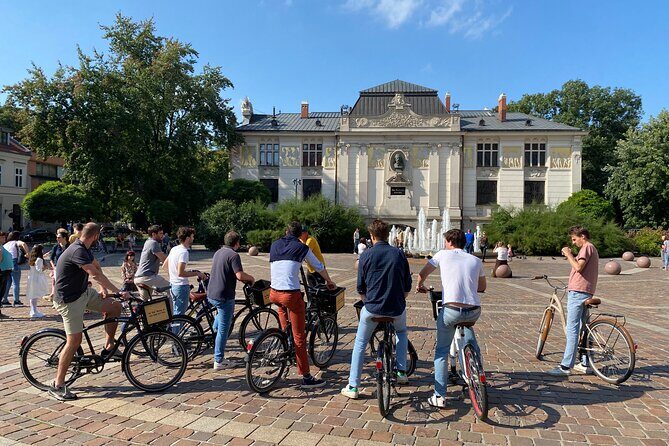
The Schindler’s List Passage stop is where the tour links pop culture to place. You’ll hear the story behind the movie, along with notes from documentaries and factual context.
I appreciate stops like this when they’re done carefully, because it prevents the film from becoming the only story in your head. If you take the extra minute to listen—especially to what the guide is stressing—you’ll start to understand why this area matters beyond any single scene.
This stop is listed as free admission. Still, it’s the kind of place where you’ll likely want to slow down mentally, not just physically. The route moves fast, so use that short window to connect the film references to the neighborhood layout.
Singer Bar: A Name With Meaning
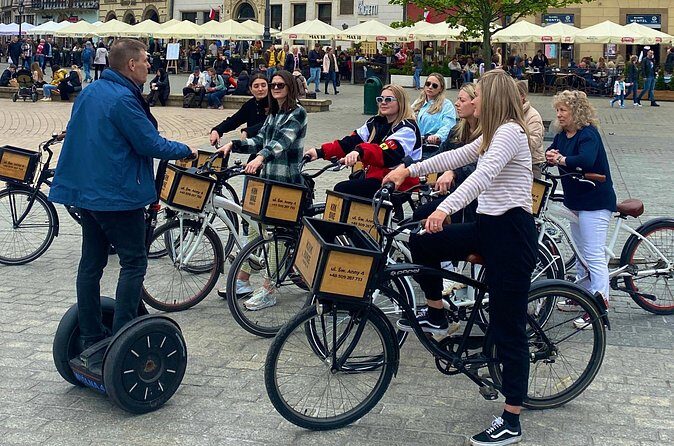
Then you roll to Singer—a bar stop with a story about what the name means and why it’s called Singer.
This kind of stop might sound small, but it often ends up being one of the most memorable. Names, brands, and repurposed spaces can act like clues for how a city layers stories on top of itself.
Like several other points on the route, this is free admission. If you care about details, look around while you listen. The guide’s explanation will help you notice what you might otherwise miss.
Old Synagogue and Popper Synagogue: Two Stops, Two Ways to Understand the Area
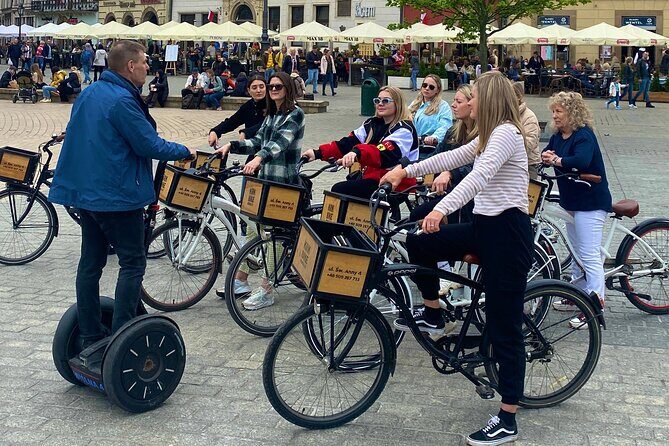
The tour hits the Old Synagogue and then the Popper Synagogue.
At the Old Synagogue, you’ll get the story behind it (with about 10 minutes allotted). The catch: admission is not included here. So you’ll decide on the spot whether you want to pay to go inside. If you’re trying to keep the day simple, you can still absorb the exterior explanation and move on.
Next is Popper Synagogue, where you’ll get an introduction to it, plus a mention of the bookshop next to it and the figure Wolf Popper. That bookshop detail is helpful because it hints at a theme: even after destruction and upheaval, the idea of study, memory, and books has remained part of how people hold onto community identity.
This stop is free admission during the tour. In practice, it’s a nice contrast to the Old Synagogue stop: one site may require extra tickets, while the other keeps the route moving.
Remuh Synagogue (Synagoga Remuh) and the Optional Cemetery Visit
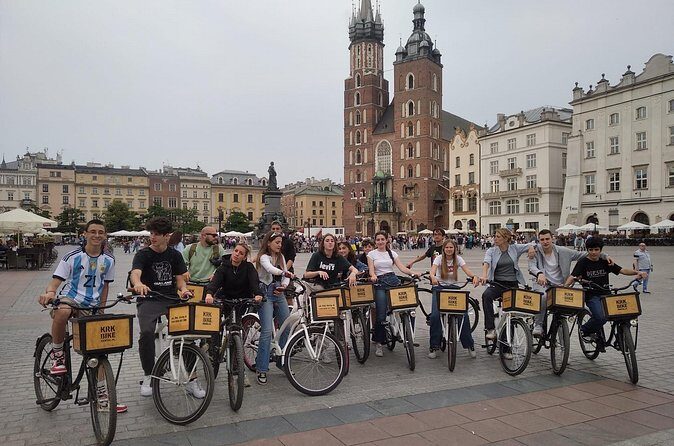
At Remuh Synagogue (Synagoga Remuh), the guide shares its history and offers an important choice: you can visit Remuh as part of the tour, and if you wish, you can also go to the cemetery area and hear more.
This is where the tour’s “choose your level” flexibility shows. Some people want to keep the movement and stay focused on architecture and stories. Others may want that additional time in the cemetery context to make the history feel more grounded.
Admission is again not included for this stop, so factor in both cost and time if you want to add the cemetery visit. The good part is that the guide is already building the story for you, so it doesn’t feel random. It’s a planned extension of the narrative.
Kupa Synagogue to Corpus Christi Church: A Neighborhood With Overlapping Stories
The route continues to Kupa Synagogue (Synagoga Kupa), where you’ll hear the story and history of the synagogue. This stop is marked as free admission, which helps keep the flow smooth.
Then you’ll ride to Corpus Christi Church (Kosciol Bozego Ciala). Here, the guide talks about the origin of the church’s name and the detailed history of the place, and you can also visit the church itself. This is a smart addition for your understanding because it shows how Krakow’s religious and cultural landscapes overlap geographically.
If you like history but don’t want a full day in museums, this “synagogue to church” sequence is a strong way to compare how communities leave different kinds of marks on the same streets.
Plac Wolnica 1 Legends: Finishing With Local Color
Near the end, you stop at Plac Wolnica 1. You’ll hear facts and local legends, and this final storytelling stop helps tie the tour together.
I like placing a legends-and-details stop near the end. By then, you’ve already built a mental map of the neighborhood from multiple directions. Listening to local lore last makes the place feel less like a checklist of sites and more like a living area with memory.
From there, the tour loops back and ends back at Wiślna 4, where you started.
Price and value: Is $30.23 for 2 hours a good deal?
At $30.23 per person for about 2 hours, the value depends on one key thing: how many paid entries you choose to add.
A lot of the stops are marked as free admission during the tour. That means you’re paying mostly for the guided bike route, the narration that connects the stops, and the efficient way you cover the Jewish Quarter without needing to plan each site separately.
But remember: the tour also flags that some major stops have admission not included (Tempel Synagogue, Old Synagogue, Remuh Synagogue). So if you decide to go inside all three, your total day cost will rise. On the other hand, even skipping entrances, you still get the guided storytelling that puts the area in context.
From a “time value” perspective, this is also easy to fit in. Two hours is long enough to get bearings and short enough that you can build the rest of your day around it.
Who this Jewish Quarter bike tour is best for
I’d put this tour at the top of the list if you:
- want a fast introduction to Krakow’s Jewish Quarter without losing an entire day
- like seeing multiple sites in one go, with a guide pointing out the meaning behind what you’re seeing
- are pairing it with another heavier history stop, since this kind of Krakow context helps you keep the bigger story straight
It’s also a good match if you’re not the type who wants long ticket lines all day. The route leans on short, focused stops and keeps you cycling between them.
And if you’re traveling with friends who all like different things, this tour has something for each of them: history at the synagogues, a film connection at Schindler’s List Passage, city life at New Square, and even word/name meaning at Singer.
Should you book this tour?
Yes, if you want an organized, English-guided way to understand the Jewish Quarter in about two hours and you’re okay with the idea that a few sites may cost extra if you choose to go inside. The route is designed to keep you moving while you learn, and the stop selection covers both community life themes and well-known Krakow references like Schindler’s List.
Skip it or swap to another option if you hate cycling in mixed weather or you only want to focus on a single site deep inside. Because this is a bike tour with lots of stops, it’s not built for long, slow museum-style visits.
FAQ
How long is the Jewish Quarter bike tour in Krakow?
The tour lasts about 2 hours.
Is the tour offered in English, and will I get a ticket on my phone?
Yes. The tour is offered in English, and you’ll receive a mobile ticket.
Where does the tour start and where does it end?
You meet at Wiślna 4, 33-332 Kraków, Poland, and the tour ends back at the meeting point.
Are synagogue admissions included for every stop?
No. Admission tickets are not included for Tempel Synagogue, Old Synagogue, and Remuh Synagogue. The other listed stops are marked as free admission during the tour.
How big are the groups?
The tour has a maximum of 30 travelers.
What happens if the weather is bad?
This experience requires good weather. If it’s canceled due to poor weather, you’ll be offered a different date or a full refund.