REVIEW · KRAKOW
Kraków Oskar Schindler’s Enamel Factory Museum skip the line tour
Book on Viator →Operated by Cracow Holidays · Bookable on Viator
This museum pulls you in fast. If you want WWII explained through everyday life and one extraordinary moral choice, this is a strong way to see Krakow’s most important factory-site story. You get a licensed, professional guide who connects the fate of the city’s Polish and Jewish residents to the wartime work inside Deutsche Emailwarenfabrik, known to film fans through Schindler’s List.
I especially like two things: the skip-the-line format (so your time goes to the exhibits, not queues) and the fact that the museum admission is included in the tour price. One thing to consider: the visit is about 1 hour 30 minutes, so it’s not built for slow browsing if you like extra time to read everything quietly.
In This Review
- Quick take: what makes this tour work
- Fabryka Emalia Oskara Schindlera: where history becomes personal
- Getting in smoothly: Lipowa 4 and the skip-the-line advantage
- What a licensed guide does for this museum (and why it matters)
- Deutsche Emailwarenfabrik and the Schindler connection you’ll actually understand
- Schindler’s office and the ark of survivors: the emotional payoff
- Timing and how to get the most from 1 hour 30 minutes
- Price check: is $46.34 good value?
- Who should book this tour (and who might not need it)
- Should you book the Kraków Schindler’s factory skip-the-line tour?
- FAQ
- How long is the Schindler’s Enamel Factory Museum skip-the-line tour?
- Is museum admission included in the price?
- Where does the tour start and end?
- What size is the group?
- Do I get a mobile ticket?
- Is coffee or tea included?
- Is it easy to reach using public transportation?
- When will I get confirmation after booking?
- Is there free cancellation?
Quick take: what makes this tour work
- Small group size (max 10) for a calmer pace and easier questions.
- Licensed guide storytelling that explains context, not just labels on walls.
- Admission included, so you’re paying for guidance plus entry in one package.
- Schindler’s office and the ark of survivors help the story land in a physical way.
- Pacing with photo time, helpful when you want a few moments for views and details.
- Mobile ticket makes check-in simpler once you’re there.
Fabryka Emalia Oskara Schindlera: where history becomes personal
This is not a generic “war museum” stop. The Schindler Enamel Factory Museum is tied to one specific place where labor, bureaucracy, and human choices collided during World War II. That’s why the experience feels more immediate than reading about events from a distance.
The factory setting also changes how the story is told. Instead of jumping straight to big dates, the guide frames how private life and daily routines were shaped by occupation and persecution. You’ll see how the wartime industrial world affected families, neighbors, and survival decisions.
And yes, if you know the name Oskar Schindler from Schindler’s List, you’ll feel that connection—but the focus here is the reality of Krakow, not movie trivia. The museum’s materials and the guide’s explanation bring you from the film image to the people and the factory system behind it.
You can also read our reviews of more museum experiences in Krakow


Getting in smoothly: Lipowa 4 and the skip-the-line advantage
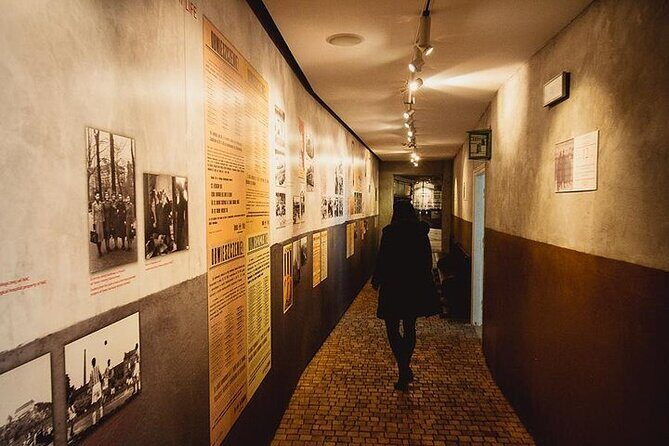
You meet at Lipowa 4 in Kraków, and the tour ends back at the same meeting point. The location matters because it helps you plan your day: this fits cleanly into a Krakow sightseeing route without demanding complicated transfers.
The big practical win is the skip-the-line style visit. Even when you arrive early, museums like this can still have lines and time-pressure. Here, you’re set up to move into the exhibition rather than losing your morning or afternoon waiting outside.
One more small but useful detail: the tour uses a mobile ticket. That cuts down on fumbling with printed vouchers when you’re already navigating streets and crossings. Also, it’s near public transportation, so you’re not forced into a taxi plan just to reach the museum site.
What a licensed guide does for this museum (and why it matters)
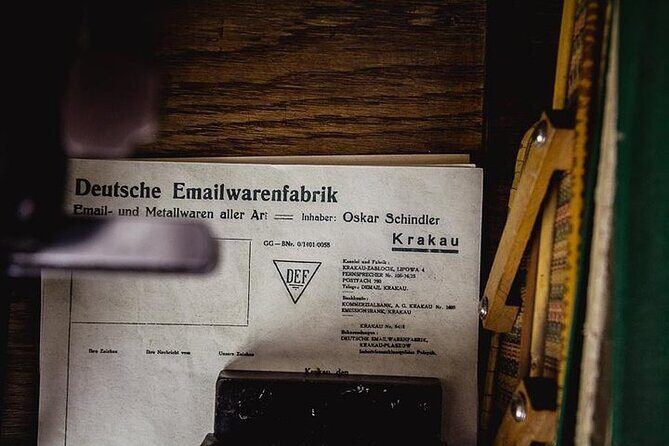
Schindler’s story has layers: industrial history, Nazi policy, Krakow’s local situation, and individual decisions. A lot of people run into a wall when they go in alone, because the exhibits are powerful but the context can be overwhelming.
This tour solves that by bringing in a licensed guide who structures the visit like a narrative. In the feedback I read, the guide Paul is repeatedly praised for passion and for adding context that isn’t obvious from the labels alone. That approach is exactly what you want here: explanation turns the objects into meaning.
The guide also helps with pacing. You’re not stuck reading every panel in silence while your mind tries to connect all the dots. Instead, you get guided stops where the story builds step by step, then you have enough space to look closer when something catches your attention.
Deutsche Emailwarenfabrik and the Schindler connection you’ll actually understand
The heart of the museum is the wartime history of Deutsche Emailwarenfabrik (DEF) and the figure of Oskar Schindler. Even if you’ve heard the name before, this visit helps you grasp why an enamel factory could matter so much to survival.
Here’s the key idea the guide will help you understand: the factory wasn’t just a backdrop. It was part of the machinery of occupation, and it sat inside the brutal logic of labor exploitation. The story follows how that same system could be bent by one man’s choices—choices that saved over a thousand people.
The museum also connects the larger war story to Krakow’s Jewish and Polish residents in a grounded way. The guide emphasizes how the great events of WWII intersected with everyday life, turning ordinary routines into precarious ones. That makes the tragedy feel human rather than abstract.
If you’re expecting a museum that only covers Schindler as a hero, you’ll still get him. But you’ll also get the broader “how it happened” context so his actions make sense in the real world of the period.
Schindler’s office and the ark of survivors: the emotional payoff
One of the strongest reasons to book a guided visit is that some parts of the museum need explanation to hit properly. In this case, that includes Schindler’s office, preserved in the factory’s administrative building.
Seeing an office space can feel strangely ordinary at first, until your guide connects it back to what decisions were made there and what those decisions meant for the people who were at risk. The setting makes the story feel less like a distant chapter and more like something carried out step by step.
Then there’s the symbolic “ark of survivors.” The museum uses thousands of enamel pots—made to resemble the kinds produced by factory workers during the war—to represent the people who survived. It’s not a literal boat, but the symbolism is clear and it lands emotionally because you can see how much work and material it takes to build that kind of memorial.
This is the moment when many visitors realize the museum isn’t only teaching history. It’s also asking you to remember what survival required, and how many lives were involved. If you tend to feel things strongly, plan to take a quiet moment here before moving on.
You can also read our reviews of more tours and experiences in Krakow


Timing and how to get the most from 1 hour 30 minutes
The tour lasts about 1 hour 30 minutes. That’s a sweet spot for most people: long enough to get real context and see the key spaces, but short enough that you’re not mentally exhausted before the story ends.
To make it work best for you, keep your expectations realistic. This is a guided highlight format. You’ll see major sections and learn the connections, but you won’t have unlimited time to linger at every display.
A practical tip: bring a phone with enough battery for photos, because the pacing includes opportunities to stop for pictures. In the feedback, the guide Paul is praised for allowing plenty of time for photographs, which is reassuring if you like to capture details as you go.
Also, since coffee and tea aren’t included, plan a small break either before or after. A museum visit like this can run on focus and emotions, and a short reset helps you stay present.
Price check: is $46.34 good value?
At $46.34 per person, the price is not low, but it can be good value for the right reason: the museum admission is included. That means you’re paying for two things at once—entry and guidance—rather than treating the guide as an add-on with separate ticket costs.
You’re also paying for a professional, licensed storyteller rather than a generic “walk and read” approach. For a site this emotionally and historically dense, that added structure can save you from confusion and help you leave with a clearer understanding.
The small group cap (up to 10 people) is another value point. Smaller groups often mean less rushing and more room for questions, even if the visit stays on schedule.
If you’re traveling on a tight itinerary and want the biggest impact in limited time, paying for this format usually beats trying to figure everything out alone. If you’re the type who loves slow, independent museum wandering and doesn’t care about guided context, then you might prefer an un-guided visit. But for most people, this price feels fair because it bundles admission plus high-effort interpretation.
Who should book this tour (and who might not need it)
This works best if you want a guided explanation of Krakow during WWII, especially the intersecting stories of Polish and Jewish residents. It’s also a great fit if you already know the name Schindler and want to understand what that name meant in real life at this exact factory site.
If you’re the kind of visitor who appreciates small-group attention, this tour is a good match. A maximum of 10 people keeps the tone more focused and less chaotic, which matters for sensitive subject matter.
It may be less ideal if you need a lot of time to read every exhibit panel slowly and build your own timeline. The tour is about 1.5 hours, so you’ll likely finish with the desire to return later for deeper solo reading if that’s your style.
Should you book the Kraków Schindler’s factory skip-the-line tour?
I’d book it if you want a clear, guided path through a difficult story—especially with admission included and a format that avoids waiting around. The main benefit isn’t just seeing the factory; it’s understanding how Krakow’s wartime reality connects to Schindler’s choices, and how those choices played out inside a working industrial world.
Skip booking only if you’re determined to self-guide every detail at your own pace. Otherwise, this is a strong way to spend a short window in Kraków and leave with the right context, not just images.
FAQ
How long is the Schindler’s Enamel Factory Museum skip-the-line tour?
The tour lasts about 1 hour 30 minutes.
Is museum admission included in the price?
Yes. The museum ticket is included in the tour price.
Where does the tour start and end?
It starts at Lipowa 4, 32-051 Kraków, Poland, and ends back at the same meeting point.
What size is the group?
The tour has a maximum of 10 travelers.
Do I get a mobile ticket?
Yes. The tour provides a mobile ticket.
Is coffee or tea included?
No, coffee and/or tea are not included.
Is it easy to reach using public transportation?
The meeting point is near public transportation.
When will I get confirmation after booking?
You will receive confirmation at the time of booking.
Is there free cancellation?
Yes, free cancellation is available. You can cancel up to 24 hours in advance for a full refund.