REVIEW · KRAKOW
Krakow Grand City Tour by golf cart – All 3 districts
Book on Viator →Operated by See Cracow Tours - wycieczki melexem, zwiedzanie Krakowa · Bookable on Viator
First day in Krakow gets easier fast. This electric golf cart tour strings together the biggest sights across several districts, with English audio commentary you can listen to as you roll past the buildings. It also hits the emotional World War II stops in a way that’s structured, paced, and easy to absorb without sprinting between places.
I especially like how the route covers Old Town landmarks and then shifts into Kazimierz’s former Jewish Quarter without you needing to figure out logistics. The ride itself is surprisingly comfortable too: I’ve seen people report heated seating and blankets during cold weather, which makes the whole experience much more pleasant.
One possible drawback: where you sit matters. If you’re sensitive to motion or get vertigo, the back seats have come up as a problem for visibility and comfort—so ask for a seat that lets you see where the guide is pointing.
In This Review
- Key highlights to know before you go
- Why an electric golf cart tour makes sense in Krakow
- Meeting at plac Jana Matejki 3 and how the ride typically runs
- Old Town highlights: from Main Square to the walls and Wawel
- Planty park and the trick to using this tour for your own walks
- Kazimierz: synagogue streets, Szeroka Street, and the story of place
- Ghetto Heroes Square, the Eagle Pharmacy, and fragments of the wall
- Schindler’s Factory: what you’ll see in 5 minutes (and what you’ll need to pay for)
- Comfort and safety: heated seats, blankets, and picking the right spot
- How the English narration and guides work together
- Price and value: $27.83 for three districts and major stops
- Best day to book and how to pair it with your Krakow plan
- Should you book this Krakow Grand City Tour by golf cart?
- FAQ
- How long is the Krakow Grand City Tour by golf cart
- How big is the group
- Is the tour offered in English
- What areas does the tour cover
- Does the tour include admission to Schindler’s Factory
- Where does the tour start and end
- Is there free cancellation
Key highlights to know before you go
- Three districts, one smooth loop: Old Town, Kazimierz, and the ghetto area in about 1.5 hours
- English audio + live guidance cues: you get narration on headphones and a guide who can pause for needs
- Big sights without the walking grind: Main Square, St. Mary’s Basilica area, Wawel Castle viewpoints
- Kazimierz’s synagogue streets: stops tied to Old Synagogue, Remu Synagogue, Isaac Synagogue, Tempel Synagogue, Szeroka Street
- A short Schindler’s Factory visit: Fabryka Emalia Oskara Schindlera, with museum admission not included
- Comfort in cold weather: people report blankets and heated seating on the cart
Why an electric golf cart tour makes sense in Krakow
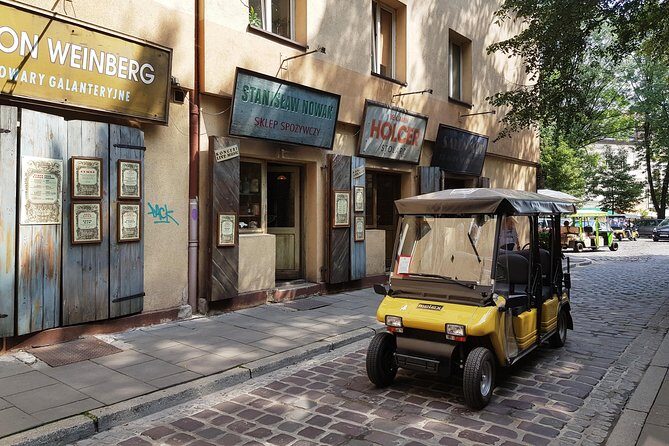
Krakow can be done on foot, sure. But the Old Town is tight, the streets can be uneven, and the “must-see” list spreads across different neighborhoods. This cart tour cuts that friction. In about 1 hour 30 minutes, you cover a lot of ground in a low-effort way, and you still get the sense of where everything fits together.
The electric cart part isn’t just a fun gimmick. It helps you get visual context. When you’re moving slowly enough to take in façades, gates, and defensive walls, you start to understand the shape of the city. That matters later when you plan your own walking routes.
You also get the narration through English audio commentary, which is a big deal if you want the story of what you’re seeing but don’t want to stop every five minutes to read plaques. In the best cases, guides add extra context and will adjust their approach based on the group. People have mentioned guides like Valentino, Nico, Dominic, and Paulina as standouts for clear communication and friendly hosting.
You can also read our reviews of more city tours in Krakow


Meeting at plac Jana Matejki 3 and how the ride typically runs
The tour meets at plac Jana Matejki 3, 31-157 Kraków, Poland, and the activity ends back at the meeting point. That makes it easy to plan your day because you know where you’ll return.
That said, a couple of people flagged that the meeting spot wasn’t always obvious on the street. I’d suggest arriving a few minutes early and double-checking the details right in your booking app. If you’re navigating with transit, the meeting point is close to public transportation, which can be a relief on a busy day.
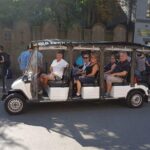
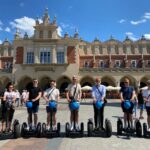
Group size is capped at 12 people, so you’re not stuck in a giant crowd. You’ll generally get enough space to take photos, and the driver can usually manage the pace without turning it into a traffic-jammed line of carts.
A small practical note: the ride can still feel like a ride. If you have motion sensitivity, pick your seat carefully. One review mentioned issues with the back seat being oriented the opposite way, which can affect both comfort and visibility when the guide points out sights.
Old Town highlights: from Main Square to the walls and Wawel
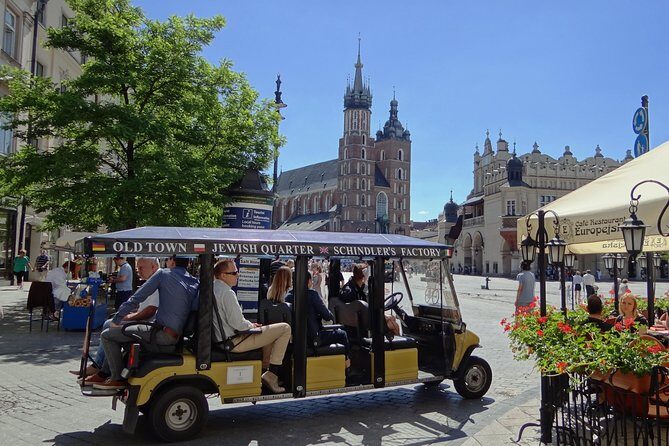
The Old Town portion is basically your orientation map—Krakow’s historic center, plus the key landmarks that help you understand why people still flock here.
You’ll pass by the Main Square, where Krakow’s public life used to orbit for centuries. The route also covers major visual anchors nearby, including the area around St. Mary’s Basilica, the Cloth Hall, and the Town Hall tower. Even if you don’t go inside everything, it’s the kind of skyline you’ll recognize later when you’re walking around on your own.
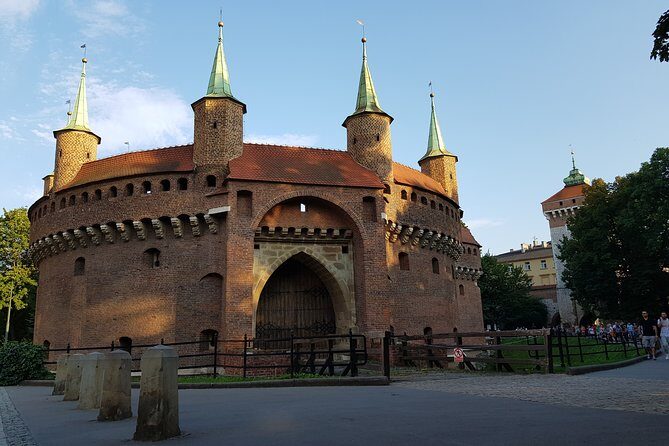
From there, the tour shifts to the defensive layer of the city: city defensive walls, the Florian Gate, and the Barbican. Seeing those elements from the cart helps because you get a better sense of how the city once protected itself and how those chokepoints guided movement.
Next, the route keeps going with academic and green-space landmarks like Jagiellonian University and Planty park. Planty is important because it circles the Old Town like a green belt, making the historic center feel contained. If you plan to explore later, you can use this as a mental boundary: where the park wraps, your feet are about to slow down and start sightseeing properly.
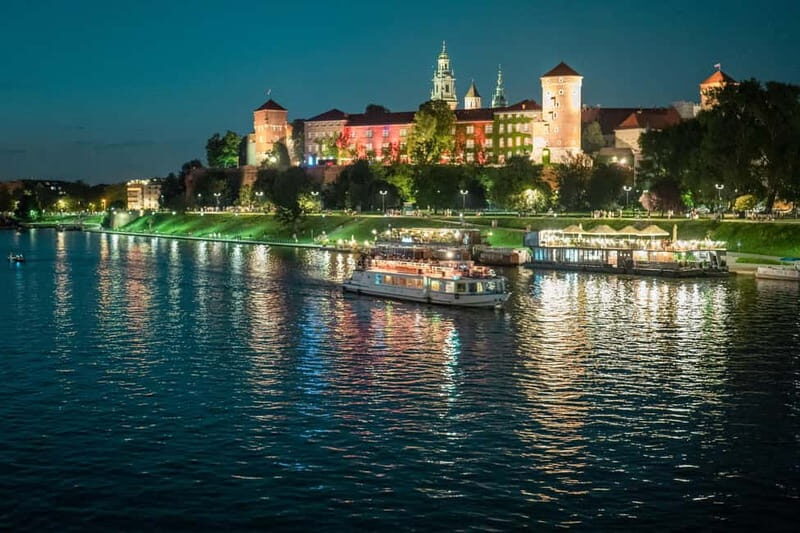
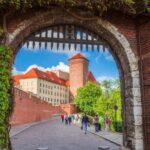
Finally, you’ll include Wawel Castle as part of the highlights. The cart keeps you from having to fight for position in tight crowds just to get a good view of the castle area.
Planty park and the trick to using this tour for your own walks
Here’s how you turn this tour into real savings: treat it like a moving map lesson, then go back on foot where you want to linger.
Because the cart runs through the Old Town, you start noticing patterns:
- which streets funnel you toward the Main Square
- how the defensive walls and gates frame the center
- how Planty park acts like a boundary between “old city core” and the neighborhoods beyond
After a tour like this, I find it much easier to decide what to do next. You’re not guessing. You already saw the layout, so when you choose a route for the rest of the day, it feels more like exploring than trying to decode.
This is also why doing the tour early in your trip tends to work well. One person specifically said it was a good beginning because it helped them understand the city layout and choose the best places to visit after.
Kazimierz: synagogue streets, Szeroka Street, and the story of place
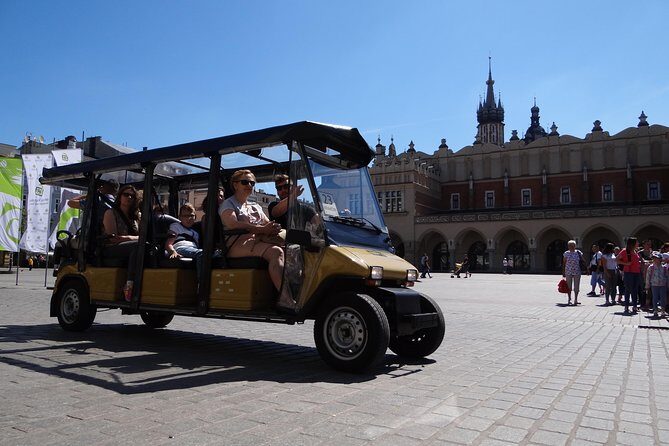
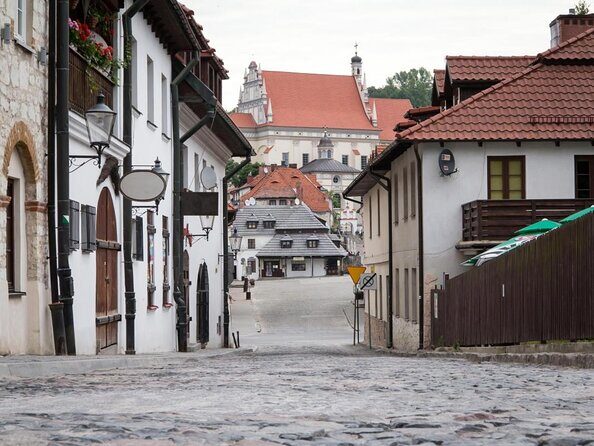
Kazimierz is where Krakow turns from postcard to real neighborhood life, with layers of culture visible in the streetscape. This tour’s Kazimierz/Former Jewish Quarter section is more than a quick drive past a few buildings. It includes a run of stops connected to major synagogue sites and the surrounding street grid.
You’ll be shown former Jewish Quarter highlights such as the Old Synagogue, the Rhemu Synagogue, the Issaak Synagogue, and the Tempel Synagogue. You also pass by Szeroka Street, which is a key spine for this area. The tour further includes old Jewish cemeteries, plus notable references like the house of Helena Rubinstein and New Square.
There’s also a shift to the Catholic part of Kazimierz, including stops like Corpus Christi church. That mix matters. It shows how the area isn’t frozen in time. It’s a living neighborhood with overlapping religious and cultural histories.
A practical tip: pace yourself here. The narration will keep moving, but you can still take a breath when the cart slows. This part of Krakow can hit hard, even if you already know the facts. Don’t feel rushed to take photos at every stop—stand still for a minute and let the place land.
One more note: some people found the Jewish Quarter and ghetto portion less compelling than they expected. If you’re the kind of person who only enjoys history when it’s delivered through an interactive, live guide style, you might want to add a separate, more tailored walking tour afterward. This cart tour is structured for coverage and orientation first, and depth second.
Ghetto Heroes Square, the Eagle Pharmacy, and fragments of the wall
The ghetto section focuses on specific wartime landmarks, which gives you a clear route through the story.
You’ll include Ghetto Heroes Square, the Eagle Pharmacy, and a fragment of the Ghetto Wall. These stops are emotionally heavy, so I recommend keeping your headphones on but also stepping back from the screen in your head and just looking at the space. The cart can feel casual because it’s comfortable, but the places you’re visiting aren’t.
This segment is also where an organized route helps. Instead of piecing together locations on your own, you get a guided line through the key points, so your understanding hangs together.
Schindler’s Factory: what you’ll see in 5 minutes (and what you’ll need to pay for)
One of the biggest “name” stops is Fabryka Emalia Oskara Schindlera, Schindler’s factory. The tour includes a short stop of about 5 minutes and references the museum exhibition Krakow under Nazi Occupation.
Admission is not included, so think of this as a quick stop to connect the famous story to the real location. If you want the full museum experience, plan separate time and budget for tickets.
That short visit still adds value. It helps you place Schindler’s story in the physical space, which makes any later museum time feel more grounded. It’s also a practical use of time if you’re doing this tour early and then deciding how much more you want to see later.
Comfort and safety: heated seats, blankets, and picking the right spot
Comfort is a major selling point here—especially in colder months. Multiple people reported that they stayed warm thanks to a blanket and heated seating. That turns a potentially uncomfortable outdoor experience into something you’ll actually enjoy.
Safety-wise, people consistently mentioned feeling safe during the drive. The cart style also tends to make it feel more human-scaled than bigger vehicles. With a group size up to 12, it’s easier for the driver to keep awareness around the group.
The main caution is seating orientation. One review said the back seats faced the opposite way, which affected visibility and comfort for someone with vertigo. If you get motion sick or you want to see everything as the guide points it out, ask for a seat that gives you forward sightlines.
And since the commentary is audio-based, make sure your headphones fit comfortably and you can hear clearly. One review highlighted that the headphones setup helped people hear the narration well.
How the English narration and guides work together
This tour is not purely a driver-without-information situation. It combines vehicle audio narration with guide interaction.
People have praised the English delivery a lot—clear voice, good communication, and the guide pausing to describe buildings when requested. Some guides, including Valentino (as mentioned multiple times), have been described as friendly and careful, and also willing to share practical recommendations for what to eat and where else to go in Krakow.
That said, one criticism came up repeatedly in different forms: some sections feel more like pre-recorded narration than a live back-and-forth conversation. If you’re hoping for a guide to answer lots of questions with unique, customized details, you may not get that from this format. The upside is that it keeps the tour moving and coverage steady.
My advice: treat it as your city intro. Afterward, spend your deep-dive time on the places you personally care about most—whether that’s Old Town wandering, synagogue-area streets, or the Schindler museum.
Price and value: $27.83 for three districts and major stops
At $27.83 per person, this is priced like a city orientation experience rather than a private tour with long stops. The value comes from what you don’t have to manage:
- getting around multiple districts in a short window
- paying attention to dozens of landmarks without reading everything
- staying warm and comfortable with blankets/heated seating
- seeing both Old Town and Jewish/WWII-related locations in one loop
Also, because it’s a small group (max 12) and uses an electric cart, you’re not dealing with the same crowd stress you can get on larger bus-style tours.
The one cost caveat you should plan for is Schindler’s Factory admission. The tour stops there briefly and the ticket is not included. If you want the museum experience, budget extra so you don’t get surprised later.
If you’re traveling on a tight schedule, this tour often pays off because it helps you decide what to do next. People have even called it worth the money as an efficient overview and mentioned it as a good first-day activity for understanding where everything is.
Best day to book and how to pair it with your Krakow plan
If you want the biggest payoff, book it early—ideally your first day or at least soon after you arrive. Several people specifically said it helped them get their bearings and choose later sights with more confidence.
Then pair it with:
- Old Town walking time for the Main Square and nearby lanes
- a follow-up visit to any places you want to see longer (especially if the cart stop made you curious)
- time for either a deeper museum visit or synagogue-area walking, depending on what moved you most
Think of the cart tour as the thread. Your later self-guided time is where you tie the knots—longer photo sessions, slower museum visits, and detours that only make sense once you’ve seen the city from this bird’s-eye-but-not-too-far angle.
Should you book this Krakow Grand City Tour by golf cart?
Book it if you want:
- an easy first look at Krakow across three districts
- an electric cart ride with English audio commentary
- a comfortable way to see major landmarks like St. Mary’s Basilica area, Wawel, Kazimierz synagogue streets, and the ghetto-related stops
- a small-group experience where the driver can manage comfort and quick photo moments
Skip it or add something else if:
- you need a truly live, conversational guide style for every topic (this tour leans on recorded narration)
- you’re very sensitive to motion or vertigo and you can’t handle back-seat orientation—sit accordingly or choose another format
Overall, if you want an organized, comfortable way to get oriented fast and hit the key sights without turning your day into an endurance test, this is a strong pick.
FAQ
How long is the Krakow Grand City Tour by golf cart
It’s listed at about 1 hour 30 minutes.
How big is the group
The tour has a maximum of 12 travelers.
Is the tour offered in English
Yes, it’s offered in English.
What areas does the tour cover
It includes Krakow Old Town highlights, the Former Jewish Quarter in Kazimierz (including several synagogue-related stops and nearby streets), and the ghetto area stops such as Ghetto Heroes Square.
Does the tour include admission to Schindler’s Factory
No. Admission to the museum at Fabryka Emalia Oskara Schindlera is not included.
Where does the tour start and end
It starts at plac Jana Matejki 3 in Kraków and ends back at the same meeting point.
Is there free cancellation
Yes, you can cancel for a full refund if you do so up to 24 hours in advance.